

Startup newbie: How researching entrepreneurship in Medellin led me to Kansas City
July 9, 2018 | Mike Plunkett
Editor’s note: The opinions expressed in this commentary are the author’s alone.
When my wife Megan and I visited Kansas City this past January as part of our “city shopping tour,” there was much that impressed us and led to our decision to make it our new home.
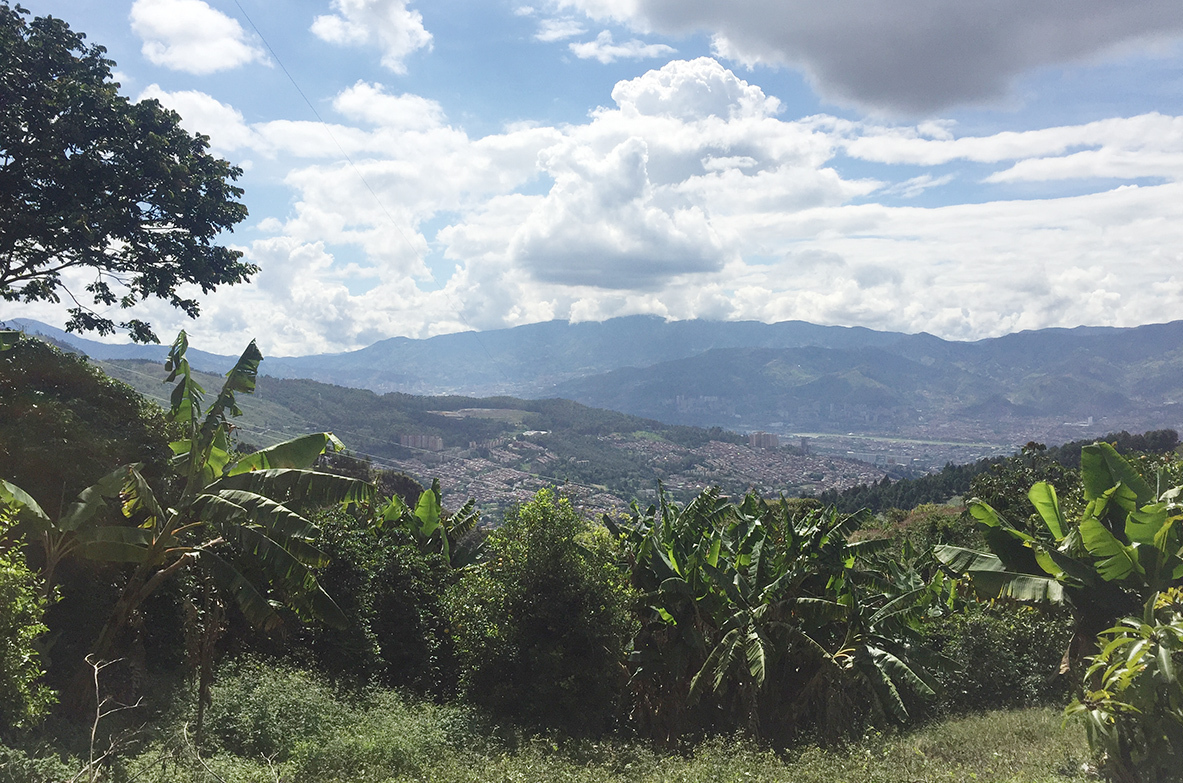
In many respects, we chose Kansas City because of our time in Medellin, Colombia, where we had lived in the later part of 2017. Medellin, nicknamed “The City of Eternal Spring,” has transformed after decades of violence to become a thriving metropolis with a strong entrepreneurial mindset.

Mike Plunkett
Many are looking to Latin America as the next hub of entrepreneurial success. In 2017, VC investment doubled from the previous year and, for the first time, total investment reached $1 billion. While much of the money and attention is on larger countries like Brazil and Mexico, Colombia is rapidly growing as a power within South America.
I researched the entrepreneurial community in Colombia’s second largest city, talking with business owners, startup founders and officials with government-led business incubators. What I found were striking similarities between Medellin and Kansas City.
To be sure, the entrepreneurial scenes in Kansas City versus Medellin are not an apples to apples comparison but some lessons we learned in Medellin can be helpful to the entrepreneurial community here.
A common vision drives the ecosystem
Medellin is a metropolitan area of around three million people and much of its economy is rooted in textiles and manufacturing. Today, it’s a growing hub in technology, banking and healthcare. Bancolombia, Colombia’s biggest bank, is headquartered in Medellin.
Paisas —the nickname given to Medellin locals— have always been known as entrepreneurs. Nestled in a valley of the Andes mountains and geographically isolated from much of the country, Paisas have drawn upon their own self-reliance and business sense to create a thriving city. They are bullish on the future and the possibilities it presents.
They are starting their businesses, opening up coffee shops, coworking spaces and clothing stores. Startup incubators recruit Paisas and expats alike and are partnering with multiple companies, particularly U.S. companies, as clients.
An ecosystem has emerged by their own building.
Similarly, a real desire to see the “best-kept secret of the Midwest” thrive and flourish, abounds. Venues like One Million Cups give Kansas City entrepreneurs a platform to share what is happening but more so, a sense of what could be. However, that only comes with perseverance.
Pitch nights that we attended in Medellin start with the proclamation: “We want to be the Silicon Valley of Latin America.”
Here in Kansas City, a familiar message is ringing true: “We want Kansas City to be America’s most entrepreneurial city.”
A strong collaboration with the government
The Medellin government led much of the city’s transformation.
In addition to military operations to drive out drug traffickers, the municipal government used the concepts of democratic architecture and education with dignity to help citizens engage with each other. The metro system, including the incredible metro cables that connect some of the poorest neighborhoods to the city, is one of the best in the world. The pride Paisas have for their metro system is astounding.
Another government-success was the Districto de Innovacion, a block designed as a prime spot for entrepreneurship. It’s anchored by the government-funded incubator RutaN, major companies and public utilities. RutaN helps Colombians start businesses, as well as attract international businesses to set up shop in Medellin.
It’s one of the several government-led entrepreneur programs in Latin America. StartUp Chile is a popular and significant business incubator funded by the Chilean government and requires participants to live in Santiago for at least six months. Ironically, many of those who participate in StartUp Chile leave after their grant is completed, and many of them move on to Medellin.
Here in Kansas City, much of the revival is a true success story. Even the streetcar, which the New York Times just featured, is a testament to how positive collaboration with businesses, residents and the government can produce results.
While it’s not feasible to have the government drive all innovation here in Kansas City and the United States, it’s essential that government play a strong role in this. It can be as simple as the “coffee shop density” map that deputy city manager Rick Usher is documenting as emerging innovation districts.
It’s the collaboration between entrepreneurs and the government that will lead to lasting results.
A clear-eyed sense of what is truly happening
For all the efforts by the Medellin government, the Urban Land Institute voted Medellin as the “Most Innovative City in the World” in 2013. That title for many brought with it a source of pride and as you can imagine, great marketing.
But many within the startup scene I spoke to scoff at the title because it creates unrealistic expectations about where the city truly is and what needs to be done. For them, even with the major gains, Medellin is years behind Bogota and a decade or more behind Mexico City and Sao Paulo. Even though venture capital investment is growing, many of the investors’ goals are to find the Colombian Uber or Airbnb, even while both companies are rapidly growing in the country.
Marketing is important, as is creating an overarching vision. And yet, being clear about the realities and what needs to be done moving forward is essential. Even though Kansas City wasn’t selected as a finalist for Amazon HQ2, I believe discussions that came from the proposal regarding what needs to exist for the city to grow are perhaps more important to the city’s long-term future.
The aim is to have what Jim Collins called in his book Good to Great “the Stockdale Paradox,” a relentless optimism with a clear-eyed accounting of what is truly happening.
While we were sad to leave Medellin, we were excited to come back to the United States and see what awaited us. It became clear to us upon visiting Kansas City that the entrepreneurial ecosystem here is alive and teeming with possibilities. More so, it showed what the city could be for us: Home.
Mike Plunkett is a writer, editor and communications consultant who makes his home in Kansas City. After more than 10 years working at top newspapers and nonprofit organizations on both U.S. coasts, he now partners with mission-driven companies and entrepreneurs to help them share their best story. Email him at mjmplunkett@gmail.com


2018 Startups to Watch
stats here
Related Posts on Startland News
Digital Sandbox charges three new startups with its proof-of-concept challenge
An effort to elevate Kansas City’s creative minds, Digital Sandbox KC is digging deeper in its sixth year of acceleration — adding three new startups to its portfolio, the proof-of-concept program announced this week. “Our initial goal was to find 10 early-stage concepts that had high-growth potential and help them secure follow-on funding,” said Jeff Shackelford,…

KCultivator Q&A: Donald Hawkins chews on sage advice, blood sausage, ‘circle of giving’
Editor’s note: KCultivators is a lighthearted profile series to highlight people who are meaningfully enriching Kansas City’s entrepreneurial ecosystem. Founders should rally around Kansas City’s startup ecosystem like fans rallied around the Chiefs, said Donald Hawkins. “If you look at a lot of the companies that have scaled — there’s a huge connection gap between…

‘Hardest deal is always the first one’ — Partnership adapts Motega Health tech for animal use
A new licensing deal with Simini Technologies has unleashed disruptive potential for Lawrence-built Motega Health, the company announced Thursday. “We are very pleased to be partnering with Simini and their team and are excited by the energy and creative thinking they are bringing to the commercial process in veterinary medicine,” said Dr. Blake Hawley, founder…
KC Tech Council: ‘No Coast’ aims to prove landlocked doesn’t mean limited for local tech industry
Kansas City has been “punching above its weight” since the days of covered wagons, said Ryan Weber, noting the tech industry specifically has an impact of almost $11 billion a year on KC’s local economy. “Nationally, our profile has risen so much,” said Weber, president of the KC Tech Council which works to support the…