

Now in new Crossroads space, Rightfully Sewn prepares to welcome male sewists (Photos)
July 20, 2018 | Tommy Felts and Bobby Burch
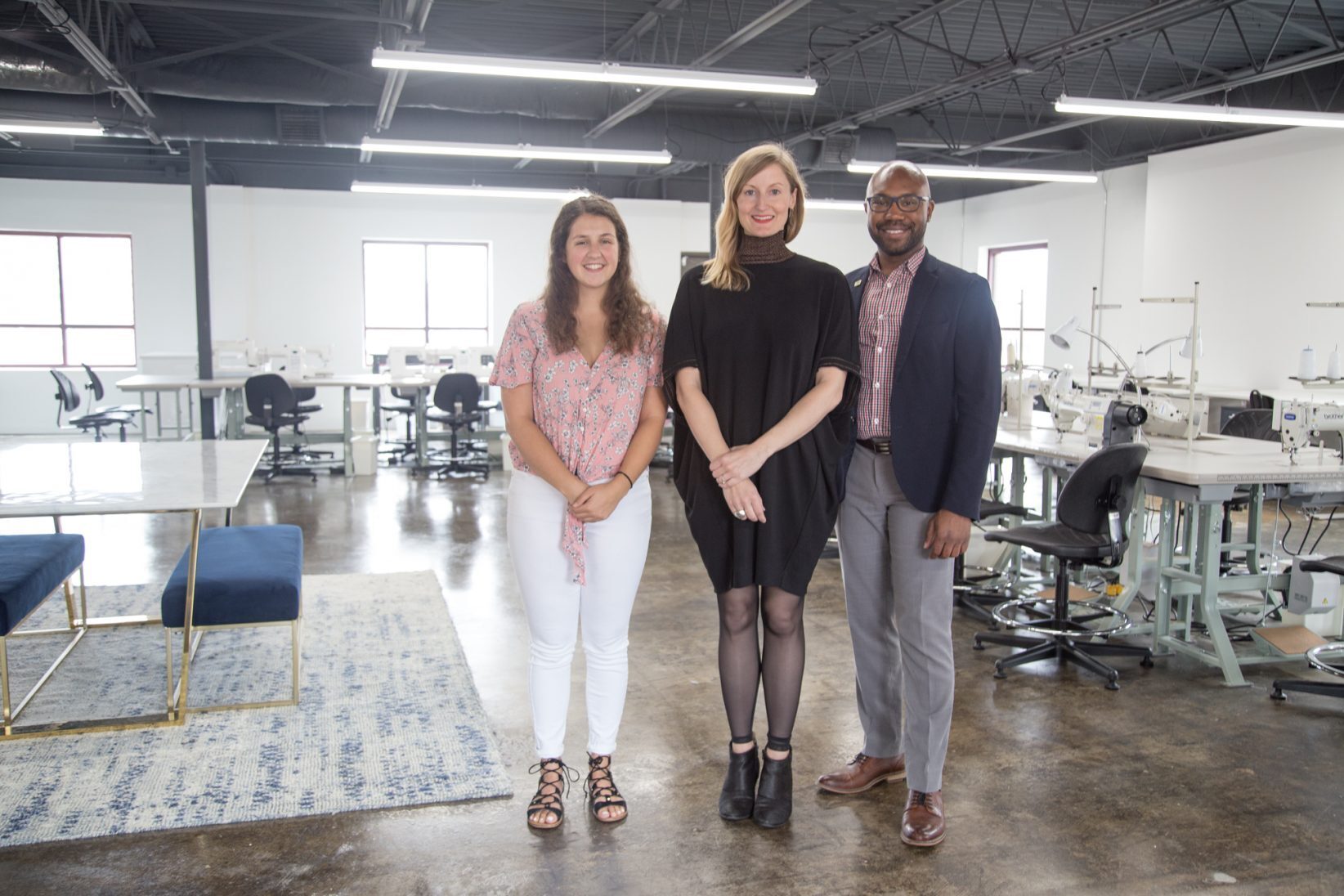
The secret to any startup venture is to move forward one stitch at a time, said Rightfully Sewn founder Jennifer Lapka.
“Start small, struggle, have success, then scale,” she said, quoting one of her many mentors.
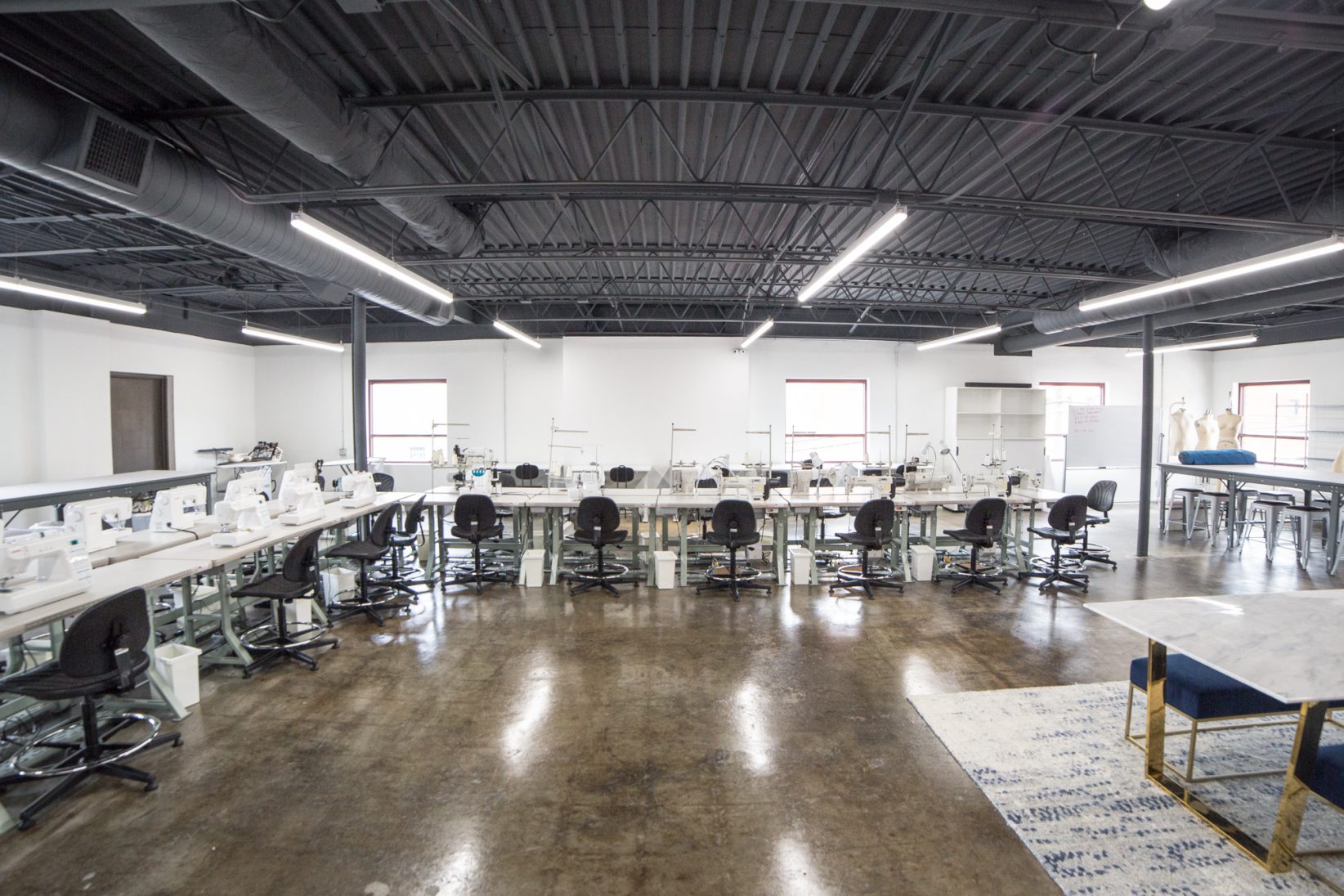
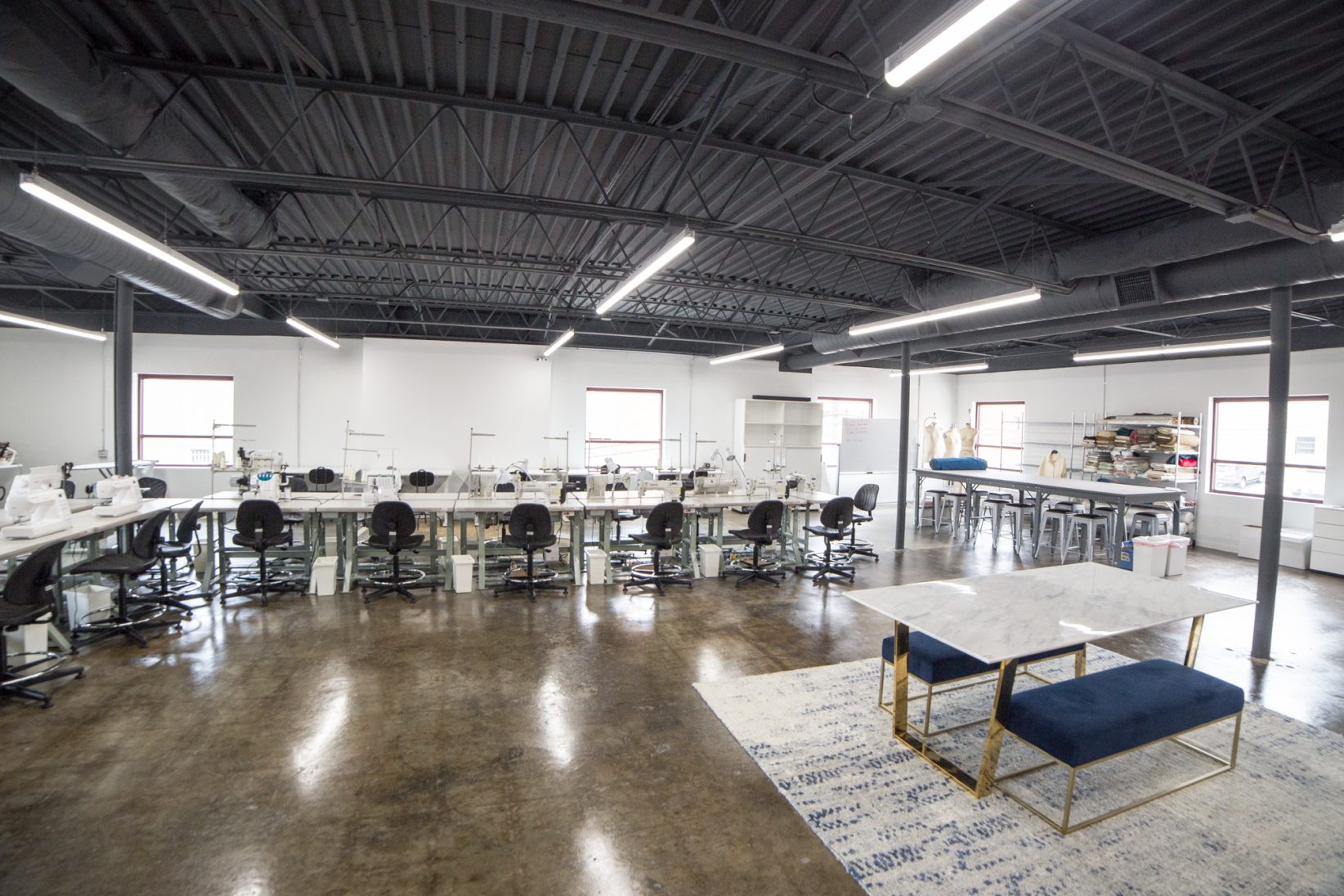
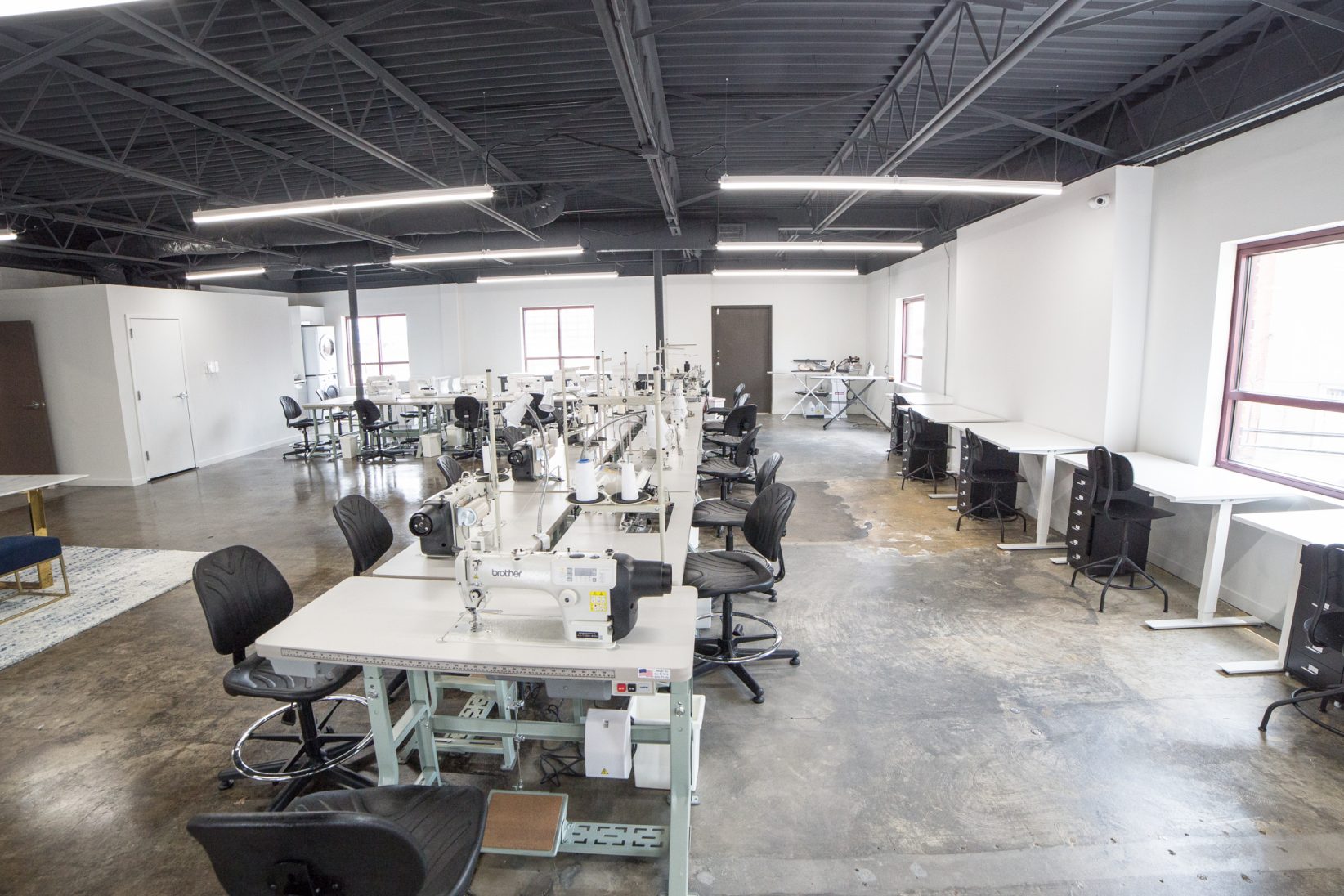
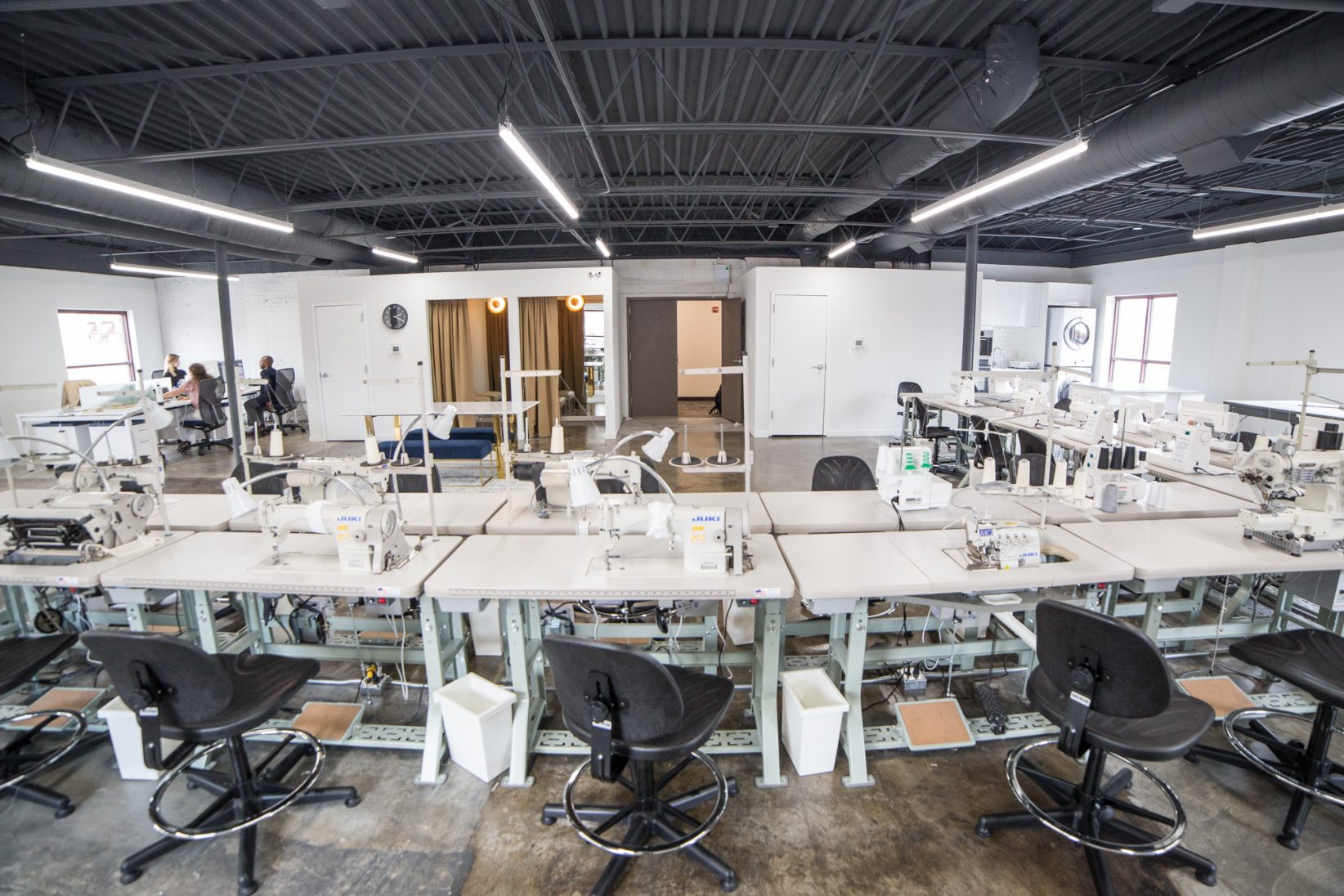
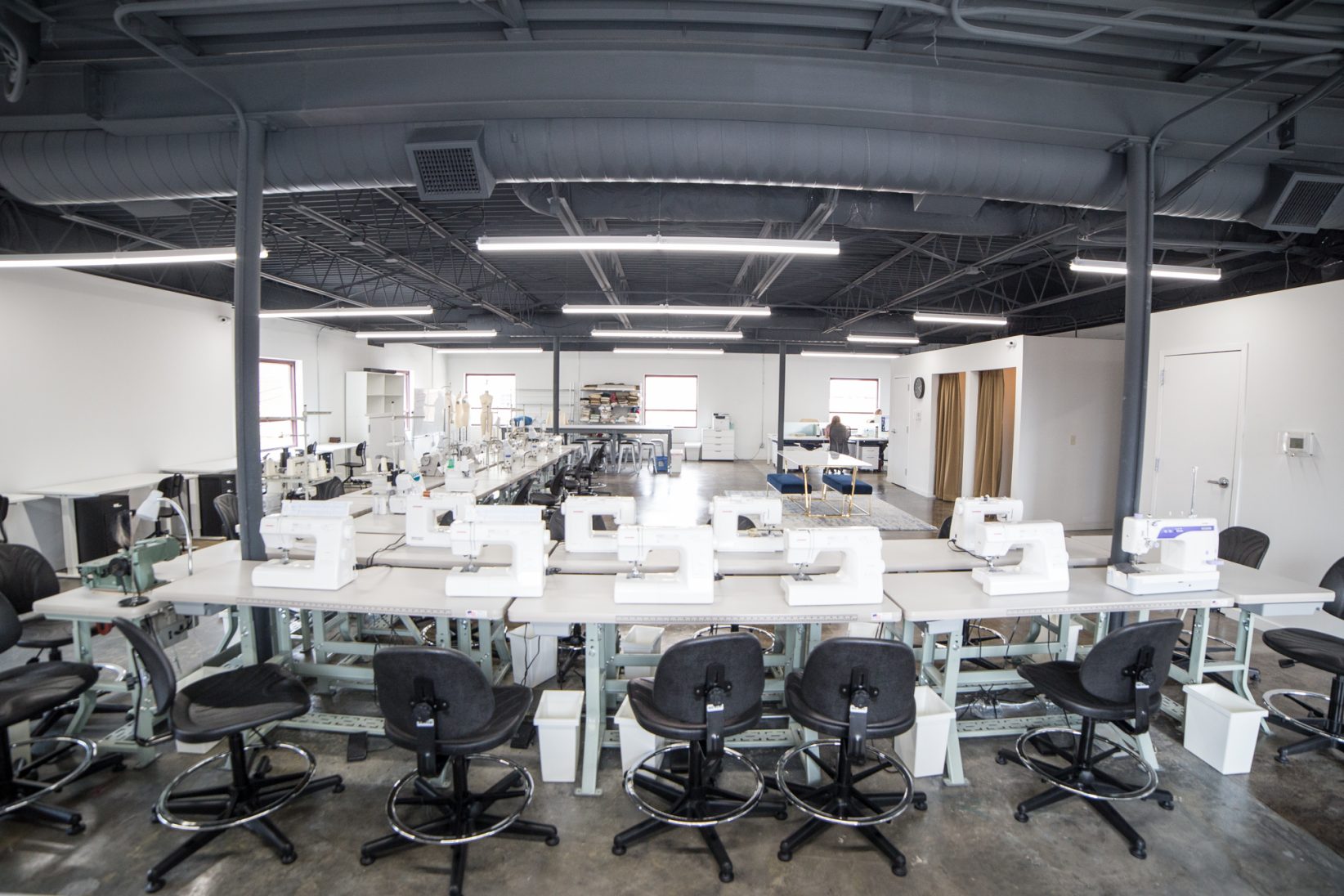
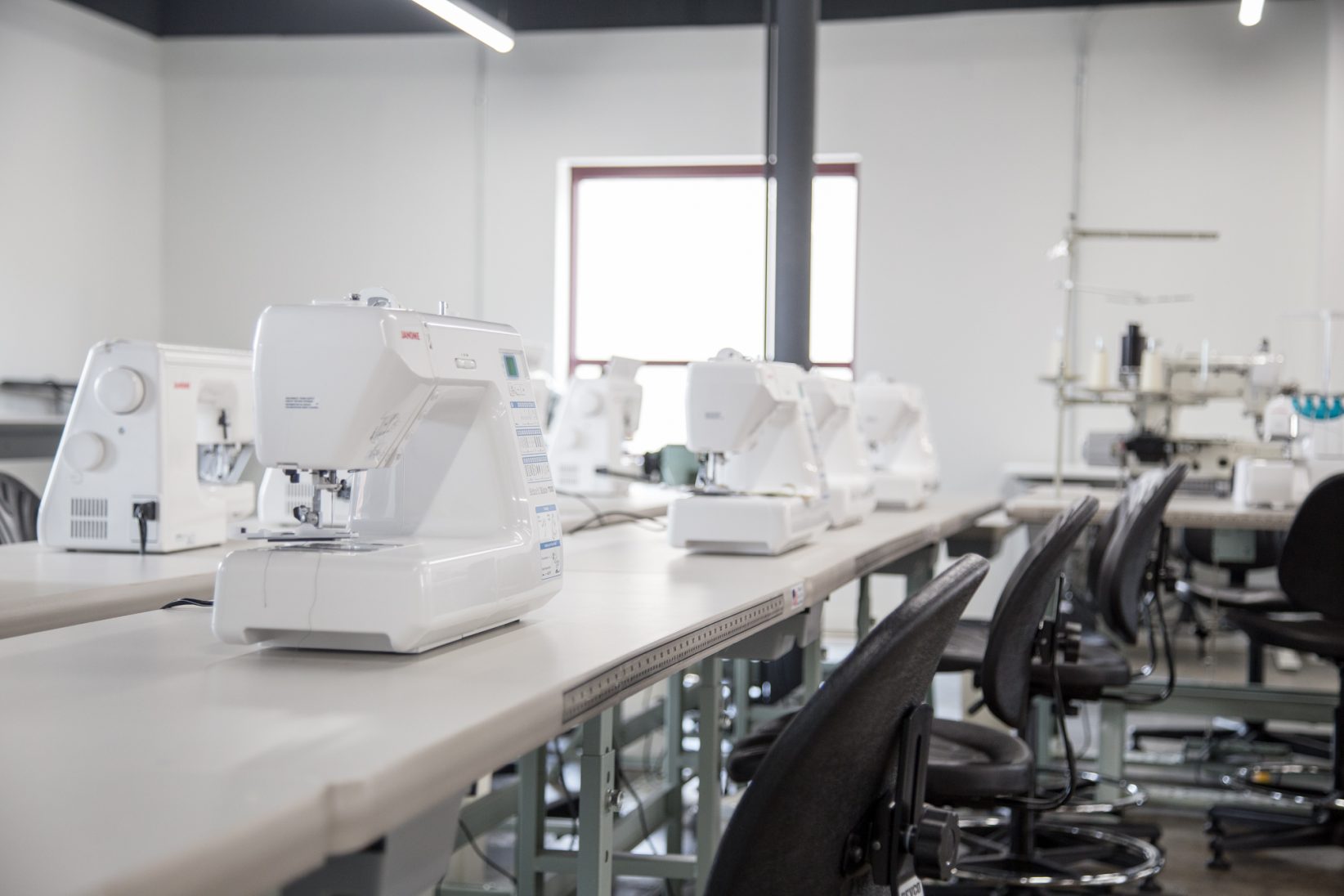
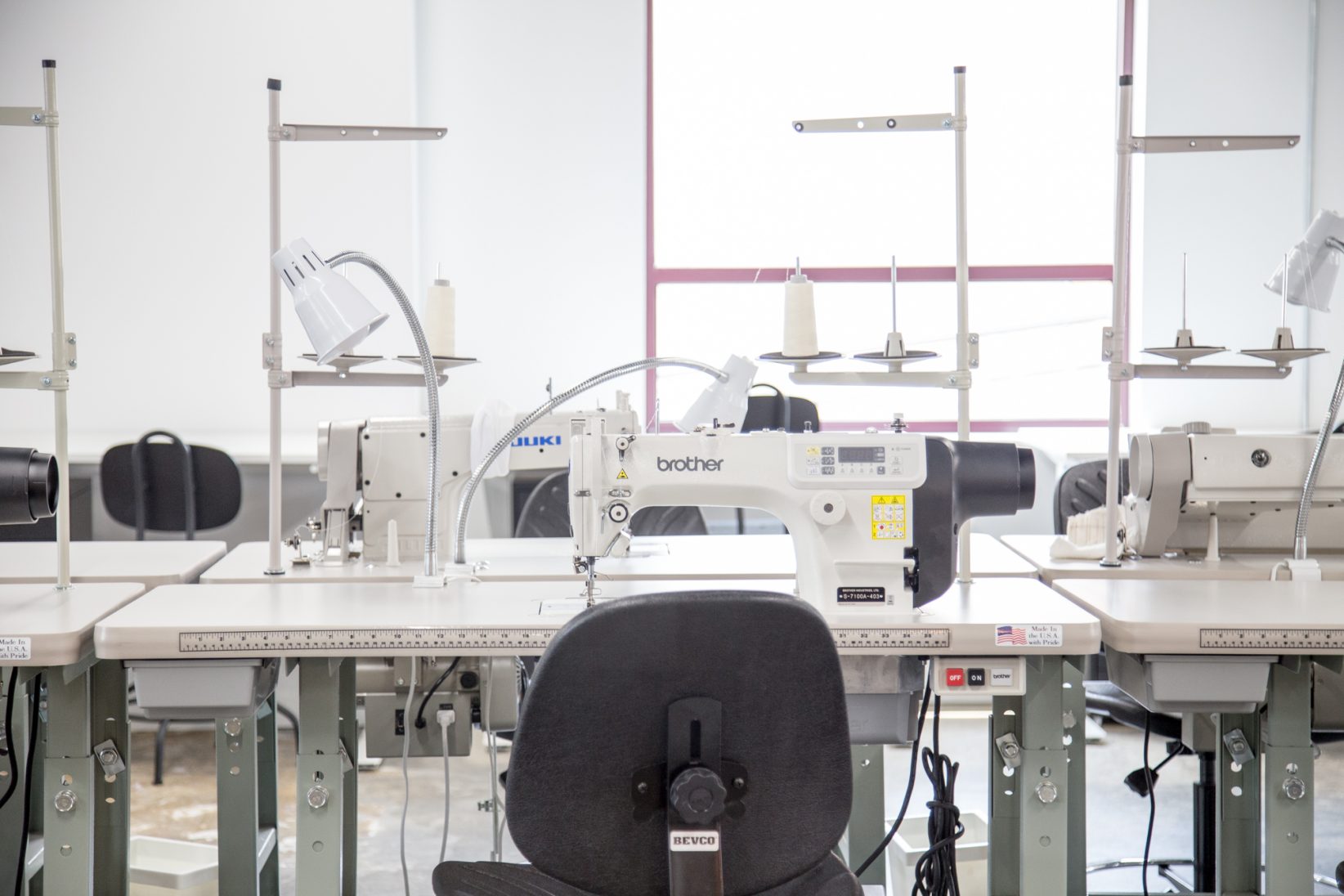
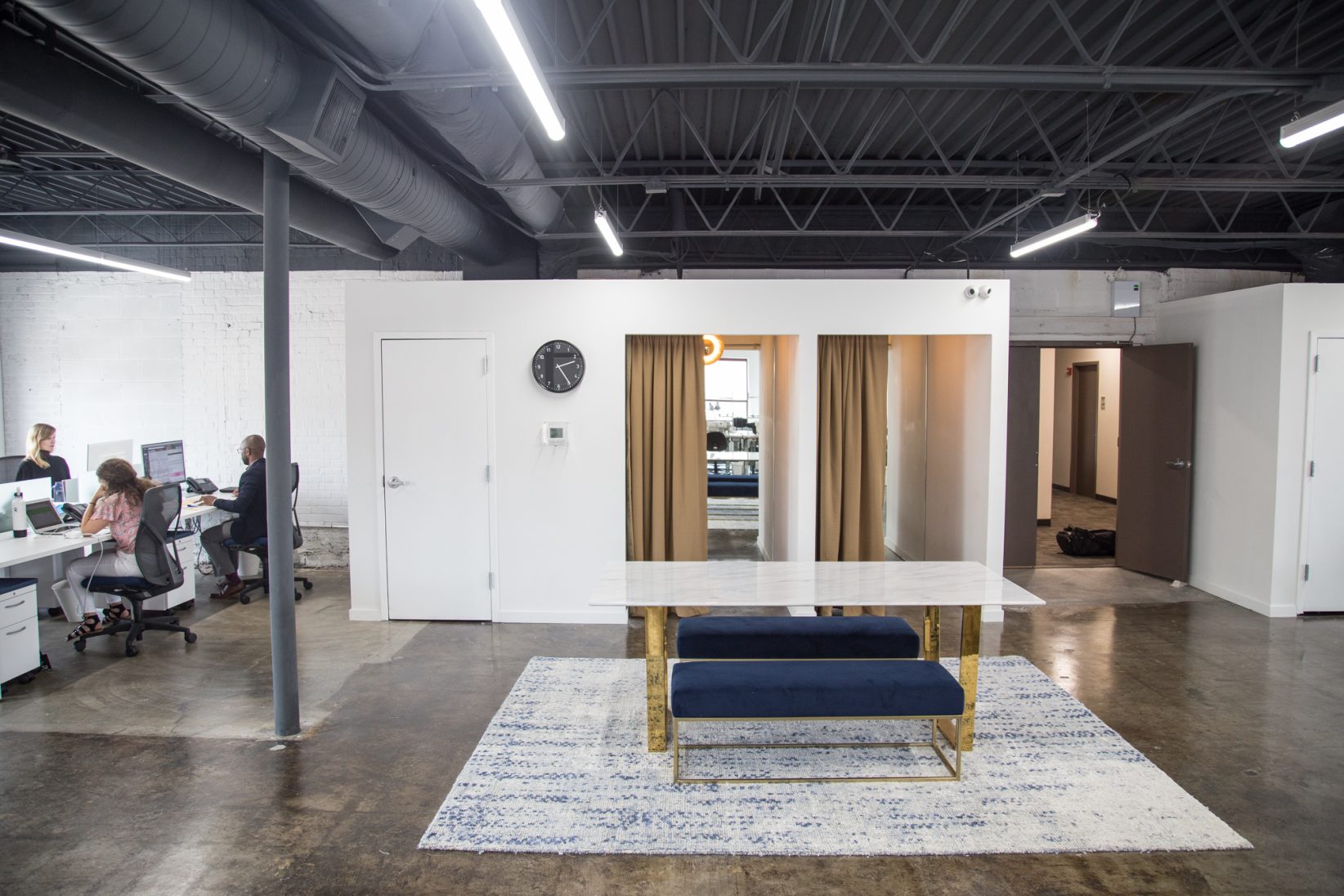
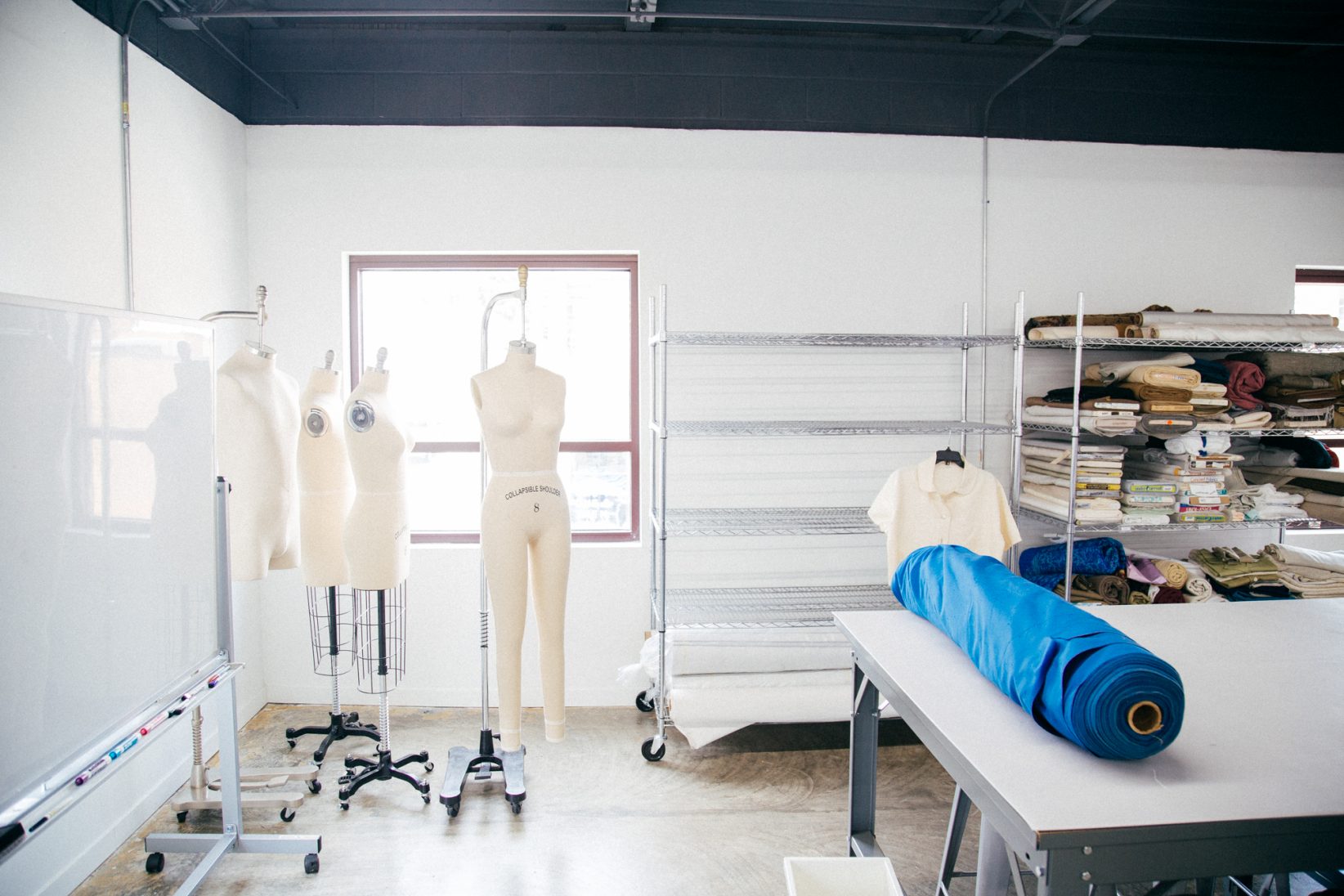
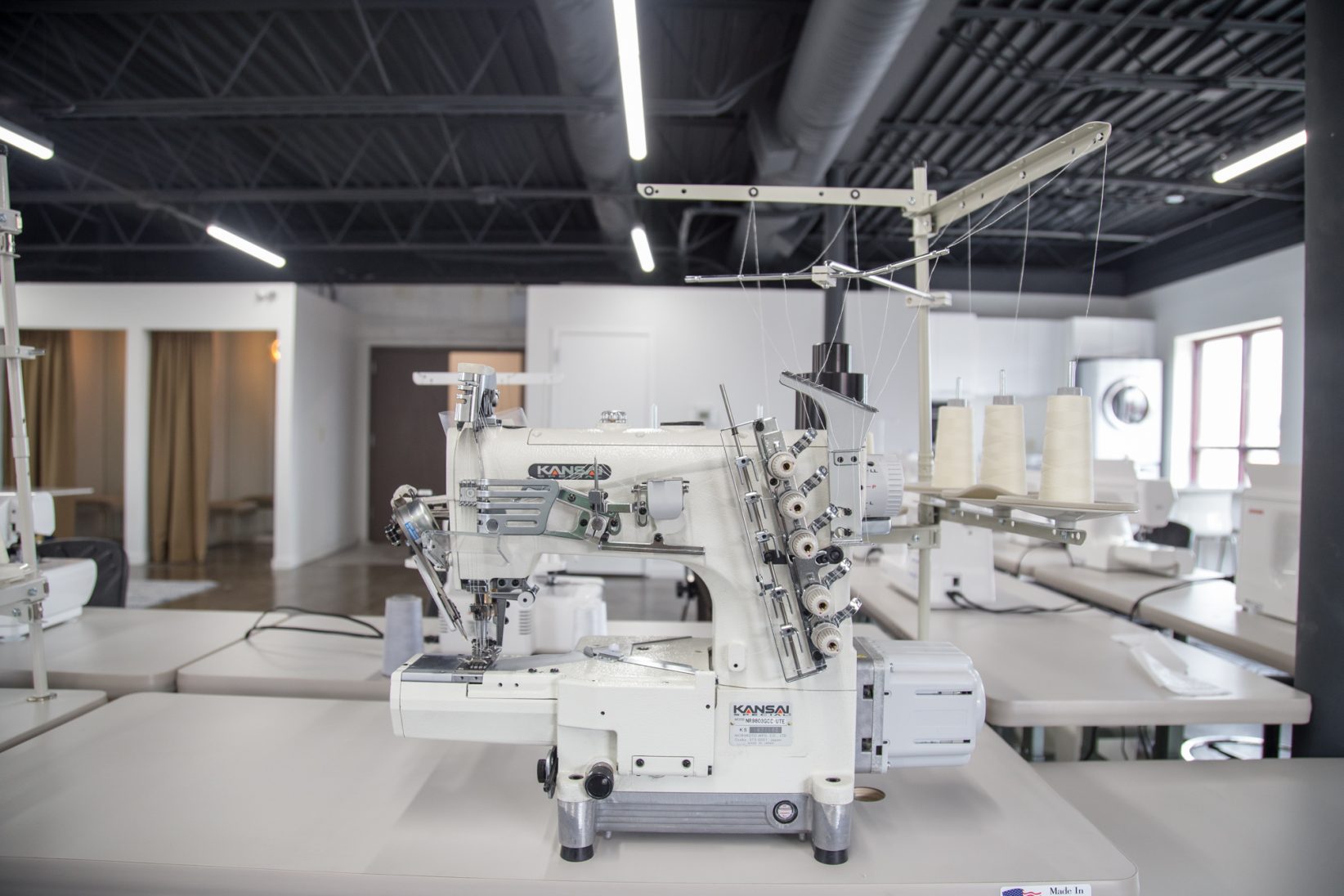
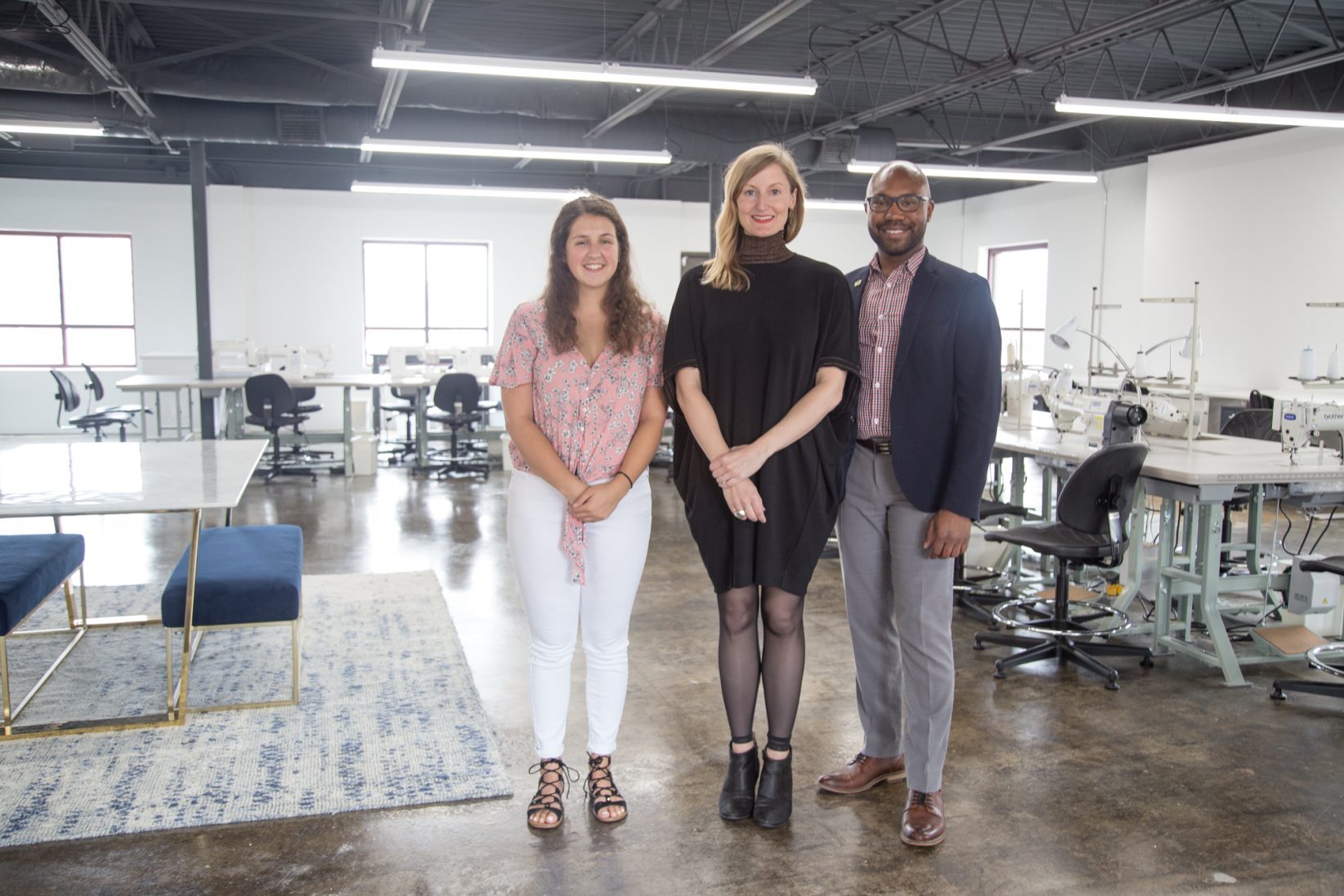
Freshly moved into a 2,200-square-foot atelier, or design studio, at 1800 Wyandotte St. in the Crossroads, Rightfully Sewn is now ready for the next step in the nonprofit’s journey: men.
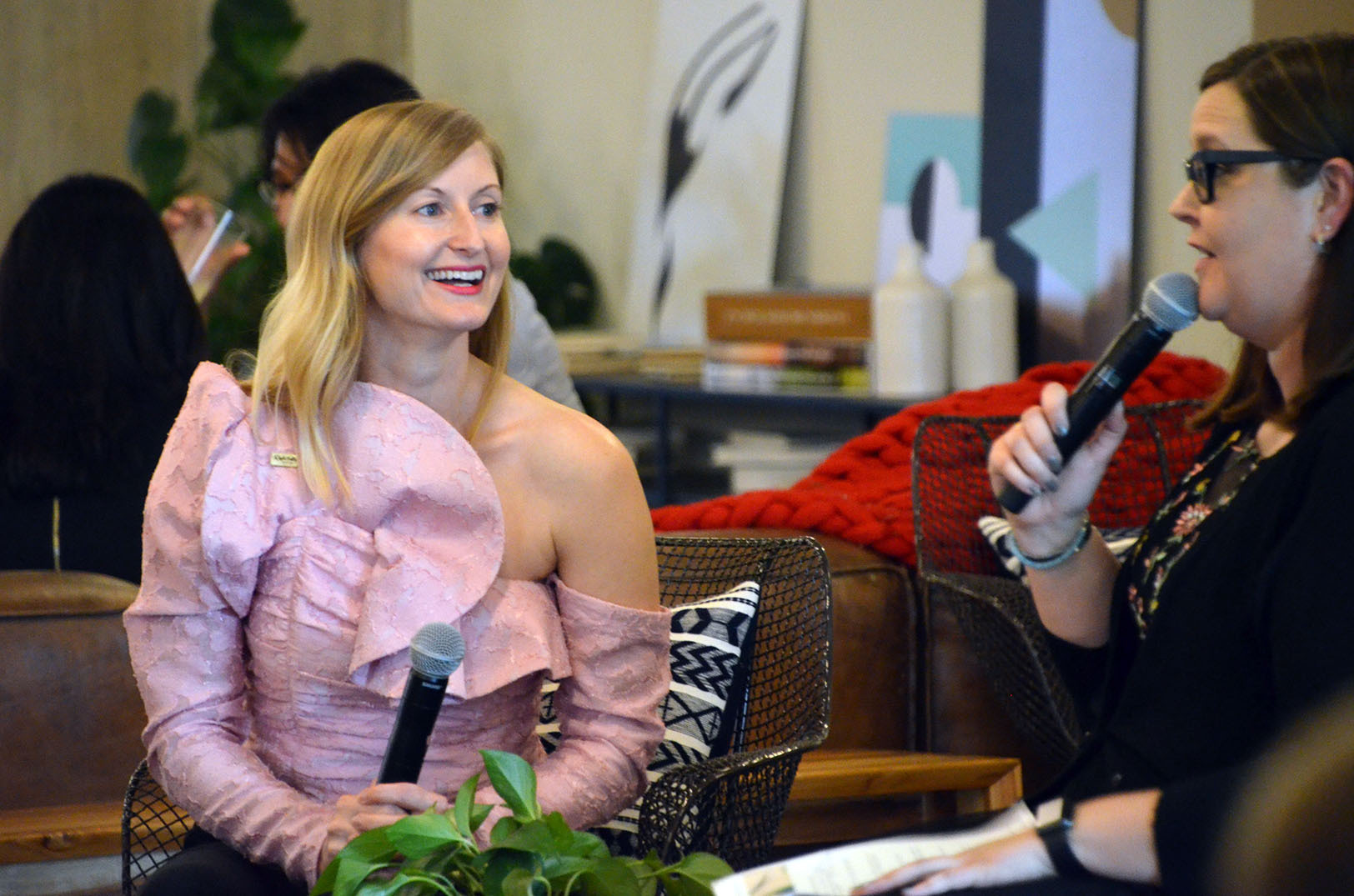
Jennifer Lapka, Rightfully Sewn, and Jeriney Fulcher, 96.5 The Buzz
Sewists — a gender neutral term that presents a more inclusive description than “seamstress” or “machinist” — typically have been women, though men possess the same potential for the work, Lapka told a crowd gathered Wednesday evening for We, the Creators KC: Startups Unplugged.
The event — organized by WeWork, 96.5 The Buzz and the Kansas City Startup Foundation — showcased Rightfully Sewn’s development since its founding in 2015. The program, which traditionally has trained women to be seamstresses for local designers through a two-year experience, initially could only accommodate six women (typically refugees or low-income, working individuals) per class.
In the new space, Lapka has room for 30 sewists, she said, noting Rightfully Sewn could open to men as early as August.
Learn more about the nonprofit’s capital campaign here.
The program already has welcomed Godfrey Riddle as vice president of external affairs. Formerly director of development for the Kansas City Friends of Alvin Ailey, Riddle is the nonprofit’s first full-time hire, Lapka said.
It’s another big step — and a scary one at that, she said.
“When I was developing Rightfully Sewn, it was just kind of me volunteering my time. And then it was part time, and my family was financially involved. And then I went to it full-time,” Lapka said. “But when does the most fear and doubt come in? It’s when you add that first full-time staff member. That person believes in you enough to leave his day job — he has a mortgage, he has dreams.”
“But you can’t let fear paralyze you,” she added. “It has to help drive you.”
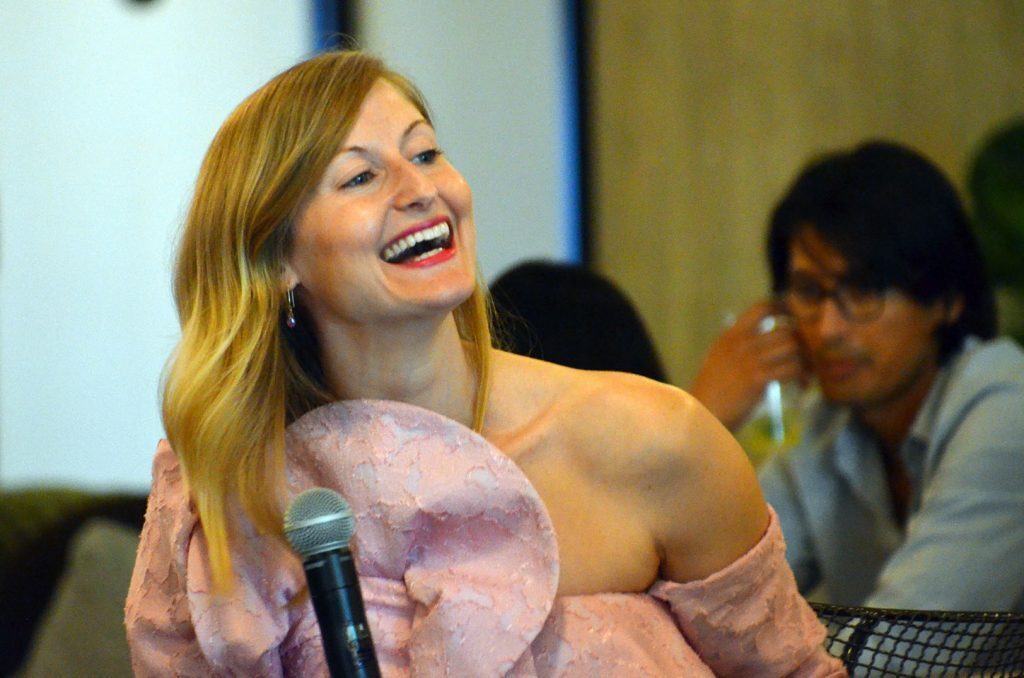
Jennifer Lapka, Rightfully Sewn
Lapka believes Kansas City is on track to regain its historic crown as an internationally known fashion hub, she said, in part because of the potential locally for success based on sheer determination.
“Kansas City is so accessible,” Lapka said. “It’s easy to get a meeting with [Roasterie founder] Danny O’Neill or someone like [H&R Bloch co-founder] Henry Bloch. If you are polite, you have an idea, you are persistent, these doors will open to you.”
Check out the new Rightfully Sewn atelier below.


Featured Business

2018 Startups to Watch
stats here
Related Posts on Startland News
Novel Capital teams with Crux KC to offer growth-focused marketing to early-stage tech companies
An exclusive partnership between two Kansas City-based innovators is expected to help remove a traditional financial hurdle to business growth, said Ethan Whitehill, president and chief strategy officer for the KC Chamber-lauded marketing firm Crux KC. The collaboration between Crux and Overland Park-headquartered capital provider Novel Capital is expected to offer B2B SaaS and tech…
Neighborhood smart cans help Kansas Citians save the planet from their kitchens
Newly introduced composting technology is already turning new ground in Kansas City, Kristan Chamberlain said, with more solar-powered compost cans arriving later this spring across the metro’s urban landscape. Her social venture, KC Can Compost, installed three of the devices in October — free to use for KCMO residents wanting to deposit their soil-making food…

Voodoo Volleyball bounces back in OP: Father-daughter duo doubles as new venture’s setters
Quinn Austin put several sports to the test as a preteen — racing from basketball practice to softball to volleyball. But she latched on to just one. “Volleyball. It was my sport. Everyone was having a good time,” she said. “We just loved the cheers — a cheer when we got a hit, a cheer…

Black farmers are losing ground in the fight to feed their communities, advocates say
More than a century of systemic land dispossession and discriminatory practices has left Black farmers with less than 0.6 percent of U.S. farmland — less than a third of the 16 million acres they operated in 1910, according to local urban farming advocates. They gathered Tuesday at Independence Boulevard Christian Church to confront this history…