

Another slice in stock: Walmart picking up KC startup’s Made-in-the-USA Pizza Saver
June 20, 2018 | Tommy Felts
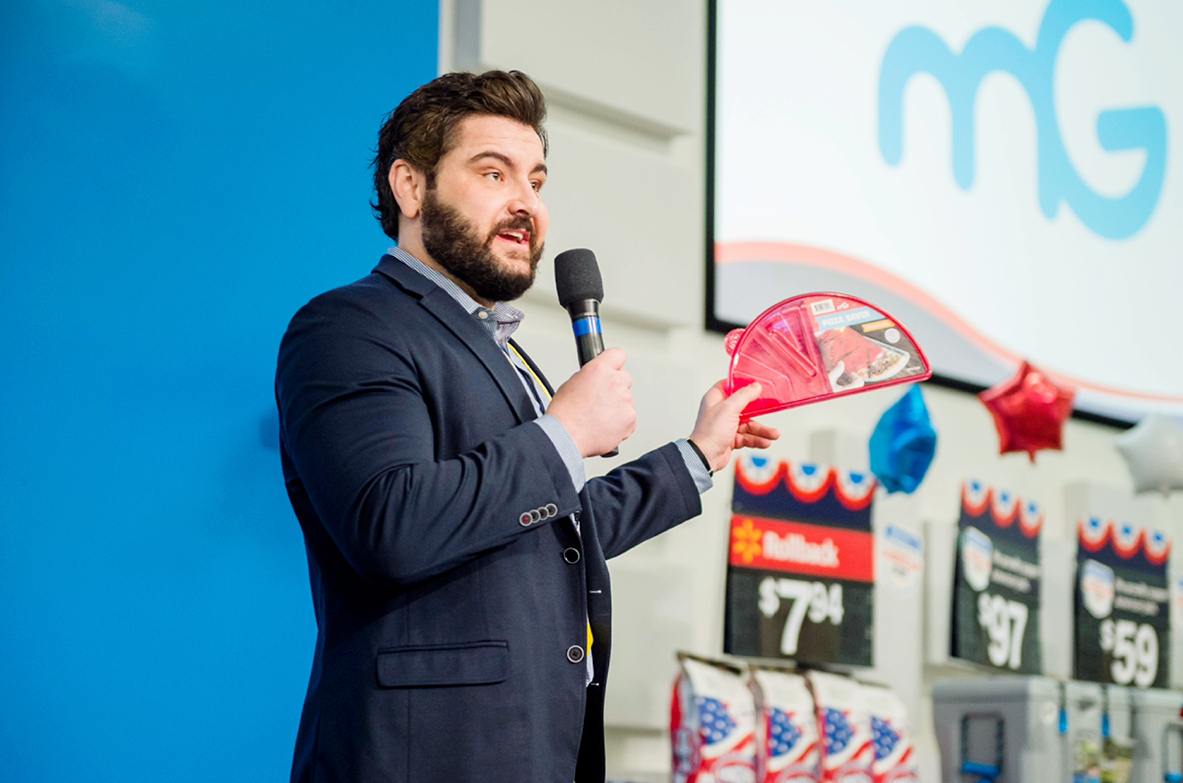
Mighty Good Solutions leaves no ideas to waste, said co-founder Ben Rendo. The Crossroads-based company’s Pizza Saver product — baked from a simple premise — is its latest offering to earn a deal with the world’s largest retailer.
“We just try to focus on products that are going to make everyday life better,” Rendo said of Mighty Good’s ideation philosophy. “We don’t source products from outside. We don’t license products. Everything we develop is developed in-house. We try to identify problems. We ask: ‘What are things we don’t like doing? What is a task that we can make better or more enjoyable?’”
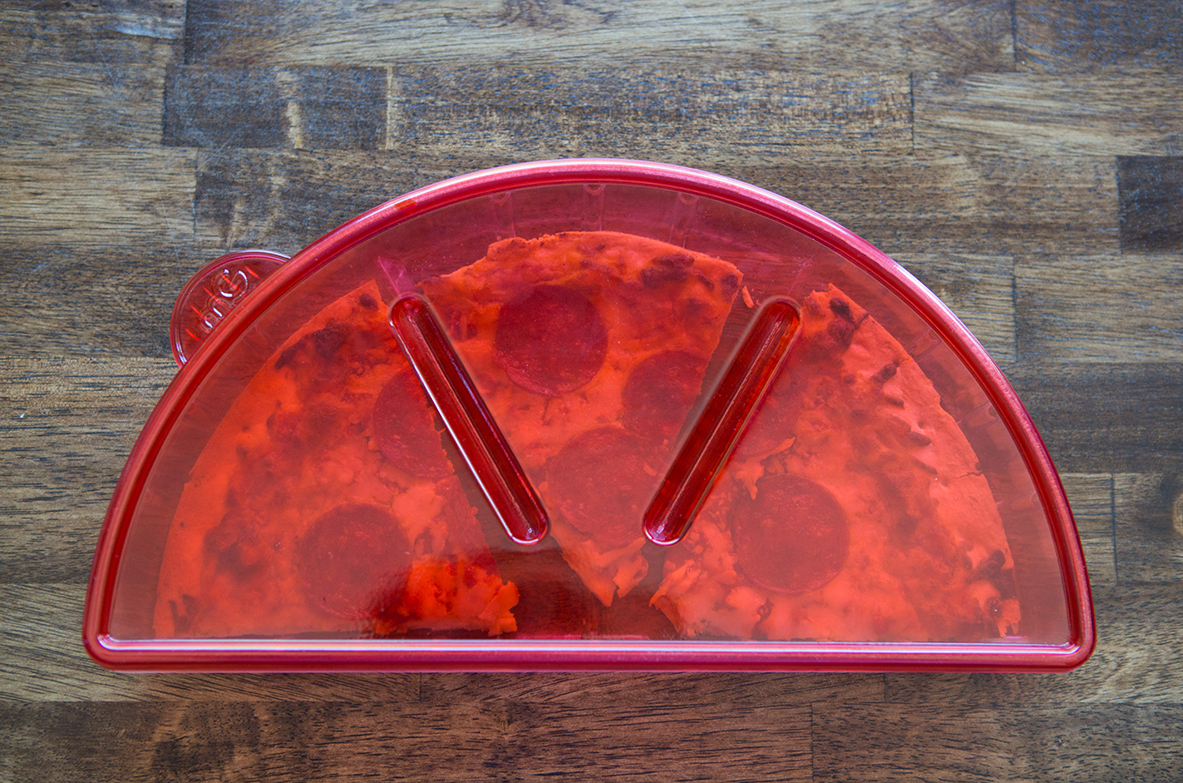
Pizza Saver from Mighty Good Solutions
For the Pizza Saver, it’s the challenge of preserving and reheating leftover slices.
“When the average family of four orders a large pizza, our research has shown, they have about three slices leftover,” Rendo said. “So most people will either jam the full box into the refrigerator or they’ll try to cram the pizza slices into round or square-shaped containers, or they might even put them in baggies. If you use Tupperware, pizza gets stacked on top of each other and it can get congealed and funky pretty fast.”
Mighty Good’s product features triangular compartments within the specialty container.
“Pizza Saver is shaped like a half moon; three slices go in and then there are raised, injection-molded ridges on the bottom,” he said. “So it elevates each piece to prevent sitting directly on the bottom of the container. When you microwave to reheat the pizza, our design allows heat waves to go evenly around the entire body of the slice — leading to a uniformly heath, tasty eating experience.”
Open Call for inventions
The deal with Walmart — details of which are still being finalized, though the product will sell for $1.98, Rendo said — wasn’t a one-off victory for Mighty Good. The company has participated in Walmart’s Open Call in Bentonville, Arkansas, since the program’s inception in 2014.
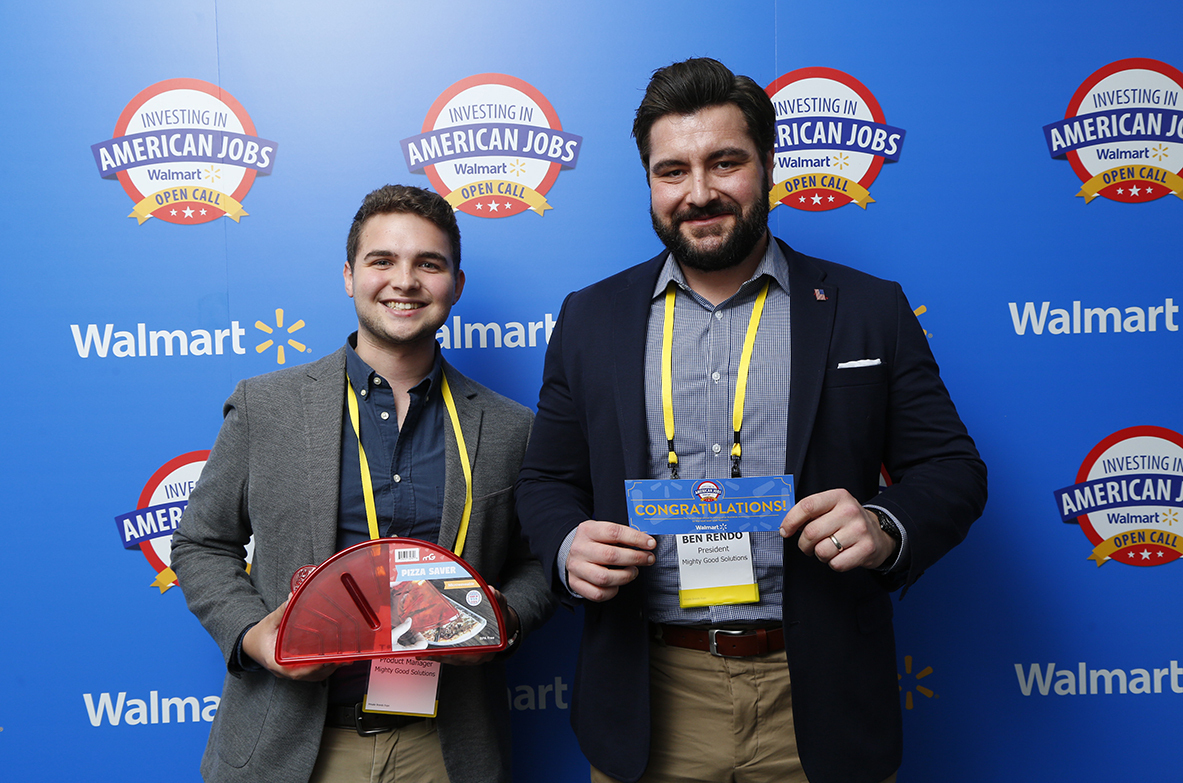
Taylor Jay, product manager, and Ben Rendo, president, Mighty Good Solutions
That’s when Mighty Good successfully pitched its Mighty Handle product, which continues to be carried by the retailer today. Rendo and co-founder Anita Newton, who also serves as chief innovation officer at CommunityAmerica Credit Union, have presented product concepts each year since.
Open Call is part of Walmart’s initiative to purchase an additional $250 billion by 2023 in products made, sourced or grown in the U.S. Mighty Good’s inventions are manufactured in Knoxville, Tennessee, Rendo said.
An estimated 1 million new U.S. jobs are expected to be created through the effort, according to Walmart, noting $7.3 billion spent with Missouri suppliers in 2017, supporting more than 59,953 local jobs.
The process begins with companies like Mighty Good visiting an online portal to upload product photos, descriptions, pricing and demographics, Rendo said.
“If there’s some potential interest, they’ll let you know you’ve been accepted to present, and then it’s just buyer meetings all day,” he said.
About 450 companies participated in last week’s annual Open Call event, Walmart said.
“You have 30 minutes with a buyer for your category,” Rendo said. “That’s kind of your chance to shine — to tell them why your product would be a good fit for Walmart, why they should sell it, and why it would benefit their customers.”
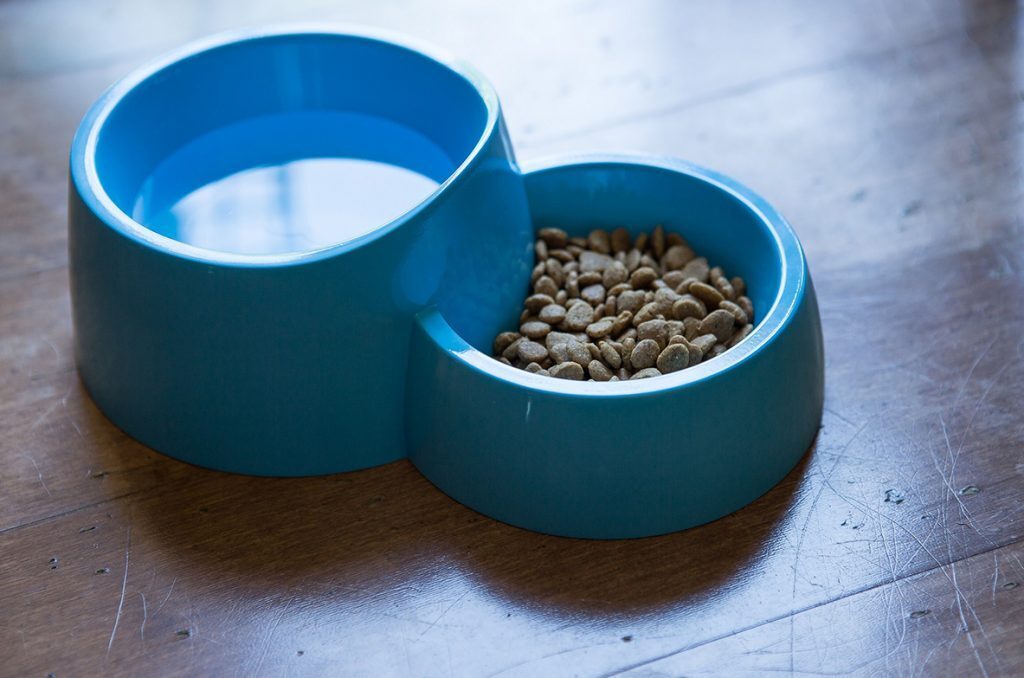
Less Mess from Mighty Good Solutions
In the product pipeline
Mighty Good planned to pitch another product at last week’s event: a cat waterer called the Less Mess.
Unfortunately, Rendo noted, the presentation was scheduled with a dog feeding and watering buyer, rather than the appropriate buyer for feline products.
The company expects to reschedule the pitch for later this summer, he said.
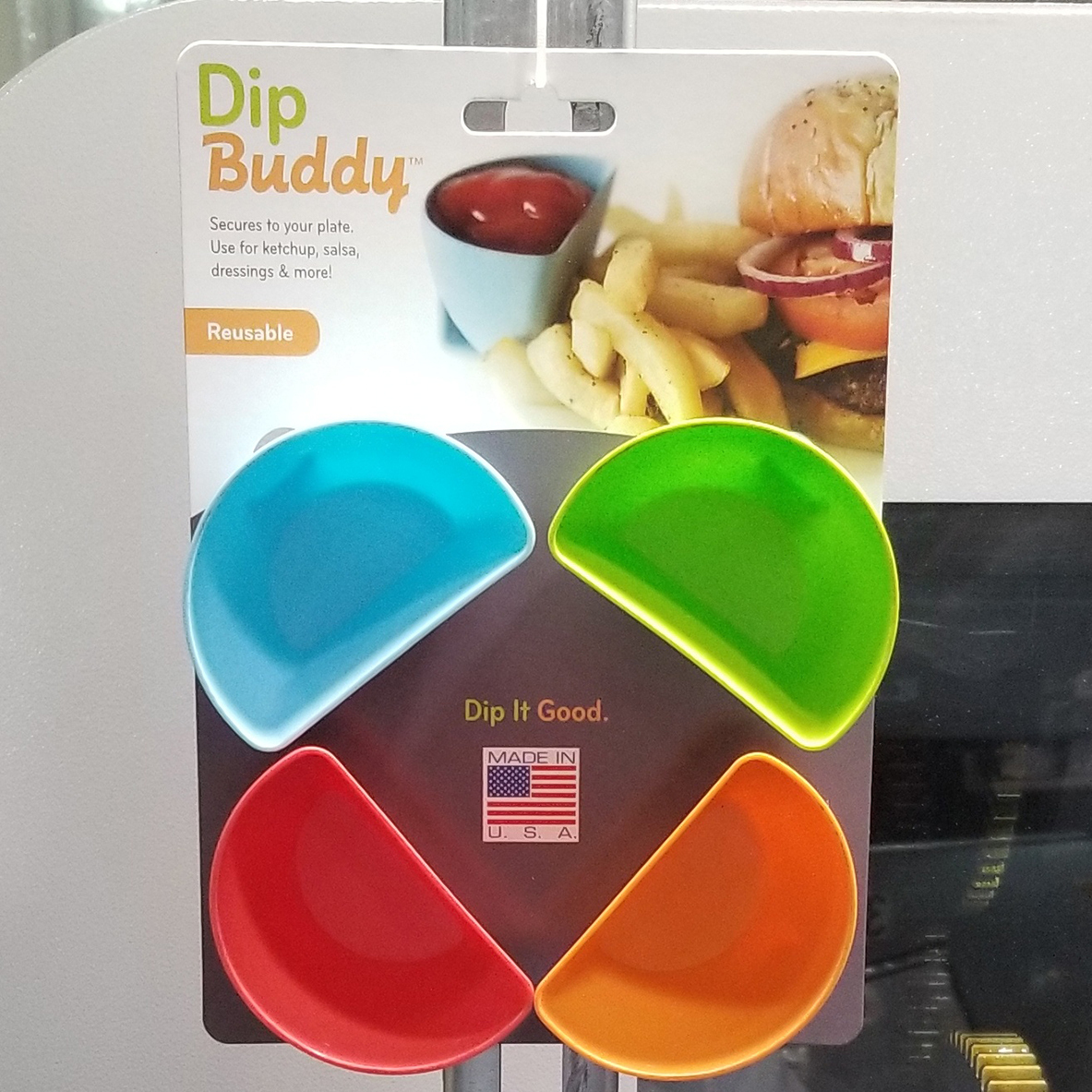
Dip Buddy from Mighty Good Solutions
Another successful Mighty Good product, the Dip Buddy — pitched at a previous Open Call — is set to debut in 3,400 stores in the first week of September, Rendo said.
Priced at $2.48, the product — a snap-on cup — prevents dipping sauces and condiments from spreading all over a plate while a person eats, for example, buffalo wings, he said.
Such simplicity and functionality are the keys to Mighty Good’s traction so far, Rendo said, also noting the team’s ability to keep a pipeline of 10 to 20 ideas floating at all times.
“It’s a numbers game. For every 10 we pitch, we might get one in,” he said. “So we constantly have to be innovative.”
Rendo is grateful to Walmart, which was the first chain to launch Mighty Good’s wares, he said.
“They’ve given us incredible opportunity and allowed us to take it from one product that my wife and I packaged entirely by hand to now, when we feel like we’re finally a real company,” Rendo said.

Featured Business

2018 Startups to Watch
stats here
Related Posts on Startland News

WonderWe launches faith-based crowdfunding platform
Kansas City-based software startup WonderWe hopes to tap a specific market for its new faith-based crowdfunding platform. Launched in early June, WonderWe combines faith-based values, the latest in crowdfunding tech and new proprietary features to “be one of the leading names” in crowdfunding, said Dominic Ismert, founder of WonderWe. The platform currently accepts fundraisers for…

The Lean Lab will award $100K to education entrepreneurs
Local efforts to inject innovation into education received a boost Friday as The Lean Lab announced fellows in its incubator program will earn seed capital for their projects aimed at disrupting traditional learning. Founded in 2013, The Lean Lab welcomed five new teams of fellows from around the nation for its incubator, which develops…

‘Kansas City Startup House’ aims to be smart home incubator
A local tech founder is transforming his Kansas City, Kan., home to eventually become the area’s next incubator program. Sports Photos founder Brandon Schatz recently launched the “Kansas City Startup Home” to host entrepreneurs and innovators from around the world. While it’s now serving as an Airbnb destination for techies, Schatz said in the next…

Kauffman Foundation analyzes Kansas City’s startup growth
What does startup community success look like? Often one hears buzzwords like “vibrant,” “supportive” and “close-knit” — standards by which nearly any community can label itself successful. But since it’s nearly impossible to objectively measure those terms, a startup community’s success is instead frequently evaluated through funding and exits. That ignores the fact that most…