

KC Tech Specs report: Net gain of 11,000 workers for KC, but 3,000 jobs remain unfilled
May 16, 2018 | Tommy Felts
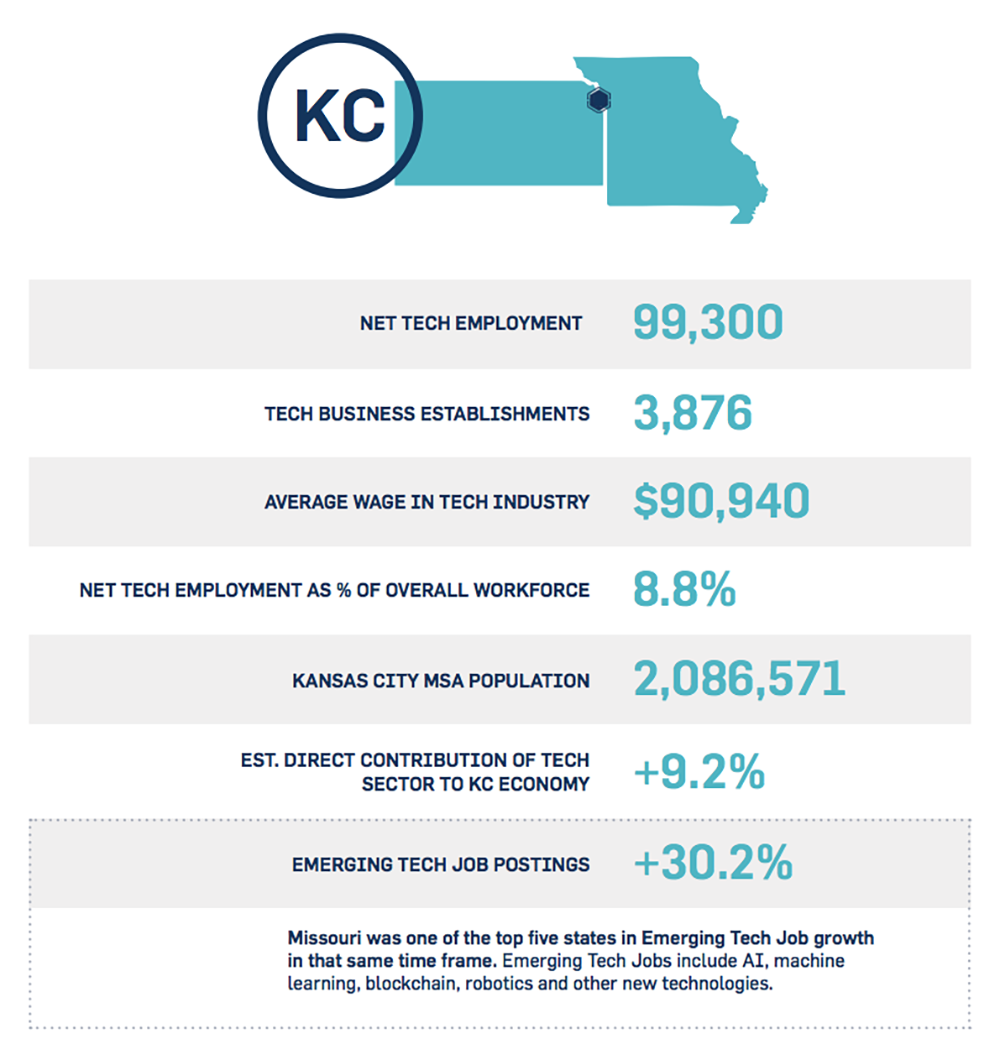
Kansas City’s brain gain grew at three times the rate of Chicago in 2017, according to a new report from the KC Tech Council.
Isolated to tech jobs, the city’s pool of workers swelled by 11,000, the KC Tech Specs 2018 report said, though a shortage of skilled professionals remains.
“The Kansas City tech industry is growing faster than all other industries in KC,” according to the report. “Its momentum is greater than most competing cities’ tech industries. We’re outpacing the national average for tech industry growth, and we are beating out cities like ours by attracting in-demand, skilled talent.”
“But, with more than 3,000 unfilled jobs, we need to find ways to fuel even more growth,” it continued. “The Kansas City regional economy depends on the tech industry more than the state economies of either Kansas or Missouri, with the tech sector contributing almost twice as much to our bi-state, regional economy than it does to the overall economy of the state of Kansas, for example.
KC Tech Specs 2018 report
Focusing on the current state of the metro’s tech community, the report shows a path forward for Kansas City by balancing successes with the opportunity to overcome challenges in such areas as wage and skilled labor gaps, as well as cultivating under-represented segments of the workforce, said Ryan Weber, KC Tech Council president.
“Kansas City’s momentum is driving the growth of our tech industry,” Weber said. “What this all comes down to is how do we as a city and a region position ourselves to attract, retain and grow a robust tech workforce. ”
Paying less than the national average — anywhere between 4 percent and 13 percent below it, in fact — doesn’t help, the report said.

Weber
“It’s imperative that we recognize we’re competing for this talent on a national level — and compensate them appropriately,” the report said. “Paying in-demand, skilled workers at rates closer to the national average will enable us to pull from bigger markets and retain our local talent.”
Kansas City continues to be ranked No. 2 as a best city for women in tech — in part because the wage gap between the sexes in the metro flips the script on the nation conversation about pay. (Female tech workers, on average, are paid more than their male counterparts in KC, according to numerous reports.)
But what could move KC to No. 1 in such rankings?
Improving growth of female representation in seniority positions within the tech scene across the city, the report answers.
“Women in leadership is particularly helpful, with revenues rising along with female leaders to the tune of almost 4 percent,” the report said. “Troublingly, the tech industry has the lowest rate of female board membership of the industries surveyed. Kansas City suffers from the same problem. In fact, if you divide tech jobs in Kansas City by seniority, as the level rises, the number of women in those jobs declines. In contrast, the number of job openings rises with seniority. In short, we need more women at the top, but our pool actually decreases.”
The KC Tech Council partnered with leading Kansas City marketing firm VML to produce the KC Tech Specs 2018, which was released Tuesday.
“To flourish in the future, we can’t rest now. Kansas City is a town built on twin values: vision and function,” the report said. “As a city, we’ve traditionally leveraged the most advanced tech of the day, whether it was the steamer or the railroad, and our position at the crossroads of the country to prosper as a community. That industrious spirit is alive in Kansas City today. By embracing our tech industry in the following three key ways, we can position our city as a hub of innovation for years to come.”
KC Tech Specs 2018 report

Featured Business

2018 Startups to Watch
stats here
Related Posts on Startland News

FitBark GPS launches with embedded sim card for tracking lost pups via cell service
FitBark’s latest treat for pet lovers: A four-legged friend finder. FitBark GPS recently launched in the Kansas City-based startup’s U.S. market, said Davide Rossi, co-founder and CEO, detailing new features that allow owners to pinpoint their dogs’ locations in case of emergency via embedded Verizon cell service. “We send all of the owners an alert…

Two tech founders identified a coding talent gap; they launched WeCodeKC to help fill it
A future-ready workforce depends on students mastering as many technology, cybersecurity, and computer science skills as possible, said Tammy Buckner. The founder at CTO of Techquity Digital, Buckner joined forces this fall with Dr. Phillip Hickman, author and founder of PlaBook, to launch WeCodeKC — a no-cost, year-round program built to promote computer skills through…

OHUB is sending five startups to SXSW, each infused with $50K; Meet the seven KC finalists
Iron sharpens iron, said Rodney Sampson, announcing 12 finalists — seven from Kansas City — for $250,000 in investments and a coveted demo day stage at SXSW in March. Each startup is rich with founders who have invested the time and energy to earn a payout from the ecosystem, said Sampson, founder of the Opportunity…

Show Me Capital: 6 key goals can help fill funding gaps for early-stage Missouri companies
Missouri is leaving millions of dollars on the table that could fuel early-stage startups, which create nearly 80 percent of net new jobs in the state. A new report from MOSourceLink, a program of the UMKC Innovation Center, reveals Missouri is lacking in alternative loans, access to resources, early-stage capital and locally activated venture capital.…