

Merit-based economy is an illusion ripe for AI disruption, talent coop founder says
April 20, 2018 | Elyssa Bezner

Organizing Midwest talent to use artificial intelligence and machine learning to combat societal challenges like income inequality could be a powerful tool for a new generation of problem solvers, said Brian Curry.

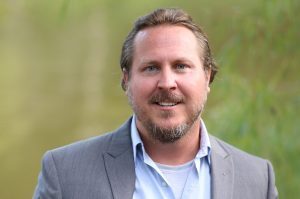
Brian Curry
“I truly believe in the possibility of artificial intelligence for changing the way we look at jobs, income, capitalism, poverty, wealth disparity, disease and many other things that we face in modern society,” said Curry, founder of the Kansas City AI Lab (KCAIL).
The talent cooperative, which has grown to include more than 900 industry professionals since its conception in 2016, most recently partnered with Kansas State University to conduct research using machine learning for drug discovery effort and has several other partners in the pipeline for further into 2018, he said.
“We have an estimated $3 million worth of talent in our group already,” Curry said.
The building stages
While experimenting with machine learning in 2015 to solve marketing and advanced analytics questions, Curry quickly realized its potential, along with artificial intelligence, as a solution for real world issues, he said.
He first organized a small meetup group, which grew into the idea for a cooperative that could more effectively use the passion and talent of its members.
“As I thought about ways to possibly disrupt what I view as an antiquated higher education system and broken business funding model, I came upon the idea of reverse engineering the entire education and business startup process,” said Curry.
Coordinating the expanding group and funding the concept have been the biggest challenges so far, he said, but Kansas City has lent its significant talent base, it’s low cost of doing business, and supportive community.
Revolutionizing the human experience
Curry hopes the group will work on bigger issues as it further develops to better realize the full potential of artificial intelligence and machine learning, he said. The cooperative’s focus will shine a spotlight on age-old problems like poverty, humans as labor, and particularly wealth disparity, Curry said.
Closing the gap between poverty and riches is a particular passion project for Curry, he said, noting most of the world’s wealth is concentrated with small percentages of people, many of whom are inheritors, overpaid founders and executives.
“From my perspective, this is a broken and inefficient system that is ripe for AI disruption,” Curry said. “The illusion of a meritocracy in that kind of system has the potential to be disrupted using machine learning and AI to determine systemic inefficiencies in capital and income flows using value-added modeling and other tools.”
KCAIL’s plan for the future also includes building the skills of its members, solving problems for their partners, and giving back to Kansas City.
“We hope to find partners who want to help us continue our mission and expand our footprint while also building up the Midwest as an AI and ML hub,” said Curry.

Featured Business

2018 Startups to Watch
stats here
Related Posts on Startland News

Target Hill Capital defusing risk on startups between friends and family, seed funding stages
An opportunity to deliver exponential impact in a community committed to entrepreneurship has resulted in the launch of Target Hill Capital –– an outside-the-box venture capital fund, Marshall Dougherty said. “When we were involved [with previous startups], we compared notes and surveyed the startup ecosystem in Kansas City,” Dougherty said of the events that led…
Lenexa-based Aloe soothes health insurance enrollment pains with human touch
A patient’s “wow” moment shouldn’t be when he or she opens a medical bill and discovers procedures that unexpectedly aren’t covered by insurance, said Andrew Belt, co-founder of Aloe. “People are frustrated — frustrated because they don’t understand how their coverage works or what’s included, and it doesn’t seem like anyone they talk to understands,”…

LendingStandard plans innovation upgrade with $2.5M investment from Flyover Capital
An investment in innovation has landed Kansas City-based LendingStandard $2.5 million in investment funds following the close of a Series A funding round led by Flyover Capital, CEO Andy Kallenbach said. “These are folks that are well-known in Kansas City and have had software businesses in the past, and that’s a really rare combination,” Kallenbach…

Don’t just play the game: MECA Challenge urges students to innovate ‘school of the future’
Challenging Kansas City students to envision “the school of the future” will usher in a paradigm shift wherein teens can see themselves as customers of school, said Katie Kimbrell optimistically. “[Students] don’t even think, ‘Oh, I could rethink this whole thing that I’m experiencing,’ and choose — or even demand — something different,” said Kimbrell,…