

1 Million Cups credits its six-year run to the strength of its volunteers, entrepreneurs
April 27, 2018 | Startland News Staff
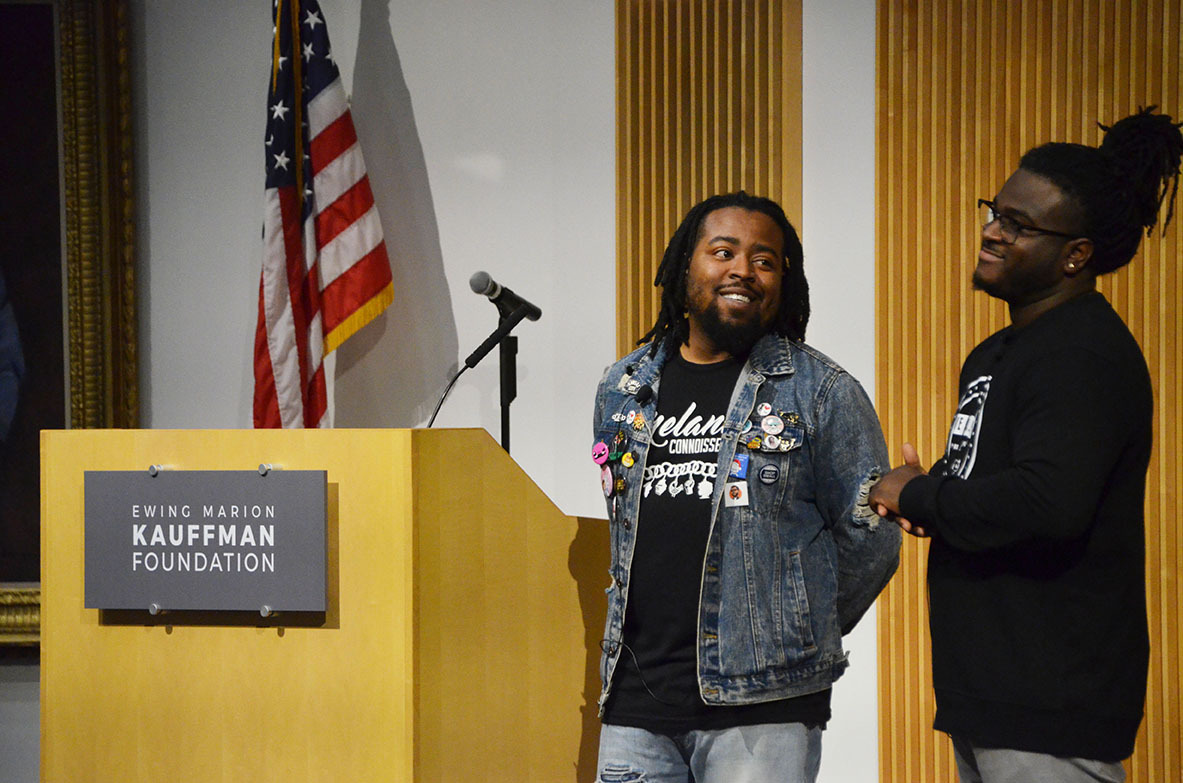
After six years, the connectivity at 1 Million Cups remains as strong as the coffee, organizers said.
The Kansas City-born event series is celebrating the anniversary of its first pour 9 a.m. May 2 with the program’s trademark brew — two startups delivering 10-minute pitches to an audience with the intent to educate, engage and network — all over cups of coffee.
“It’s hard to say whether we’ve actually served 1 million cups of coffee yet, but it has to be pretty close,” said Matt Fischer, director of new entrepreneurial learning at the Ewing Marion Kauffman Foundation, which established the program in 2012. “Since 1MC’s inception, the program has continued growing, year over year. New 1MC applications roll in every week, largely from cities and towns that are ’next door’ to existing communities. That’s a testament to the value that 1MC creates for entrepreneurs and local ecosystems.”
1 Million Cups has now spread to more than 185 cities nationwide, according to the program, which announced in September an ambitious goal to grow to 500 communities by the end of 2018.
Individuals apply to bring the pitch program to their cities and then volunteer to host and organize local entrepreneur presentations, the Kauffman Foundation said in a press release.
“The expansion of 1 Million Cups can be attributed to more than 900 volunteers around the nation working to build entrepreneurial ecosystems in their communities,” Kauffman said. “These volunteer organizers have already coordinated more than 1,365 entrepreneur presentations in 2018.”

Ben Schultz
One such presenter, Ben Schultz, CEO of LaborChart, said appearing on 1 Million Cup’s stage was an important catalyst for his business, which offers a resource management platform for the construction industry.
“After that presentation, I was connected with Hunter Browning, who is now the co-founder and CTO of LaborChart. Together, we’ve grown the business and are helping contractors become more efficient with their labor,” he said. “We’re fortunate to have some of the biggest names in the industry now on our platform.”
That impact is possible because 1 Million Cups is a program run by entrepreneurs for entrepreneurs, said Courtney Windholz, a Kansas City organizer for the program.
“As entrepreneurs, we understand the unique challenges that come with the territory of starting a business, and are here to support one another in any way possible,” she said.

Featured Business

2018 Startups to Watch
stats here
Related Posts on Startland News
Students struck by KC gun violence search for solutions at MECA Challenge
Editor’s note: MECA Challenge and Startland News are both programs of the Kansas City Startup Foundation, though the content below was produced independently by Startland. For more information on the relationship, click here. Escaping the cycle of gun violence can seem impossible, said Lea Thompson, still wearing a cast on her hand after being shot…
STEAM Studio team coding best fit for boy’s 3-D-printed prosthetic arm
Four-year-old Hudson Borton extended his arm Wednesday, as his father fitted a 3-D-printed prosthetic to the boy’s upper arm and elbow. The light blue plastic piece mimicked the size and length of Hudson’s right arm, though his father and Mandi Sonnenberg, co-founder and director of STEAM Studio, agreed the new device wasn’t yet a perfect…
KC-based SouveNEAR vending machine startup prepping to scale up
SouveNEAR offers travelers a piece of KC — from KC, said co-founder Tiffany King. The Kansas City-based startup, which repurposes vending machines to sell locally made souvenirs, is in its fourth year of steady, organic growth, King said. As a member of ScaleUP! KC new class, SouveNEAR is preparing to grow the business and turn…
Google, Techstars partner to lower barriers for March 23-25 Startup Weekend
A new partnership with Google will allow Techstars to present this month’s Startup Weekend free of charge to Kansas City participants, said John Coler. “It opens up the opportunity to reduce the barrier for entry for those who either would not usually use their discretionary income or (do not) have the ability to pay for…