

TechAccel, UC Davis lab developing wheat seed to combat climate change
March 12, 2018 | Leah Wankum
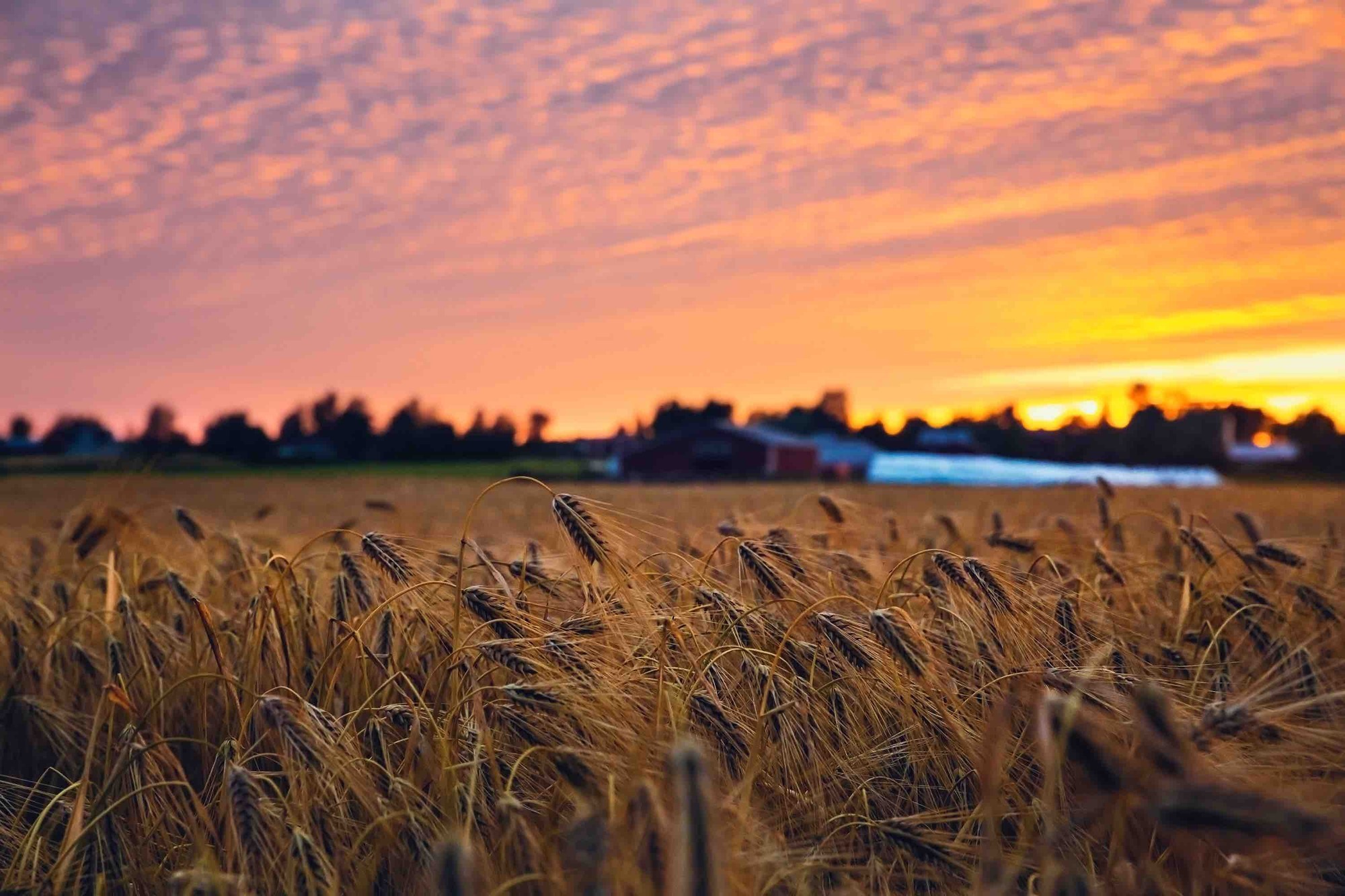
A Kansas City-based tech and venture development firm hopes to engineer wheat seeds that produce higher yield by withstanding warmer temperatures.
“We’re taking a concept that is pretty important for wheat worldwide,” said Brad Fabbri, Chief Science Officer of TechAccel.
Increasing temperatures make growing wheat more difficult across the globe, studies show. Reports indicate climate change is already slowing wheat yield gains; for each degree Celsius of temperature increase, global wheat production is estimated to fall by 6 percent.
TechAccel LLC recently initiated a protein engineering research project with The Siegel Lab in the Genome Center of the University of California, Davis.
Researchers at UC Davis’ Siegel Lab have cloned a native wheat enzyme in several varieties of wheat, Fabbri said. Researchers next will conduct a series of lab experiments, or “enzyme kinetics,” to validate the enzyme’s activity and determine its sensitivity to heat.
The objective is to find a small handful of mutations that could be injected into that enzyme to give it heat stability and then validate it through in vitro studies, Fabbri added.

Brad Fabbri, TechAccel
“Essentially, the main goal is to come up with a ‘recipe’ that you could then go in and use something like a CRISPR-Cas or some other gene editing technique to make a non-GMO (genetically modified organism) wheat that actually has that recipe put into its genome,” Fabbri said.
If successful, the developed enzyme would be able to withstand temperatures up to 10 degrees Celsius above the ideal range, according to a press release.
“We are excited to bring the cutting-edge technologies of computational protein design and synthetic biology to tackle this important problem,” said Justin Siegel, UC-Davis assistant professor of chemistry, biochemistry and molecular medicine, in a press release. “The unique combination of technologies and discoveries brought together in this endeavor by TechAccel and UC Davis has the potential to build wheat varietals that we need in a world with an ever-changing climate.”
The Siegel Lab’s advanced enzyme design and engineering capabilities make it the “perfect partner for this important research,” Fabbri said. “If we are successful in demonstrating the enzyme’s effectiveness, the next step will be to employ gene editing to produce a non-GMO wheat with significantly improved yield.”
Harold Trick, a bioscience professor at Kansas State University, hypothesized one of the molecular reasons behind a decreasing wheat yield, which turned out to be an enzyme that loses activity when the temperature even slightly increases, Fabbri said.
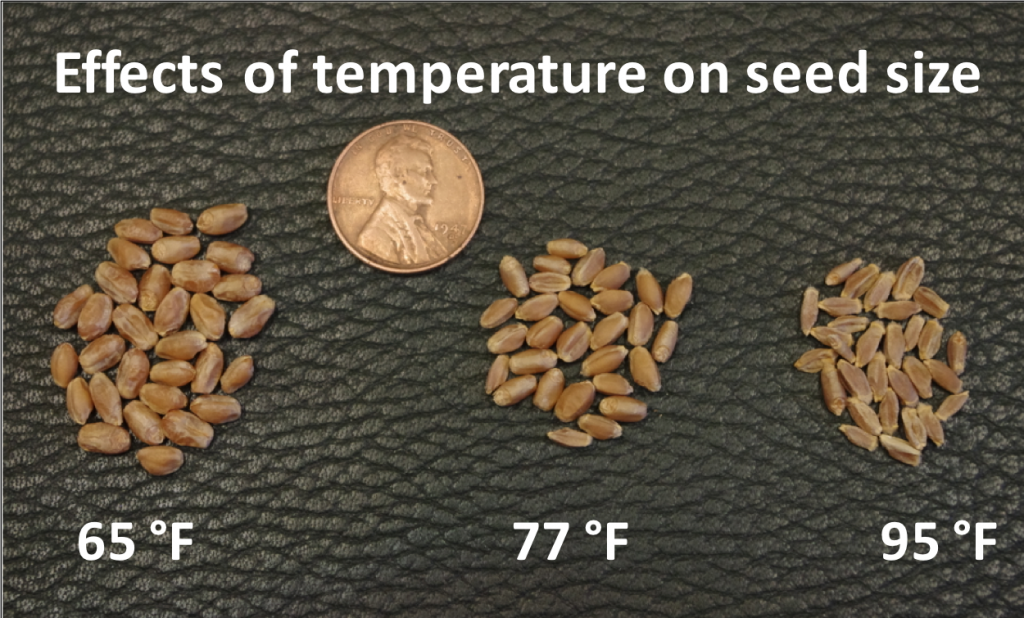
The effect of increasing temperature on wheat seed size. Photo courtesy of Harold Trick, Kansas State University
“He had demonstrated that you could put in a transgenic, a heat stable version, of this enzyme and showed that it overcame the yield loss,” Fabbri said of Trick’s work, which led to the project between Fabbri and UC Davis.
TechAccel is leveraging innovation at a couple of major land grant universities such as Kansas State University — where the wheat knowledge and expertise lies — and at UC Davis, where the firm can access world-class protein engineering, Fabbri said.
The firm builds relationships with universities, both to access capabilities like protein engineering, and to look for innovations within the universities that the firm can then fund and try to move toward commercialization, he added.
“This wheat project is an example of that,” Fabbri said.
The final product won’t be on shelves overnight; Fabbri hopes the first bag of seed would be available for purchase in six to eight years, he said. In fact, it may take three to five years to ultimately get the product in the hands of a wheat seed company.
“It’ll take us a handful of years after that, given that we’re talking about a plant and that you ultimately need to grow it and produce seed and then produce even more,” Fabbri said. “It takes a little bit of time just to even do the manufacturing because you’re somewhat at the mercy of the seasons.
“It’s not [like] something else that you manufacture, that you can just put things in the tank and hope for the best. Ultimately, you need to put things into the field and wait for it to grow and harvest.”
There is also a “difficult and long path” to go through regulations, he added.
“There’s some public debate of whether or not they would want a transgenic wheat,” he said.

Featured Business

2018 Startups to Watch
stats here
Related Posts on Startland News
InnovateKC: City pivots to startup-in-residence program to leverage local tech ingenuity
A new administration equals a new spin on established ideas, Nia Richardson explained, previewing the launch of Kansas City’s InnovateKC program. “I literally had a 45-minute conversation with [former city innovation officer] Bob Bennett before he walked out the door. He sent me an email with some notes and I had to pick it up…

KC-tested GoGetter uses AI to bring back human interaction in hiring talent (minus the middleman)
As a software contractor at Cerner for two years, Naga Rayapati saw more than 40 percent of his paycheck go into the pockets of middlemen, he said. “While the contractor puts in their heart and soul working for the company, these ‘preferred vendors’ reap the benefits,” said Rayapati, referring to third parties in the hiring…
Startup Road Trip: Patent-packed PowerBox puts productivity at the press of a button
Startland’s Startup Road Trip series explores innovative and uncommon ideas finding success in rural America and Midwestern startup hubs outside the Kansas City metro. This series is possible thanks to the Ewing Marion Kauffman Foundation, which leads a collaborative, nationwide effort to identify and remove large and small barriers to new business creation. PITTSBURG, KANSAS…
Kauffman, ECJC: Stagnant US entrepreneurship is a diversity issue that throwing money at Big Business won’t fix
Women, people of color, and rural residents remain punished by systemic barriers to starting businesses, said Wendy Guillies in a nationwide call to action that unites powerful Kansas City entrepreneurism advocates. “America’s economy is out of balance. We’ve got businesses that have become too entrenched and powerful, while people and communities across America are being…