

KC Rising red flag: Educated talent leaving KC, metro tech jobs unfilled
March 7, 2018 | Leah Wankum
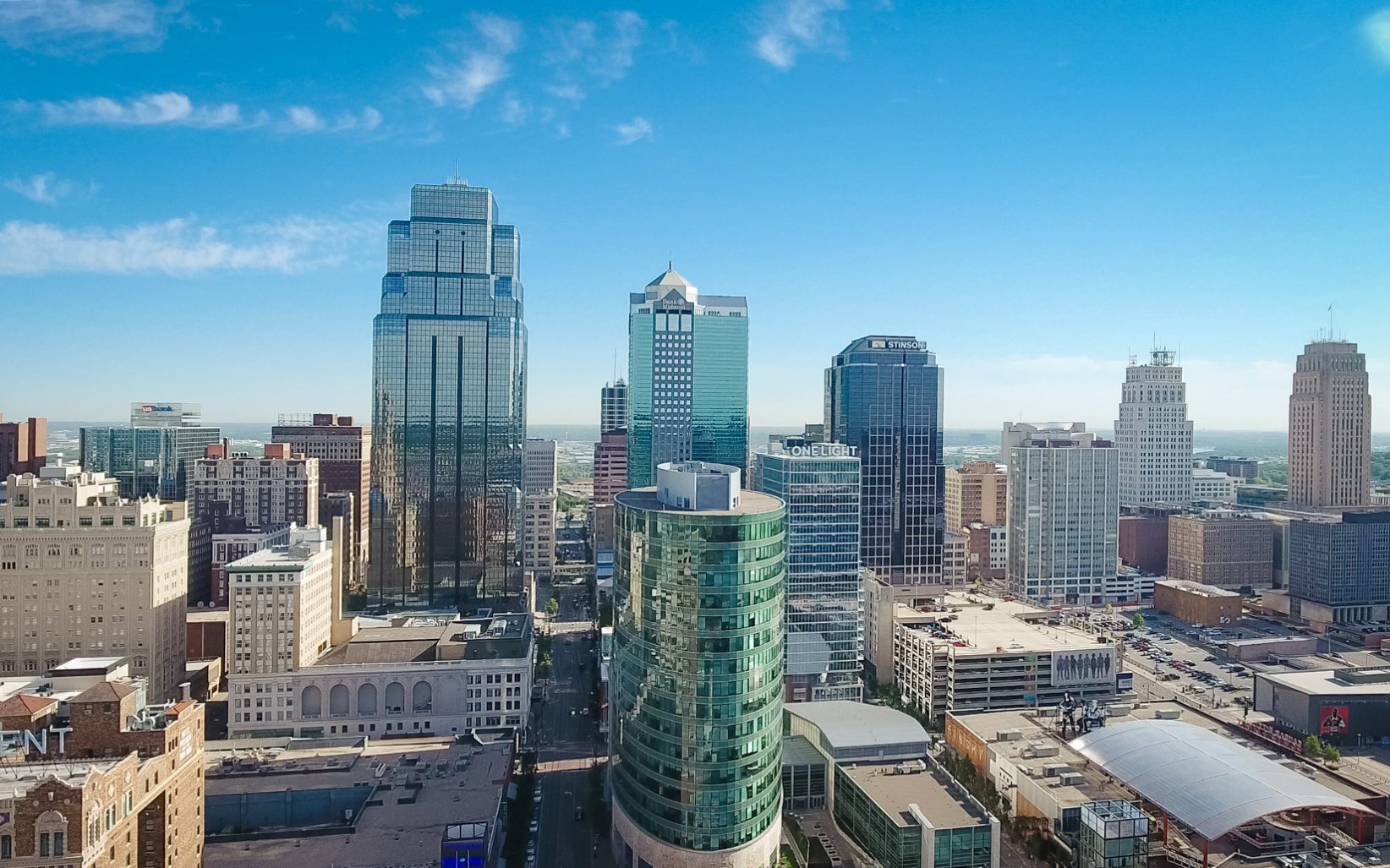
More college-educated workers are leaving Kansas City than being drawn to the region, according to a new KC Rising report. That means local companies are forced to look outward for qualified talent, said Ryan Weber.

Ryan Weber
“Most of those tech firms are hiring; it’s just for skill sets that few people have,” said Weber, president of the KC Tech Council. “And luckily, amongst all of our competition, nobody has a plethora of tech talent waiting to be hired, not even Silicon Valley. There’s no qualified candidates who are long-term unemployed.”
KC Rising released its annual update last week, noting metrics on attracting talent indicated Kansas City dropped from 14th rank in 2015 to 30th out of 31 peer cities in 2016.
When Weber sought feedback from members of the Facebook group Startup KC, asking why educated people are leaving the city, some said there were not enough places to work in the metro, he said.
“There are literally thousands of places to work,” Weber corrected. “In fact, just in the Kansas City metro, there are 3,700 technology employers.”
“[While we lack] the same qualified workforce as many other cities our size, we do not lack the number of potential employers,” Weber said. “That’s something that is a perceived thing, but is in no way, shape or form reality.”
Among those employers, Garmin CEO Clifton Pemble last week told a KC Tech Council crowd that recruiting can be a challenge.
“Finding people for any kind of tech job is really difficult,” Pemble told Startland. “And we focus on retention too, so we’re not just recruiting to replace people, but we’re recruiting to promote.”
Kansas City should continue to invest in itself to attract young, educated talent, Weber said. By doing so, the metro can stay competitive with other cities, he said.
“We’re competing with cities that have really been investing in transit, infrastructure, lifestyle, and we have too, but every time we try to move that needle forward, there is an underswell of influential people who try to push that needle back and I don’t get it,” Weber said. “But I think that’s what’s at least fueling that perception that Kansas City is a city that lacks future vision.”
Weber hopes residents soon realize the momentum building in the metro, he said.
“If you really want to think the grass is greener, the door’s always open. And clearly a lot of people in the last year walked through that door,” Weber said. “But we need to ask them why that happened and listen to the people who are leaving who we want to stay and figure out a solution to some of these things, and I bet in a number of examples, their perception was they were going to be more successful somewhere else than they were going to be in Kansas City. And that’s very unfortunate because that’s not true.”
Weber ultimately is happy to receive feedback from those who shared their perceptions of career opportunities in Kansas City; it at least shows they’re passionate, he said.
“Every major change in the world happens because young people get involved, and it makes me very excited to see that ground swell of people — young people specifically — who want to be a leaders,” Weber said. “They want to run for office. They want to roll up their sleeves and be involved in working groups and committees. That makes me incredibly happy.”
When Weber attended KC Rising’s event Feb. 28 — at which the jobs findings were unveiled — he noticed he was one of the youngest people in the room, he said.
“That has got to change,” Weber said. “The future of Kansas City rests in the hands of the people that were not in that room.”
Mitigating risk for investors
KC Rising’s update also showcased another area for improvement: investment efforts “to support early stage company growth.” Kansas City ranked 23rd among peer cities in Series “A” and angel investment and 24th in total equity capital.
The metro suffers from “at least a perceived shortage” of early stage investment, which could have contributed to KC Rising’s findings, said Dave Palmstein, managing director of Northland Angel Investor Network and managing partner with Birch Creek Partners.
Contrary to what others might believe, Palmstein has learned there is a misunderstanding between founders “that the investors around the area are too conservative to invest in very early stage” and some investors who believe “there are not enough qualified deals,” he said.
“What I have found — and I found this in Denver and I see it on the coasts as well — is that there is adequate capital and there are adequate deals, but there’s a mismatch between the two,” Palmstein said. “Investors are good risk managers; founders think that the investors are not risk takers. So there’s a misunderstanding between the founders and the investors as to what constitutes a good deal.
“I can tell you without any reservation: There’s adequate capital that is sitting on the sideline not being invested in, in part because the founders haven’t mitigated enough of the risk for the investors.”
The Northland Angel Investor Network works to alleviate the risk mismatch between investors and founders, he added.
“I would agree that there’s an inadequate amount of active capital, but we could do more to activate that capital,” Palmstein said.
A long-term strategy
The Feb. 28 update from KC Rising — a coalition of regional leaders from the business, civic, philanthropic, education and local government communities that launched in 2014 — seeks to help develop a shared vision for prosperity in the Kansas City metro, according to the organization.
Its mission is driven by progress toward three measurable outcomes: an increase in regional gross domestic product, quality jobs and median household income. Kansas City has a fairly average rank in each of those areas, John Murphy said in a press release. But through collaborative efforts, the region is “greater than we have ever seen,” he added.
“People like living here and are willing to work together to improve our economy,” said Murphy, KC Rising co-chair and partner and immediate past chair, Shook Hardy & Bacon LLP. “We know what we have to do to get better, and I promise we will get better. We are in the best possible position to look beyond the four walls of our companies and do even more to promote the region and all it has to offer to people’s lives and growth.”
The fourth year of the KC Rising effort works to bring the Kansas City metro into the top 10 among its 30 peer cities, Bill Gautreaux said in the release.
“KC Rising is a long-term strategy for our region focused on the economic drivers of trade, ideas and people,” said Gautreaux, KC Rising co-chair and managing partner at MLP Holdings LLC. “It will be several years before we see direct results on our metrics, but we are monitoring dozens of key indicators for where we should focus our energy.”
In its latest review of these metrics on the Kansas City area, KC Rising also found that the metro ranks seventh among peer cities for employment in engineering and architecture as well as eighth for employment in life sciences.

Featured Business

2018 Startups to Watch
stats here
Related Posts on Startland News

New in KC: Ops leader joins KCSourceLink to strengthen network’s collective impact for entrepreneurs
A newly created director of operations role at KCSourceLink is expected to boost efforts to connect entrepreneurs and small businesses with hundreds of resources for growing and scaling their ventures in Kansas City, as well as across the state through MOSourceLink. Dena Thomas Aouassou, a veteran of nonprofit entrepreneurship support and workforce training, recently relocated…
Cultura con carácter: How JEFES inks DINKC’s hometown team with drops of KC Latino hustle
Laedan “DINKC” Galicia draws a fine line between his creative mediums: skin, pen, fabric, and paint — now from a artists hub in Kansas City’s Columbus Park neighborhood. From his signature tattoo style to his JEFES clothing line, DINKC’s bold perspective is leaving a mark on Kansas City culture (and the Super Bowl). “With JEFES, I…
BKS Artisan Ales plans Crossroads nanobrewery, tapping additional location closer to KC’s hub of activity
BKS Artisan Ales — dubbed a “little beer heaven” by industry insiders — is bringing its award-winning operation to the Crossroads, adding a second, smaller brewery location near what founders Brian and Mary Rooney see as a downtown tourism market that also is easily accessible to some of their business’ biggest local fans. The space…

Pipeline doubles-down on diverse voices: Meet its new class of Pathfinder entrepreneurs
Programs built to support emerging founders who are primed to break through — despite entering entrepreneurship from a different starting point — have never been more needed, said Melissa Vincent, announcing the newest class of Pipeline Pathfinders. “In today’s climate, programs like Pathfinder are not just valuable — they’re essential,” said Vincent, CEO of Pipeline…