

CEO warning: Talent pipeline collapsing with fewer immigrants; tech training needed at home
March 21, 2018 | Tommy Felts

Editor’s note: The following story on challenges within KC’s talent pipeline is part of a three-part series on the potential for immigrant or foreign-born entrepreneurs to help reshape Kansas City’s startup ecosystem. Read more about how a Kansas senator’s Startup Act legislation could reduce barriers here. Check out a feature on an immigrant entrepreneur who found opportunity in the United States and helped take his firm to nearly 60 employees here.
Opportunities for immigrants have dwindled in the two decades since Neelima Parasker came to the United States, the SnapIT Solutions CEO said. And Kansas City already is seeing the result reflected in a talent pipeline rife with vacancies.
Simply put, fewer immigrants means reduced potential for companies to grow or even be created with the skills of foreign-born workers or entrepreneurs, she said. That’s a lose-lose scenario when local talent isn’t ready to fill the gap, Parasker said.
“The ultimate goal is to provide more jobs here by cutting down the workforce from outside [through tighter limits on immigration], but if you don’t train local workers, bring them the right opportunities or change the mindsets in the hiring process, then we’re not going to go anywhere,” she said.
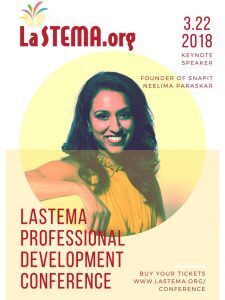
Parasker is set to be the keynote speaker at Thursday’s LaSTEMA Professional Development Conference at Kansas City Kansas Community College, where organizers hope to guide and connect more diverse girls and women toward education and careers in science, technology, engineering, math, and advertising.
Leaving India in 1998 to study computer science at Oklahoma City University, Parasker already had earned a bachelor’s degree in mechanical engineering, and intended on returning home to join her father’s company. Instead, she met her future husband and stayed in the U.S. — working in the corporate world for 15 years before founding Overland park-based SnapIT in 2015.
But the ability for her fellow immigrants to replicate that journey — including earning a green card and eventually citizenship — has grown more challenging since the dot-com bubble burst in the early 2000s, Parasker said. And with greater government regulations, fewer companies are willing to sponsor work visas for foreign-born talent, she added.
U.S. Sen. Jerry Moran first introduced a bipartisan Startup Act in 2011 — the most recent version of which would allow for 50,000 STEM visas and 75,000 entrepreneur visas — but the legislation has stalled in Congress annually amid ongoing fights over comprehensive immigration reform. (President Trump made the issue a key debate topic in the run-up to the 2016 presidential election, but political action on reform remains elusive.)
“Depending on talent from outside this country is not a sustainable future, not just because of what our current president has been working on, but also previous presidents,” Parasker said. “Opportunities were already going down tremendously.”
In addition, the U.S. is losing the market on attracting top talent thanks to tech advances that might allow skilled workers from across the world to achieve their dreams without having to leave their home countries, she said.
“We are moving extremely fast into becoming a globalized economy and work culture,” Parasker said. “Very soon — especially in the technology realm — it may not matter the location. A lot of people will work, contribute and make the same amount of money that they could get in this country.”
A 2017 report from KC Tech Council showed 4,699 tech jobs went unfilled at the end of 2016 because companies couldn’t access the right high-skilled workers. Speaking at a KC Tech Council event in late February, Garmin CEO Clifton Pemble noted that recruiting locally had become increasingly challenging even for the $11 billion GPS tech giant.
“Finding people for any kind of tech job is really difficult,” Pemble told Startland.
Understanding such realities drives Parasker’s warning that the U.S. must shift its focus from merely protecting domestic jobs from foreign workers to preparing locals for the rigorous requirements of the subsequently vacant positions, she said.
“Talent can be found even without a four-year degree, if you groom them well and they are hard-working enough,” Parasker said, noting her company, SnapIT, for example, recognizes it must train its employees in the information technology skills needed to be successful in the workforce, rather than depending on them to already have mastered the job.

Ali Tawakoli, a native of Afghanistan, LaunchCode graduate
Such is the motivation for programs like LaunchCode, which last week graduated about 60 students from its 20-week coding course. The nonprofit organized free classes twice a week for three hours, offering an affordable option for students — immigrants and U.S.-born alike — to develop key programming skills.
Ali Tawakoli, a native of Afghanistan speaking alongside his fellow LaunchCode graduates, described his experience coming to the U.S. less than a year ago. Armed with a bachelor’s degree in computer science from his home country, he wanted to become proficient in the field of coding and sought out opportunities to learn, he said.
“When I moved to the United States, I looked at lots of boot camps. They are expensive and most of them are outside of Kansas,” Tawakoli said. “It was my first year, so I had to struggle with living costs and finding a job. I couldn’t move to any other states to do this. And then I found LaunchCode.”
Parasker praises efforts to give every member of the workforce the tools to contribute, she said.
“We must figure out what we can do within our country to build talent here,” Parasker said. “If not, big companies in the United States will come tumbling down five years down the road when the talent is not filling the pipeline.”
Related stories:
• Immigrant entrepreneurs need path to US now, GOP senator behind Startup Act says
• Engineering KC: Global talent builds success for Taliaferro & Browne
• ICYMI: Freedom’s Carol Espinosa showcases path to creativity, opportunity

Featured Business

2018 Startups to Watch
stats here
Related Posts on Startland News

Inclusivity succeeds when founders are held accountable, says winner of Chamber’s equity award
Fahteema Parrish doesn’t mind putting forward extra work to make sure her employees feel included, she shared, embracing an environment that supports individuals of all backgrounds. “Parrish & Sons Construction is an example of what intentional execution of equitable work within an organization actually looks like. Equality and inclusivity are key focal points as my…

KC scores 2026 World Cup for Arrowhead; games expected to mean big business for region’s economy
Fans rallied in near-triple-digit heat Thursday in the heart of Kansas City as the region scored a longtime goal: earning a spot on the roster of 16 host cities for the coming 2026 FIFA World Cup. “To be named a host city for not only the biggest single sport event in history, but as part…

Tiki Taco’s iconic curly fry-filled burritos riding wave to Troost storefront near UMKC, Rockhurst
Originating as a gas station in the 1950s, the vacant but charming building at 5400 Troost Ave caught the attention of Lyndon and Lindsey Wade. The brothers realized it would be the perfect place to expand their California-inspired Mexican restaurant, Tiki Taco, Lyndon Wade said. “We love the feeling of something unique and standalone,” shared…

Artio closes $28M as it scales to save lives; latest funding brings Prairie Village startup’s investments to $74M
Another hefty funding round for Artio Medical is expected to launch the startup’s commercial sales team in the U.S. and continue development of its best-in-class product pipeline, said founder Nicholas Franano. Artio, a medical device company developing innovative products for the peripheral vascular, neurovascular, and cardiology markets, on Thursday announced the closing of $28 million…