

State of Entrepreneurship Address: Redefine ‘entrepreneur’ through inclusion
February 28, 2018 | Leah Wankum

Entrepreneurship rates are half of what they were a generation ago, and although the U.S. population is increasingly diverse, educated and older, the nation’s entrepreneurial population isn’t changing at the same pace, Wendy Guillies said.
Founders face too many barriers, said Guillies, president and chief executive officer of the Ewing Marion Kauffman Foundation, Wednesday morning during the ninth annual State of Entrepreneurship Address in Washington, D.C.
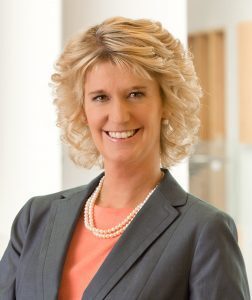
Wendy Guillies, Ewing Marion Kauffman Foundation
Whatever the barrier, Guillies and other speakers urged the startup community to support new businesses, redefine the word “entrepreneur” and, ultimately, work toward building a more inclusive economy.
“We start by advancing a new economic model, one that infuses entrepreneurship and the economy more broadly than ever,” she said. “It begins with creating entrepreneurial ecosystems — local cultures of entrepreneurship in communities across the country — and it can only succeed if we remove barriers in the way.”
For the past year, collective efforts at the Kauffman Foundation have been focused on achieving zero barriers for startups, Guillies added. Those efforts involve “actionable research” based on what entrepreneurs across the country say they need to succeed.
“This approach represents a collaborative, nationwide effort to identify large and small barriers to new business creation,” Guillies said. “It involves entrepreneurs, organizations that help entrepreneurs, researchers and policy makers, and it will develop solutions to empower more entrepreneurs to pursue their dreams.”
Some of those efforts include the Kauffman Foundation’s ecosystem-building playbook as well as a free version of the foundation’s FastTrac program, a program that equips aspiring entrepreneurs with the business skills, tools, insights and resources needed to start and grow successful firms, Guillies added.
Entrepreneurs are optimistic about their businesses, but they struggle with the technical steps of opening their businesses, such as obtaining business licenses and setting up benefits for their employees, Guillies said, citing the foundation’s study of more than 2,000 entrepreneurs across the nation.
“Entrepreneurs are not looking for an easy way out, but they do want the government to spend more time supporting business owners and to prioritize startups,” Guillies said of the survey results. “Most entrepreneurs would also rather see the government focus its efforts on creating a more business-friendly environment instead of on other programs like government grants and funding.”
Entrepreneurs start as ‘the little guy’
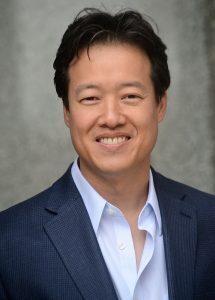
Victor Hwang, Ewing Marion Kauffman Foundation
The Kauffman Foundation learned that many people starting businesses don’t see themselves as entrepreneurs; that word is reserved for billionaires like Elon Musk and Mark Zuckerberg, said Victor Hwang, vice president of entrepreneurship at the Kauffman Foundation.
“The vast majority of entrepreneurs like Mr. Kauffman back in 1950 — those who are creating the new jobs in America — start small,” Hwang said. “They are addressing needs in local communities by pursuing passions, following dreams and creating their own destinies. They’re the little guys; those are the people we’re fighting to remove barriers for. Those are the people who deserve our best tools for entrepreneurship. Those are the people who are creating the new American dream.”
The Kauffman Foundation has four strategic pillars to remove those barriers, Hwang added. Those include addressing the needs of individual entrepreneurs; addressing the needs of entrepreneurial ecosystems and communities; increasing inclusion by closing gaps in the market; and, finally, using knowledge to translate ideas into action.
“We have to make a fundamental shift as a nation to enhancing ecosystems, which can locate and grow anywhere, in literally any neighborhood, any community and in any part of the country,” Hwang said. “That will make entrepreneurship accessible to every interested in American, which was Mr Kaufman’s dream. It’ll energize the American economy like never before.”
Mentorship, inclusivity vital
One such entrepreneur who is working to foster supportive communities and ensure that entrepreneurship is open to all, Hwang noted, is Janice Omadeke, founder and chief executive officer of The Mentor Method.
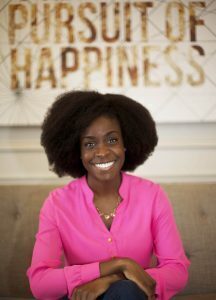
Janice Omadeke, The Mentor Method
Omadeke, the keynote speaker at the address, said many entrepreneurs have little to no access to mentors, yet those connections are key for entrepreneurs to succeed. That’s where The Mentor Method, a D.C.-based social enterprise that uses mentorship to make workplaces more inclusive, comes into play.
“I believe that this type of mentorship and development will create a tidal wave of change and innovation, and I’m thrilled to be a part of it,” Omadeke said.
As a first-generation American, Omadeke is a young, black woman with a background in graphic design. Because of her diverse background, she said she was often treated as a token working for various Fortune 500 companies that simply wanted to check off the diversity hiring box.
“Identifying that pain point, understanding it and seeing the market and knowing that I was capable of creating something better — that’s really how The Mentor Method came to be,” she said.
Studies show that lack of access to capital is one of the biggest challenges for minority entrepreneurs, Omadeke said, but another, more obscure, problem is a lack of community. Because of that, she challenged listeners and viewers of the address to “become the community for minority founders.”
“If you identify with the founder, their mission, their business model, get in their corner, advocate for them, share your network of experts and advisers and potential customers,” Omadeke said. “I think sometimes it’s very easy to say, ‘OK, well, you’re too early, so let me wait, see your traction, and then I’ll come back next year when you’ve actually made something.’ I think that’s absolutely ridiculous, going off script. Instead of waiting, coach and develop us to get us ready. I think that is mission-critical and something that all of us are capable of doing, starting today.”
Ultimately, Omadeke wanted to encourage listeners to commit to helping her and the Kauffman Foundation realize a more inclusive entrepreneurship environment.
“When it comes to innovation, you can’t just settle for checking boxes,” Omadeke said. “You really need to step up and be a part of the movement.”

Featured Business

2018 Startups to Watch
stats here
Related Posts on Startland News

Biz class to barista: UMKC student’s mobile matcha cart hand-whisks crowds of thirsty fans
Editor’s note: The following story was published by KCUR, Kansas City’s NPR member station, and a fellow member of the KC Media Collective. Click here to read the original story or here to sign up for KCUR’s email newsletter. HerCafe, a matcha business founded by a University of Missouri-Kansas City student and her friend, has found success with its weekend…
Tim Tebow to entrepreneurs: Embrace the heavy lift if you want to reap life’s real profits
COLUMBIA, Mo. — Business should be about driving impact, not just scoring another win, said former NFL quarterback Tim Tebow — challenging Midwest entrepreneurs, community builders, and investors to consider outcomes that boost others, not just one’s personal pocketbook. “Probably everybody in this room has been super blessed with skill sets, resources, relationships, opportunities, companies,…

Here’s how a Prospect renewal project invests in both those who built KC and the city’s future
Economic development initiatives are measured not just in buildings, but in opportunity, said Melissa Patterson Hazley, lauding the use of the Central City Economic Development (CCED) Sales Tax Program to transform underutilized parcels in Kansas City into modern, energy-efficient housing that support long-term neighborhood vitality. “Projects like Prospect Summit represent the intentional work of making…

Fusing talent, passion: Serial founder trades his Screamin Cow for offshore talent hiring platform
Brad Starnes’ itch to lean into a newly realized pain point at the end of 2024 led to the acquisition of his Screamin Cow Marketing Group and the launch of another passion project, the former UMKC Student Entrepreneur of the Year shared. With the move — which sees Screamin Cow transitioned to Builders of Authority…