

Techstars’ Lesa Mitchell: Non-sexy sectors are ripe for disruption
February 19, 2018 | Lesa Mitchell
Editor’s note: The opinions expressed in this commentary are the author’s alone.
In the process of looking for a new crop of companies to invest in on behalf of Techstars Kansas City, I thought I should highlight the type of companies I think are undervalued and critical to our economy. In 2017 we invested in Ampogee. The founders of Ampogee realized they had uncovered a solution that could help the manufacturing industry as a whole optimize their workforce and increase productivity by a minimum of 20 percent.

Ampogee co-founders: Brian Lopatka, Jonathan Woahn
My first question was of course, according to my friends at MIT, all manufacturing facilities will soon be full of robots, not people, so how can this be relevant? The founders quickly helped me understand that most manufacturing companies or companies with manufacturing facilities do not have granular data on productivity and therefore understanding what can actually be automated would be extremely difficult due to the lack of data.
As Tim O’Reilly has referred to in his new book, “WTF” (Why the Future, and What’s Up to Us), machines will in most cases be extensions of humans, not necessarily a replacement for humans. In a similar way we have no complete provenance data on machine parts, nor any supply chain transparency on the steak I am eating for dinner. We are making massive assumptions about many things with a lack of granular data that can inform logistics, supply and in this case employee engagement and productivity. All of this might be considered super boring (not sexy), which has actually increased my interest.
A significant number of manufacturing facilities fall into the category of 100 to 500 employees. In 2015, there were 251,774 firms in the manufacturing sector in the United States, with all but 3,813 firms considered to be small (i.e., having fewer than 500 employees). These firms have little to no technology in place to measure productivity, let alone engage employees to boost productivity and retention.
According to Kylene Zenk with the Manufacturing Business Technology, “in 2016 alone, manufacturers contributed $2.18 trillion to the U.S. economy. In fact, for every dollar spent in manufacturing another $1.81 is added to the economy, which is the single largest multiplier in any industry.” This “boring” problem is a huge economic opportunity.
Robert Lawrence of the Kenny School at Harvard further explains that “while some blame measurement errors for the recently recorded slowdown in manufacturing productivity growth, spending patterns in the United States and elsewhere suggest that the productivity slowdown is real and that thus far fears about robots and other technological advances in manufacturing displacing large numbers of jobs appear misplaced.” But, manufacturers in the United States currently put only 10 percent of their capital spending into tech equipment and software, according to data from the Bureau of Economic Analysis. Sounds like a market opportunity.
Michael Mandel, chief economic strategist of the Progressive Policy Institute has stated that “we’re about to find out that innovation in domestic manufacturing isn’t a job destroyer at all—it’s a job creator.” According to the National Association of Manufacturers over the next decade, nearly 3.5 million manufacturing jobs will be needed. This is occuring in parallel with a recognized massive skills gap and shortage of available employees to work in manufacturing firms. Attracting and retaining employees in the manufacturing sector has to become a national priority.
All the above leads me to believe that in this industry segment, productivity is about more than autonomous cars and robots. There are few technology solutions focused on employee engagement and productivity, and Ampogee has proven success with their customers that today include across industries (Sandvik, Michelin, Thermo Fisher, Commscope etc). The time has come to embrace technology in the manufacturing industry and I am feeling pretty confident about the role that Ampogee will play in the future of this industry.
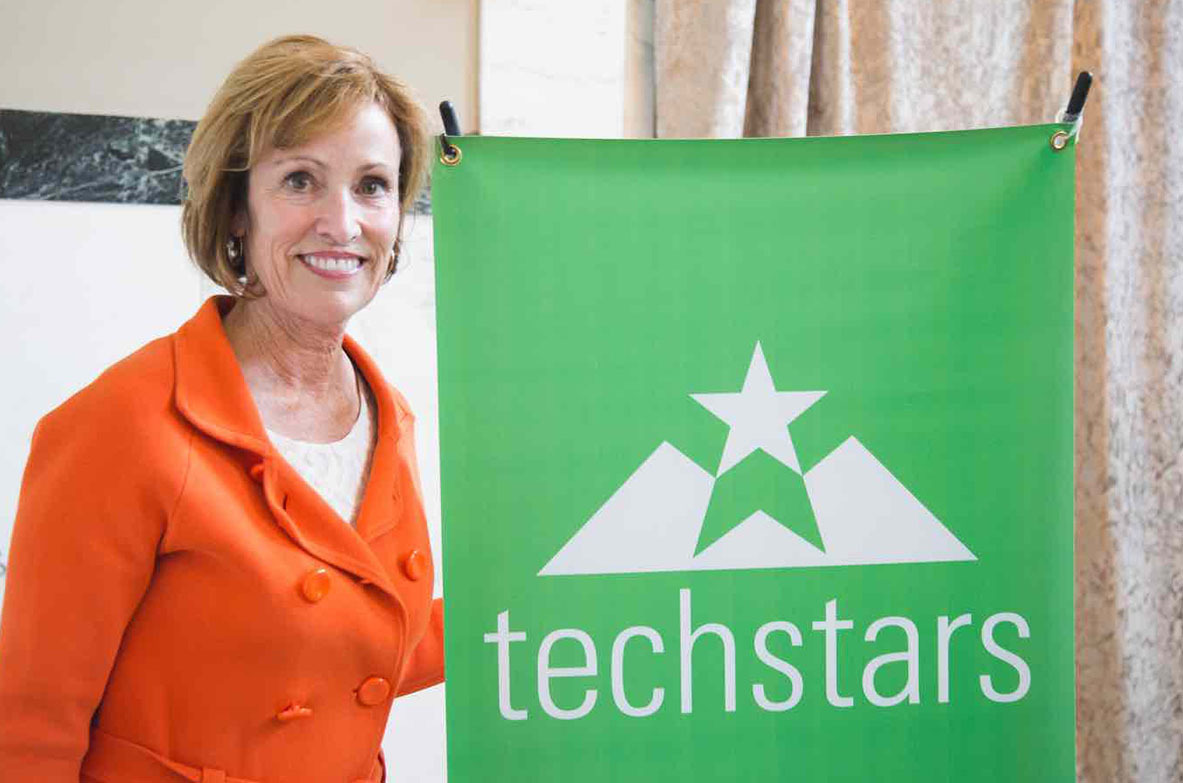
Lesa is the managing director of the Techstars Kansas City accelerator. Her career has included roles as a corporate executive, entrepreneur and consultant to multi-national corporates expanding their innovation footprints. For 10 years, she was vice president of innovation and networks at the Ewing Marion Kauffman Foundation where she designed, implemented and scaled models focused on initiating new markets and recovering markets in support of economic growth.

Featured Business

2018 Startups to Watch
stats here
Related Posts on Startland News

Farm-to-wineglass: Big Mood Natural Wines talks sustainable drinking — ‘Why stop at food?’
It’s never the wrong time to drink wine, said Richard Garcia. “We have a wine for every time of the day,” said Garcia, who owns and operates Big Mood Natural Wines with his friends, Jamie and Liz Zoeller. “Someone came in the other day asking about breakfast wines, and we absolutely have several on the…
How an elastic team turned an early tip about face masks into SewKC’s saving grace
Editor’s note: The following is the third in a series of stories about Kansas City fashion companies putting their own creative spin on the often-utilitarian face mask. As demand for face masks surged this spring, a massive and sustained influx of traffic and orders at SewKC crashed the Crossroads creatives’ online retail engine — forcing the…
Married to collaboration: SewKC couple stitches meaning into each hand-sewn design
Michele and Johnny Dawbarn’s symbiotic studio space in the Crossroads allows the always-evolving creative duo to do more than finish each other’s sentences. It stitches ideas to passion, threading a common mission through their businesses, they said. “When you sew-” Johnny began. “You bring two things together,” finished Michele, co-founder of SewKC with her husband.…

How two hungry vegan sisters went from making queso to their own storefront on Holmes
Arvelisha Woods and India Monique just wanted to style hair and eat nachos, the duo said, breaking into laughter. “It all started with being hungry,” Monique recalled, with Woods emphasizing the “hungry.” The sisters behind Mattie’s Foods went on a fast in 2015 as part of their mission work. They took what they loved the…