

Want a globally competitive KC? Look beyond smart city ‘bling,’ Digi.City founder says
February 20, 2018 | Leah Wankum
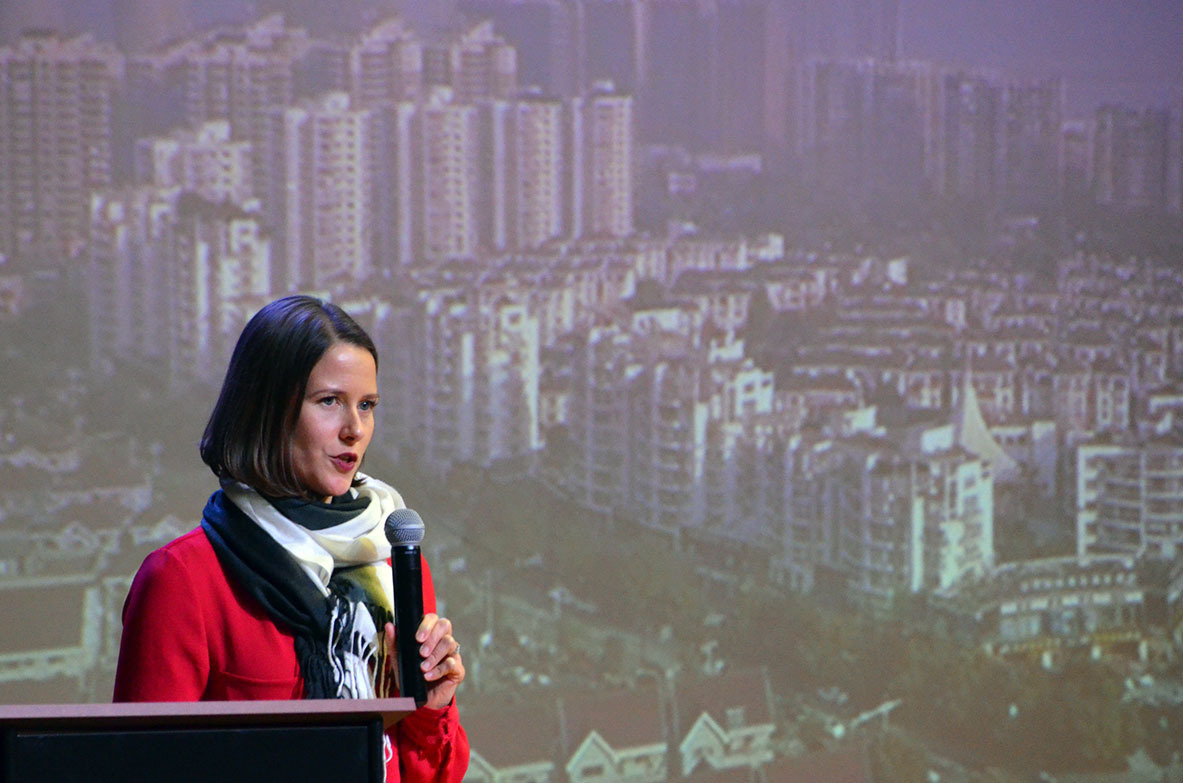
The U.S. has a lot of catching up to do, said Chelsea Collier, founder of Digi.City.
It’s not quite doomsday, but Collier wanted to express a sense of urgency, she said Friday during a Smart Metro Summit at Plexpod Westport Commons. Cities need to get smart — fast — or the United States will continue to slip behind in global competitiveness.
“(Americans) are so used to being No. 1, but all you have to do is go spend four weeks in China to realize that is a very tenuous reality,” she said. “I came back from that experience with my eyes blown wide open. We talk about the China of 10 years ago or the China of their revolution, (but) it is a very different place. They are investing in innovation. They are investing in technology. They are moving 100 miles an hour because they know there’s no time to waste.”
Several countries in Asia and Europe — namely Singapore, China, Japan and members of the European Union — are meeting the new technology era head-on, Collier said. She urges the United States to do the same.
“We need to speed up or we won’t be able to catch up,” she said. “And that’s not what I want to see.”
Collier is traveling the country to spread her message. Thanks to the Eisenhower Fellowship, she has been studying smart cities to see what’s working in other parts of the country and across the world.
Kansas City was no pit stop. Collier has been watching the metro with great interest since the Gigabit City Summit last year, she said. In her mind, the city is preparing itself for global competitiveness as a smart city.
In fact, because of Kansas City’s efforts to develop smart infrastructure, Smart Cities Connect — of which Collier is editor — selected Kansas City as the next host of its annual Smart Cities Connect Conference March 26-29.
Collier wants other cities to start paying attention to what local entrepreneurs — including those in the Kansas City, Missouri, city government — are doing right, she said.
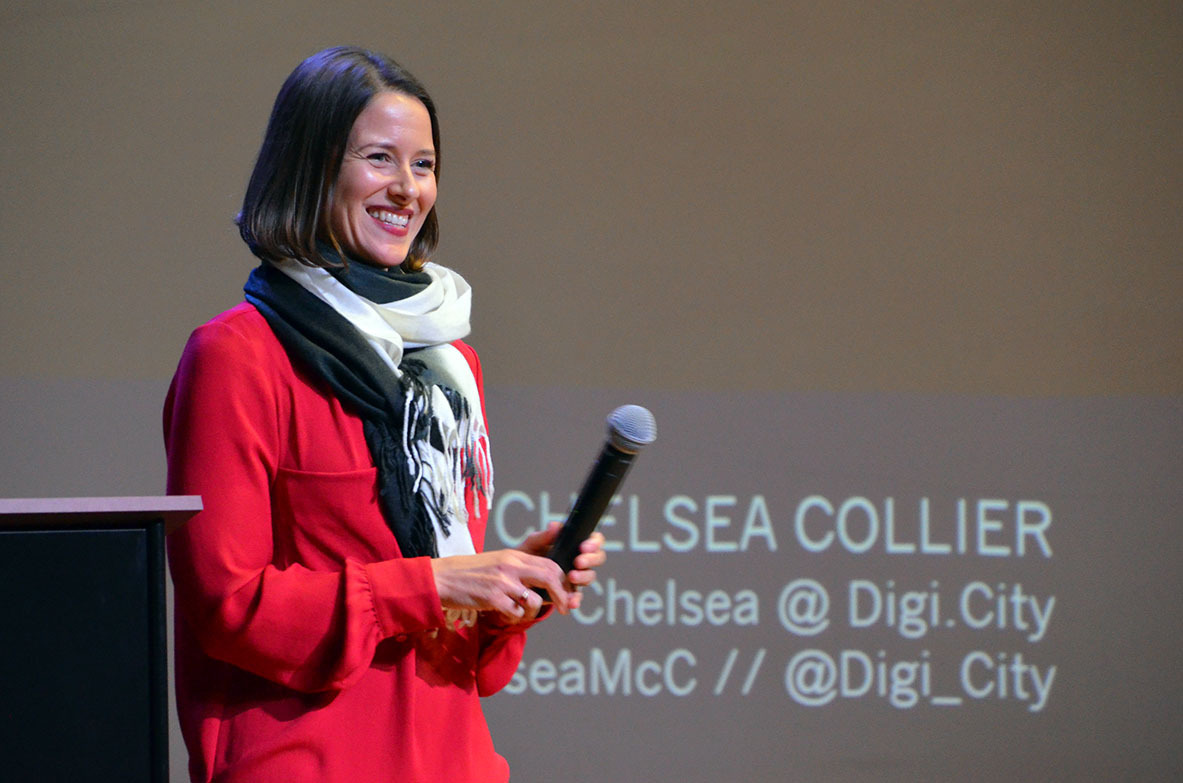
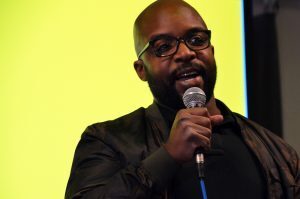
Chelsea Collier, Digi.City
A self-dubbed cheerleader and champion for cities getting smart, Collier said city staff and elected officials are laying the groundwork for smart infrastructure, including the KC streetcar project.
Collier also mentioned a “staggering” statistic provided by Troy Schulte, city manager for Kansas City, Missouri: 29 mobile broadbands are competing in the metro area. And Kansas City is preparing for 5G, when devices will communicate with each other without human connections, she noted.
But most importantly, it’s Kansas City’s “entrepreneurial spirit,” creativity and willingness to look outside the city limits to what other cities are doing — and how Kansas City can learn from other cities’ experiences — that caught Collier’s attention, she said.
How does she define a smart city? It’s not just having cool gadgets, Collier stressed.
“There’s a lot of criticism about smart cities that it’s just a new buzzword, and I kind of deflate when I hear that because it’s a lot easier to point to a physical device, a sensor, or a drone or an autonomous vehicle and say, ‘Well, those cities have those things, so they must be smart cities,’” Collier said. “Smart cities is much more internal and it’s much more complicated than that.”
In Collier’s mind, a smart city has the digital infrastructure and has invested for the foreseeable future, laying the groundwork for 5G and modernizing existing utility infrastructure. On a foundational level, that means developing infrastructure and policies and procedures for the internet of things, security, privacy, big data and cloud storage, just to name a few.
“If a city is just talking about their bling, then that’s just the icing on the cake,” she said. “They’re not talking about the things that make a smart city run.”
Kansas City is one of several U.S. cities on her radar, she said. In 2016, Collier received an Eisenhower Fellowship, which allowed her to study smart cities, economic development technologies and innovation. Digi.City is the product of Collier’s fellowship. Through her digital platform and blog, she wants to share what she’s learned from smart cities across the nation and all over the world to help U.S. cities get smart.
Fellows funded by the Eisenhower Fellowship typically write papers to explain their findings, Collier said. But creating Digi.City made more sense because smart cities were moving so fast that her findings would quickly become antiquated, she said.
RootMetrics rated Kansas City second in the nation for best overall mobile performance. But while Kansas City can brag for a minute, internet and mobile connectivity isn’t everything, Collier said.
The U.S. is slipping behind in global competitiveness, according to the IMD World Competitiveness Center. Cities that work now on developing their policies, regulations and infrastructure, however, could be rewarded 10, 20 or even 50 years down the road, she said.
Some are calling it the Fourth Industrial Revolution; that’s not hyperbole to Collier, who said the world is on the brink of a new era of technology, a “transformative time” not unlike a century ago, when the steam engine was invented.
“How we work, how we connect, where we live, how we live, all of that is going to change drastically, and I really want cities to be ready for that because the ones that are ready will continue to prosper, and the ones that are not are really going to struggle, and I don’t want to see that happen,” Collier said. “If there’s anything that I can do with what I’ve been fortunate enough to experience and learn, then I want to share it.”
One piece of advice from Collier that is unique to the Kansas City metro area: Don’t get hung up on border war history.
“I get it, but man, how silly when you’re looking at the global competitive forces,” she said, touting KCK and KCMO’s collaborative efforts to be more attractive on a global scale. “Quit quibbling about the small stuff. Don’t look down at your feet. Look out at the horizon and see what’s coming, and get ready. Start working together, both sides. Both communities have something to add. Both communities have value. Both communities are creative. It is not about winners and losers in this game when you’re talking about a regional competitiveness.”

Featured Business

2018 Startups to Watch
stats here
Related Posts on Startland News

Cherry on top: 9-year-old baking entrepreneur cuts check to pay off KC students’ negative lunch balances
Baking is the perfect recipe for spreading joy — owning a small business should be too, said 9-year-old Ire Cherry, recalling the moment she stood before administrators at University Academy in Kansas City, holding a check wider than she is tall. “My mom and her sister were talking about people in Virginia who couldn’t pay their…
Kauffman Foundation’s Erin Jenkins bounces between contrasting cultures, startup life
Editor’s note: This content was sponsored by the Ewing Marion Kauffman Foundation but independently produced by Startland News. Curiosity took Erin Jenkins to Japan. Curiosity brought her home. In between, she embedded herself in the worlds of intercultural entrepreneurism and startup life — her journey aligning itself with an opportunity to serve as a program officer…
Pride outside: How the outdoor industry is missing out with a $1 trillion LGBTQ+ blind spot
“You can’t be what you can’t see,” said adventurer and speaker Mikah Meyer, quoting activist Marian Wright Edelman last week in Kansas City. Representation of LGBTQ+ consumers and entrepreneurs formed a thematic trail throughout the recent Mid-America Gay & Lesbian Chamber of Commerce awards luncheon where Meyer made keynote remarks. His borrowed quote also reflected…
nbkc launches Entrepreneur in Residence incubator: ‘I have a whole company behind me’
Less than a year after its inaugural Fountain City Fintech accelerator debuted, nbkc bank has launched a new incubator program designed to tackle common banking industry problems with start-up-style ideation, problem solving, and tenacity, said Megan Darnell. The goal: building new companies along the way, the nbkc program manager said. “Kansas City has every single…