

Wesley Hamilton earns international WeWork award, surprise $18K prize
January 20, 2018 | Tommy Felts
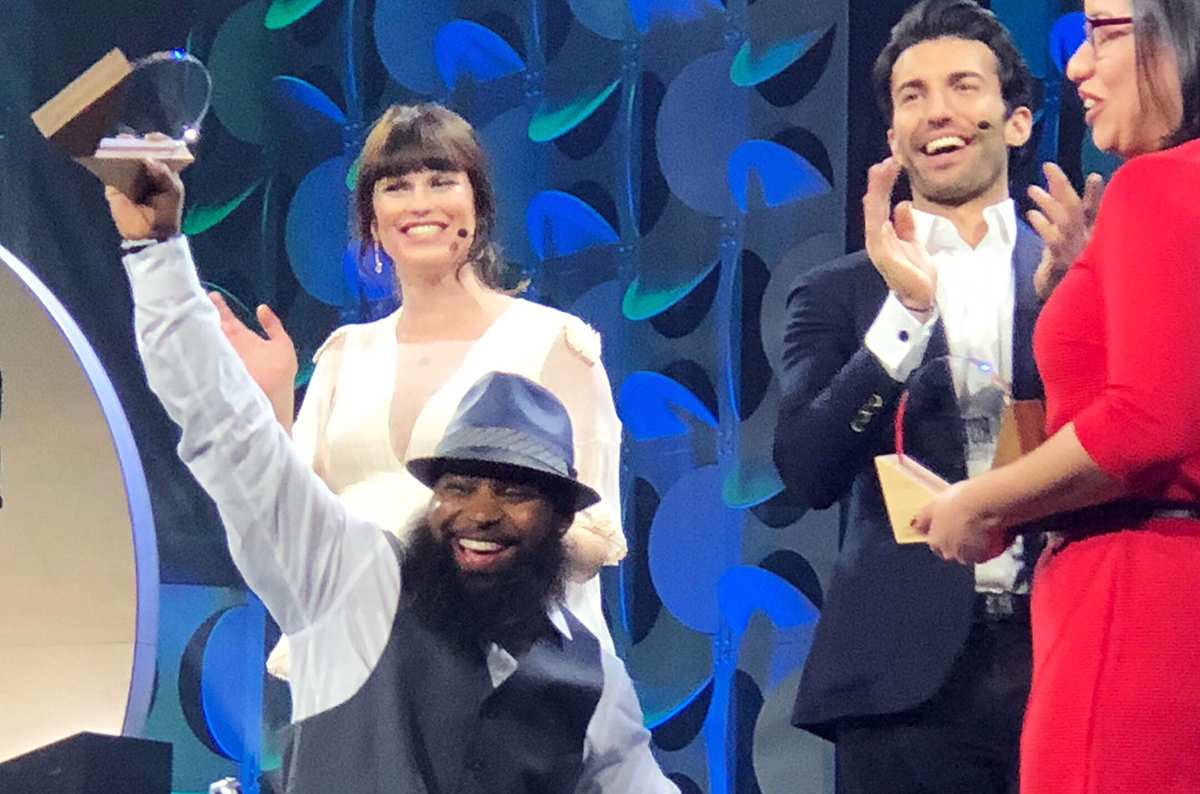
When he arrived in New York City this week to accept one of four WeWork Community Giver awards, Wesley Hamilton was shaking with pain, he said.
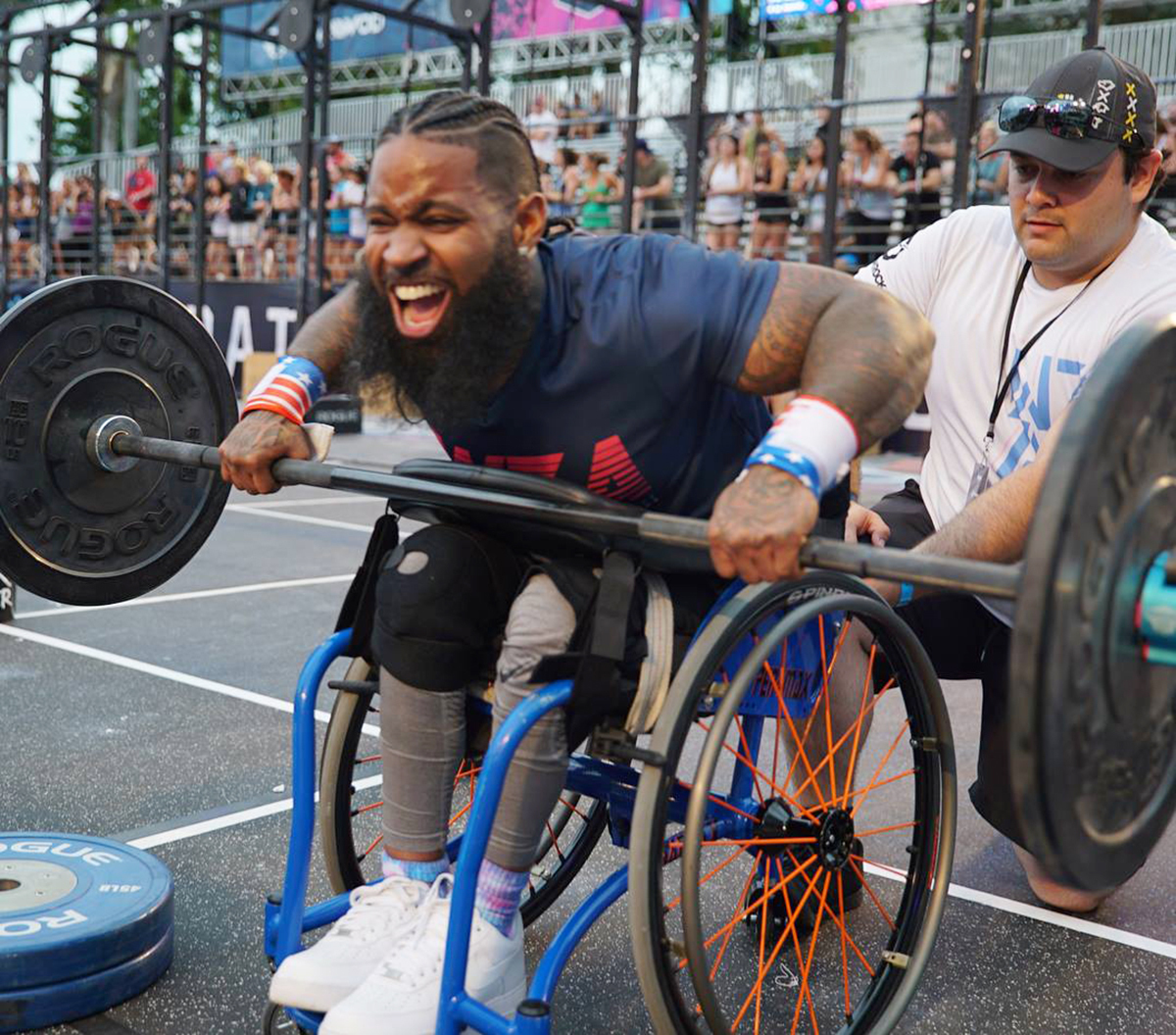
“My body was hurting so bad, I knew something great was going to happen,” said Hamilton, a Kansas City adaptive athlete and founder of the nonprofit Disabled But Not Really Foundation.
Fresh off a trip to the four-day Wodapalooza Fitness-Festival in Miami — where he took second place — Hamilton was experiencing jet lag and the effects of traveling from a cold climate to a warm one, then immediately back again, he said. A fractured tibia from a car wreck in early December added to his discomfort.
But Hamilton felt like more was at play as he prepared for WeWork’s international Creator Awards Wednesday night at Madison Square Garden. His body was telling him something, he said.
And it was just one more obstacle to push through.
“If I was weak-minded, I wouldn’t have gone to that event,” Hamilton said. “But I’m not about to let pain just take over me.”
‘And then I found WeWork’
Out of 200,000 WeWork members, Hamilton was among a handful honored for contributions to the coworking giant’s community, he said.
His positive presence at WeWork Corrigan Station — where officials took note of his work with Disabled But Not Really and side projects like Hydrate the Homeless — helped earn him the nomination and ultimately the award, Hamilton said.
“When they told me I was selected, they said, ‘Every day you come in here and you always have a smile on your face. You bring joy to us,'” he said.
Hamilton’s outlook sometimes surprises people, who often see his wheelchair first, then assume he can’t be living a fulfilling life, Hamilton said previously. That was perhaps true at one time — but no longer, as he detailed Wednesday in his acceptance speech alongside WeWork’s David Heyburn.
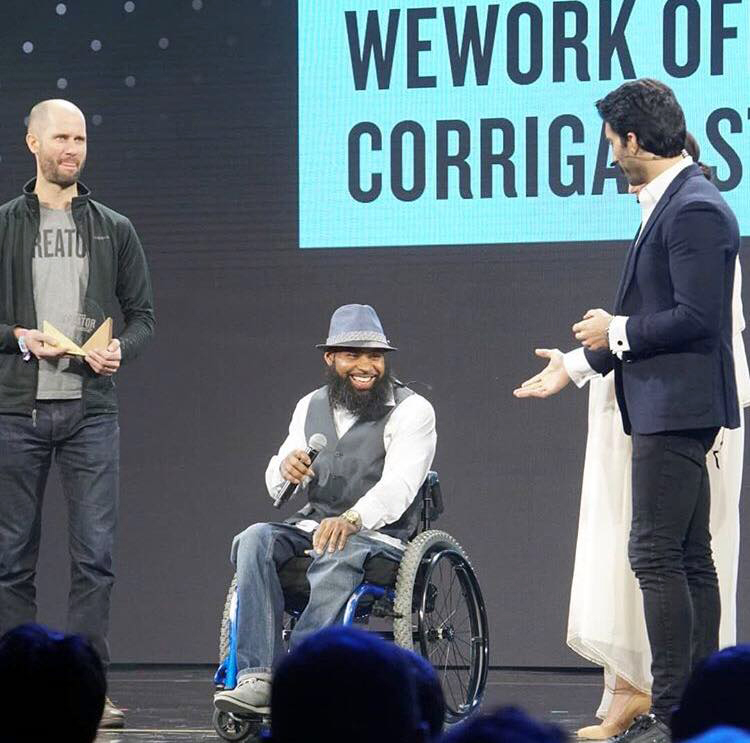
“Six years ago, I suffered a spinal cord injury that left me paralyzed for the rest of my life. At that moment, I felt rejected from society. I went through a lot of depression, and over time I found my purpose. It was to help motivate and inspire so many … And then I found WeWork,” Hamilton told the crowd. “WeWork gave me a community of like-minded individuals and it helped me fulfill my mission and to create something awesome, the Disabled But Not Really Foundation.”
The nonprofit is dedicated to inspiring people of all ability levels based in large part on Hamilton’s own story of perseverance and victory in the face overwhelming obstacles. Work through Disabled But Not Really often involves public speaking, which helped prepare Hamilton to share his story at Madison Square Garden, he said.
But he wasn’t ready for the surprise that awaited before he left the stage.
“I just appreciated the trip. I’d never been to New York, and I was excited to be acknowledged. That was enough,” Hamilton said. “But when they said they were going to give all four winners $18,000 apiece, I was like, ‘Uh … uh …’ I was speechless.”
The monetary awards to the Community Giver honorees were among more than $4.22 million in prizes throughout the evening. The big winners were re:3D, an Austin-based startup, and Global Vision 2020, a health innovator in Maryland, both of which won $1 million.
‘I’m successful in life because I’m happy’
Hamilton’s $18,000 is expected to help expand Disabled But Not Really’s first adaptive program, which is set to launch in February, he said. New fitness equipment could make the venture even more meaningful to participants, he said.
“There’s nothing that I need for myself. I just want to figure out how to put this money into Disabled But Not Really to make the platform larger and reach so many more people,” Hamilton said. “This is a huge opportunity to provide a better experience for people with disabilities. I’m ready to change some more lives.”
The nonprofit also recently won a $20,000 website from Mission-based Lillian James Creative, following an online vote.
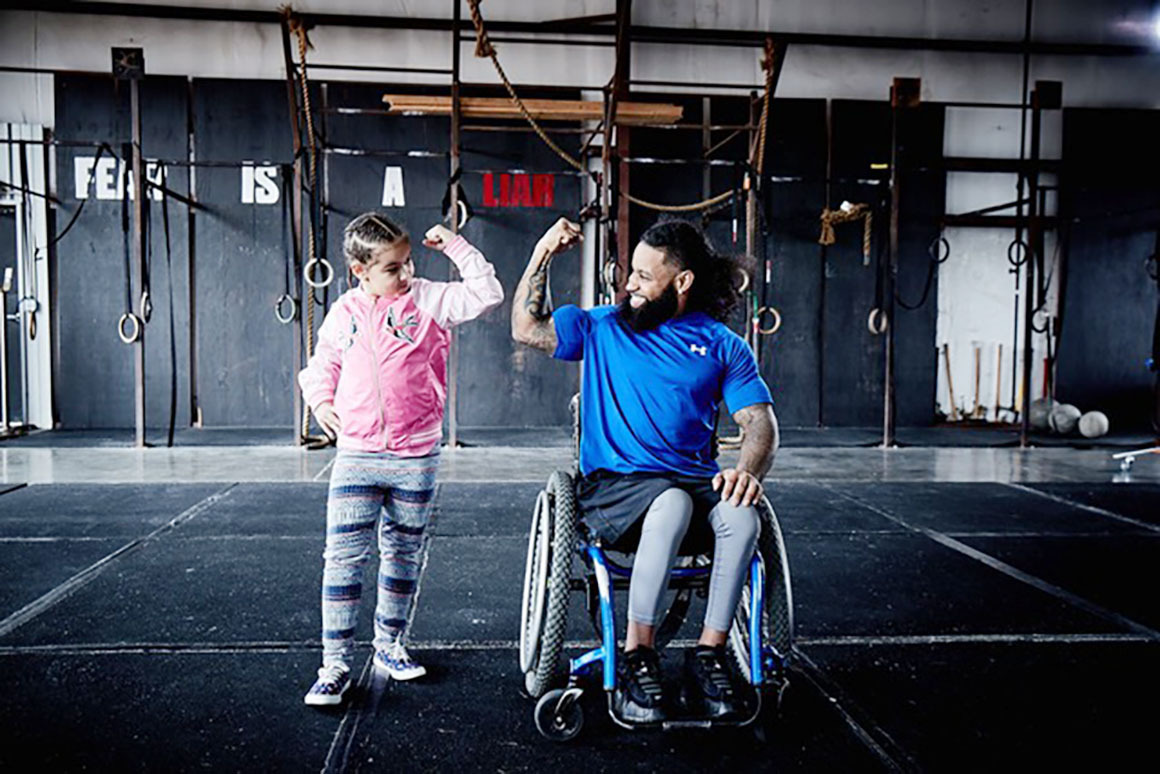
Photos courtesy of Wesley Hamilton
“So many great things happen when you don’t worry about yourself and focus on helping others,” Hamilton said. “I’m successful in life because I’m happy. I don’t need anything more than that.”
A key component of that happiness has been his daughter, Nevaeh, he said. She helped inspire Hamilton to battle through the challenges that came with being confined to a wheelchair, he said.
The days following his return from New York City will be devoted not only to physical recovery, but also to showing his appreciation for Nevaeh, Hamilton said.
“I’ve been gone too long, so I want to just spend the whole weekend with her,” he said. “I want to let her know that she’s still my whole motivation. She got me out of the hard times. I have to honor that.”

Featured Business

2018 Startups to Watch
stats here
Related Posts on Startland News

Smart city leader: Can technology predict deadly shooters before it’s too late?
A smart city is a safe city, Herb Sih said. And technology can help. “If you don’t have safety, you don’t have anything,” said Sih, managing partner at Think Big Partners, one of the key collaborators in Kansas City’s $15.7 million public-private Smart City initiative. Having grown up in St. Louis, Sih said he has…
T-shirt printer GOEX hopes to clad workers in dignity
A Kansas City T-shirt screen printer has a lofty mission: Turn local purchases into global impact. “Your dollar has value in how it’s treating others across the world,” said Ryan Hudnall, engagement director at the Global Orphan Project. Tucked away near Wyandotte and 31st streets, GOEX serves as an offshoot of the Global Orphan Project,…
Looping back? Missouri partners with Hyperloop to study 23-minute KC-St Louis route
Missouri’s prospects for landing a Hyperloop route apparently aren’t off the rails after all. Despite the company revealing four U.S. finalist routes in September — which did not include a proposed route through the Show Me State – Hyperloop One announced Tuesday it has entered into a public-private partnership with the State of Missouri to conduct…
Techstars Spotlight: GRIT Virtual builds 3-D tech into 2-D construction mindset
3-D should stay 3-D, said Chris Callen, CEO of GRIT Virtual. And with the rise of virtual reality and augmented reality technology, that philosophy can be applied to the construction of 3-D buildings, Callen said. Wichita-based GRIT Virtual is a software-as-a-service platform for large contractors. It uses VR software to streamline the workflow for construction…