

Cultural differences contribute to entrepreneur access gap, Porter House founder says
January 4, 2018 | Tommy Felts
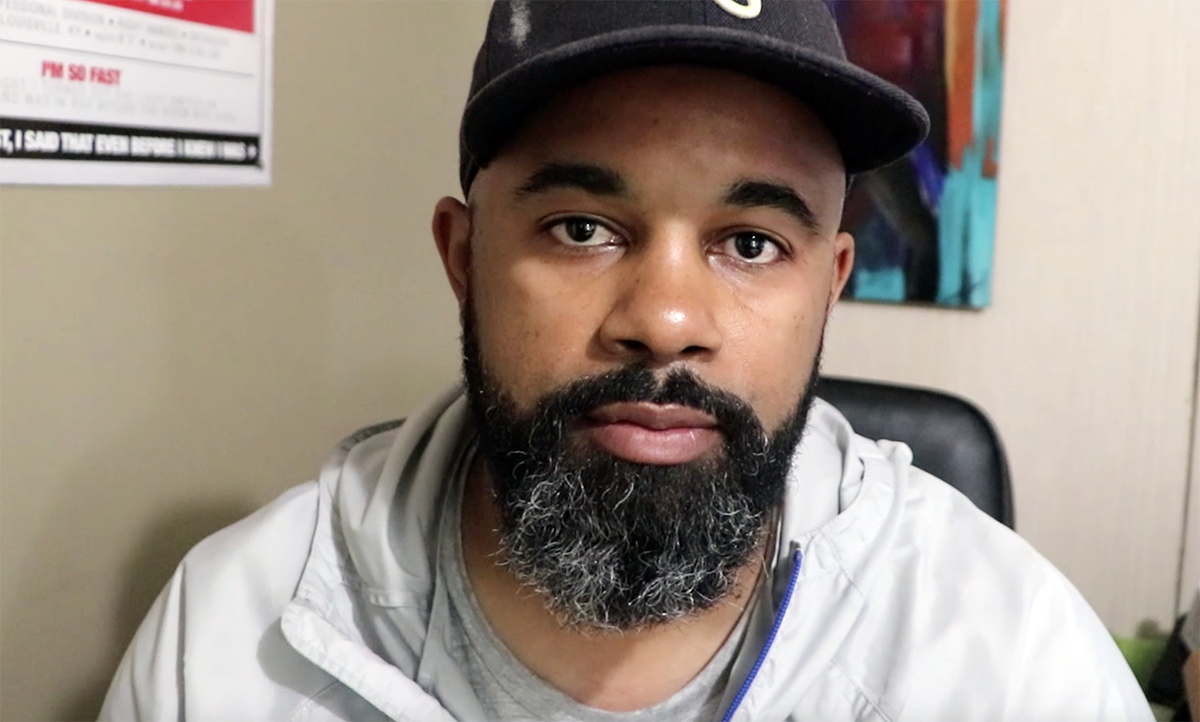
Early education about entrepreneurism and the resources available aren’t typically priorities in low- to moderate-income communities, said Daniel Smith.
“A lack of access results because we don’t really have a lot of programs in our communities that focus on small business and entrepreneurism,” said Smith, founder of The Porter House KC. “It’s more focused on helping with issues of deprivation, like food deserts or housing. Basic needs take over the conversation, rather than other areas that could help our communities thrive in the long run. So we’re still just getting by.”
Porter House, a nonprofit support organization, aims to bridge the access gap by bringing curated entrepreneurial education to those who otherwise wouldn’t experience it, Smith said.
A presentation on financial empowerment for small businesses is the next in a Porter House speaker series that began in July. The coming Jan. 18 event at CHES, Inc. (Credit & Homeownership Empowerment Services, Inc.) is set to feature Shakia Webb from UMB bank and Davin Gordan with Alt-Cap.
Past events have focused on such areas as marketing, branding and business law.
“They’re all free to the public. We try to make them as accessible as possible — in the evening, on the bus line — so that everybody has the opportunity to be there,” Smith said.
Speakers often charge thousands of dollars to speak to audiences, he said, but through negotiations with the expert presenters, Porter House is able to provide the experience without a cost barrier for attendees. That fits with the meaning behind the organization’s name — “porter” referencing someone who carries a burden for another person, and “house” reflecting a spirit of family, Smith said.
“This is something I really have a passion and affinity for,” said Smith, who also serves as an equal opportunity officer for the Full Employment Council. “I grew up on 33rd and Jackson — in the same community that I’m trying to serve. I was born and raised there, but I just had the opportunity to access other things and dream beyond the four walls around me.”
But access is only part of the equation, he said.
“Culturally, with the low- to moderate-income folks — and I’m primarily talking about in the communities of color — there’s a difference or separation where your appearance or the way you talk can put you at a disadvantage,” he said. “You might have a person who should be in an area where they can potentially grow, but the individuals around might not fully understand you — or you might not be comfortable because you don’t understand the verbage being spoken.”
Smith envisions Porter House opening a coworking space that helps to make low- to moderate-income entrepreneurs feel able to succeed in their own skin, he said.
“We’re leading to a place where the culture is right, and you feel comfortable enough to just be able to work and vibe together without worrying about someone looking at you a certain way,” Smith said. “We want to tear down individuals’ walls.”
An educational piece targeting high school students also is in the works. Porter House is working with the University of Missouri-Kansas City to develop a curriculum by the end of February, he said.
“In the low- to moderate-income areas, a lot of the school systems don’t provide coursework related to entrepreneurship,” Smith said. “There also aren’t necessarily programs that allow dreamers to dream and creatives to be creative. We don’t have access in low- to moderate-income communities because we’re so focused on getting our test scores to a certain level.”
Porter House’s mentorship-based program would take advantage of elective and home room periods to accommodate a six- to eight-week process wherein students would grow and build an idea as a team, he said. The experience would culminate with a student pitch competition. A beta school already has been selected with a goal of beginning the program in March or April, Smith said.

Featured Business

2018 Startups to Watch
stats here
Related Posts on Startland News

Accelerate Tech Learning targets the (urban) core of KC’s programmer shortage
Training would-be programmers from Kansas City’s urban core isn’t about getting rich, said Joshua Clark, co-founder of Accelerate Tech Learning. But unfortunately that means it can be tricky to get underestimated students the costly education to become a certified developer in the world of information technology, added Mauri Trent, Accelerate Tech’s executive vice president of…

With Hy-vee Arena, KC Star project, southward expansion, KC Crew plans to double its players
Where KC Crew plays, growth and development follow, said founder Luke Wade. The adult sports and event company filled Kansas City’s Parade Park every night before the Urban Youth Academy broke ground on East 17th Terrace, for example, Wade said. “So it’s kind of that economic development. The same thing happened with the riverfront when…

Mycroft hopes to build community of investment backers with new online public offering
Adding to its array of successful crowdfunding efforts, Mycroft AI recently launched an online public offering that’s generating significant financial support for the startup. Thanks to 2016 changes to the Securities and Exchange Commission’s equity crowdfunding regulations, the Kansas City-based tech startup’s OPO has already amassed more than $173,000 of its $1.07 million funding goal.…

Project UK’s teen bootcamp turns problems into pitches, founders say
Giving teens the freedom to solve problems can be transformational, said Rebecca Dove. “It is believed that this generation will be more entrepreneurial-minded and want to have more freedom in their careers,” said Dove, co-founder of Project United Knowledge, which last week debuted its first Entrepreneurial Bootcamp. “So we’re just trying to rip out a…