

Contract Canvass develops tool for future dominated by freelancers
January 11, 2018 | Bobby Burch

Chris Brown is working to put his law firm out of business.
The Kansas City attorney — who for years has served creative professionals across the metro — recently created a contract automation tool for freelancers, eliminating a part of his business at Venture Legal.
But while Contract Canvas might disrupt a facet of his firm’s model, he isn’t lamenting the change.
“Honestly, I’m OK with it,” Brown said. “I’ve dedicated my career to helping entrepreneurs, but I can’t scale my time. And I’m only licensed in two states, so I’m limited. With Contract Canvas, we can help entrepreneurs nationwide. Rather than helping hundreds, we can help thousands. And we can do it at a fraction of the cost of a traditional lawyer.”

Chris Brown
Created by Brown and technical co-founder Chad Elliott, Contract Canvas addresses a significant need for time-strapped and vulnerable creative professionals, Brown said. Freelancers are not protected by employment regulation but rather the stipulations set forth in legal contracts, he said.
Often complex and unreliable, contracts are frequently misunderstood by freelancers and their clients, sapping time and complicating agreements, Brown added.
“Our goal is to make the contract process easier, from drafting to negotiation and e-signing,” he said. “We also want to make contracts easier to understand.”
To use the tool, a freelancer logs in and answers Contract Canvas’ prompts regarding his or her agreement with a client, including what the project is, services exchanged, payment and more. The tool then drafts a “Human Contract” that uses simple to understand language, producing a contract that’s designed for non-lawyers.
From there, the freelancer and client can securely review the contract and legal terms, allowing both parties to make comments changes, and sign it electronically. Contract Canvas later sends PDF copies of the legal document.
So far, freelancers have enjoyed the tool, Brown said.
“We’ve interviewed a ton of freelancers. We’ve solicited feedback online. Most freelancers love the platform,” he said. “The vast majority of freelancers say they would actually use it. More importantly, they like the price point we are exploring. Now we just need to build it to see if that feedback holds true when we release the public beta.”
Contract Canvas does not yet have specific pricing, but a year of access to the platform should cost less than the average attorney charges a single hour, Brown said.
In addition to such typical startup challenges as tech development, financing and user acquisition, Contract Canvas faced a conundrum with the breadth of legal issues freelancers face, Brown said.
Drafting the questions that feed into users’ contracts was a complex process, he added.
“Trying to find ways to break complex legal issues down to a level where thousands of freelancers can use the same system is very hard,” Brown said. “We’ve spent six months working through that. … Turns out, it is incredibly hard to design contracts for humans, not lawyers.”
The original idea for Contrat Canvas stemmed from the desire to build contract automation tools for Venture Legal. That eventually morphed into an idea Brown pitched at WeWork’s Creator Awards’ South Regional competition.
Brown delivered the winning pitch that beat out more than 2,000 applicants, earning him an $18,000 grant.
“At first it was really just an idea,” he said. “But when WeWork named us a Creator Awards Finalist and eventually named us a Creator Award Winner, we started to think this actually had a chance. So we formed a company and then got to work.”
Contract Canvas’ early success is indicative of the changing nature of work, Brown said.
“We know the workforce is shifting to a freelance model — half the workforce will be freelance within a decade,” he said. “We figured this would be a great tool for freelancers to use to protect their businesses.”
The area entrepreneurial ecosystem’s support has been significant for the product, Brown said. It’s helped launch the idea and will surely help accelerate it, Brown added.
“I’ve been in the KC startup community now for seven years. I’ve made a lot of connections. And, you know what, the thing I appreciate the most right now about this community is what everyone is giving back to Chad and me,” he said. “Everyone has been so helpful in volunteering their time to demo our private beta, provide feedback, answer surveys, share our posts. Without this community, we wouldn’t be in this position today.”

Featured Business

2018 Startups to Watch
stats here
Related Posts on Startland News
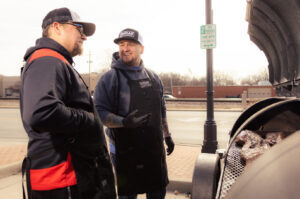
These brothers SMOAK’d gameday concepts at Kauffman, Arrowhead; now their craft BBQ, burritos are delivering downtown
A popup business that launched stadium-based concepts alongside two of Kansas City’s biggest sports teams will now be serving its popular handcrafted barbecue and burritos from an East Crossroads-based hub for ghost kitchens. SMOAK Burritos and SMOAK To-Go — the latest ventures from brothers Cade and Seth Colson’s SMOAK Craft Barbecue+ — open today at…

Report: Missouri startups continue hiring surge, creating 40K+ jobs in every corner of the state
Editor’s note: KCSourceLink and MOSourceLink are non-financial, community partners of Startland News. Missouri startups across the state created 40,169 jobs in 2022, according to the latest data, nearly matching the surge in the number of jobs they generated in 2021. Taking into consideration the number of employees these same firms hired in 2018 and in…

Vytelle expands hoofprint for its cattle IVF tech ‘closer to home,’ opening lab in Kearney, Nebraska
A new lab space for Kansas City-based Vytelle is expected to help the precision livestock startup increase regional accessibility to modern reproduction technology and enable the possibility of fresh embryo transfers for producers across the Midwest, said Kerryann Kocher. Vytelle — the fastest-growing in vitro fertilization (IVF) company — on Monday announced the opening of…

Now serving foodpreneurs: KC conference dishes out 30+ sessions for new, growing food businesses
Launching a food business comes with unique challenges, Xander Winkel shared, and the Mid-Continent Public Library has partnered with several local organizations to help those specialized entrepreneurs find their recipe to success. The Food Business Conference — free workshops, panel discussions, and networking opportunities for “foodpreneurs” that are offered in partnership with the library, Kansas…