

BKS Artisan Ales takes measured approach with nano-brewery concept
January 6, 2018 | Tommy Felts
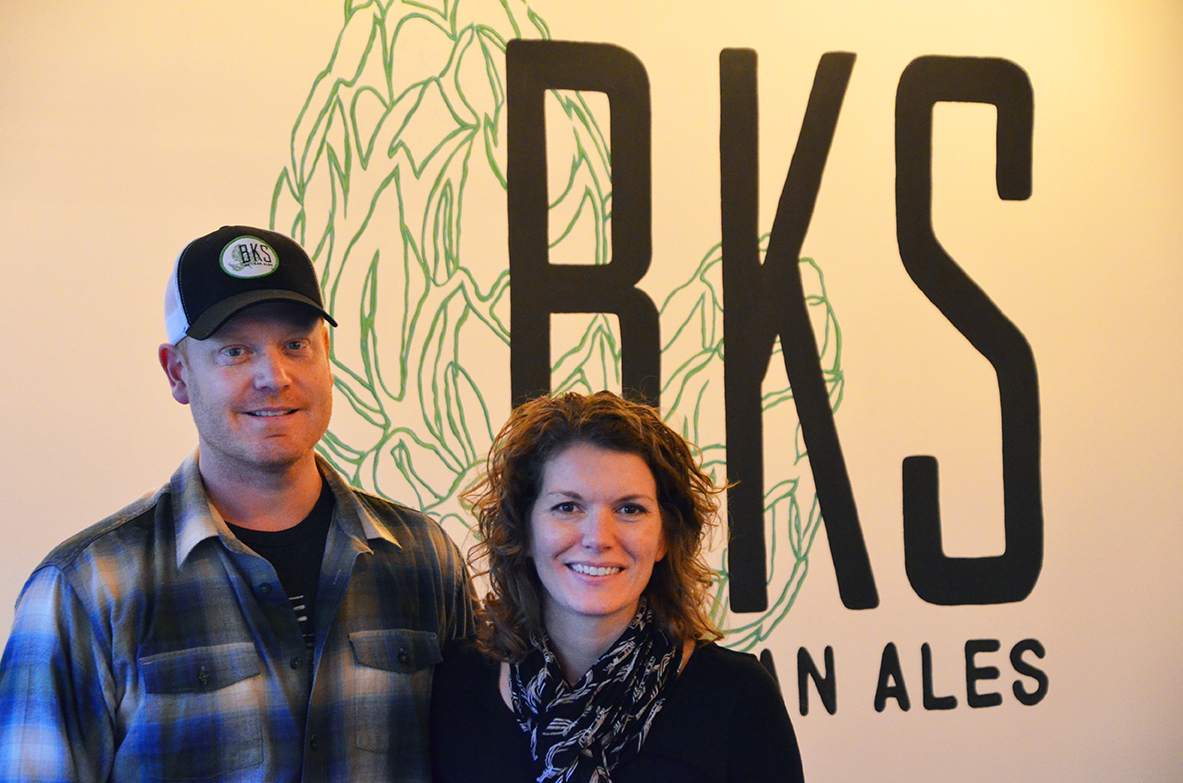
It takes only about an hour for BKS Artisan Ales to sell out of its packaged bottles and cans each Saturday afternoon, Brian Rooney said.
“We thought it would be great if maybe 40 people came in and maybe each of those 40 took a beer home,” said Rooney, a craft brewer who owns and operates the Brookside East startup with his wife, Mary. “We didn’t expect it to be one-in, one-out for the entire day that we’re open, with standing room only, and then to be wiped out of all of our to-go options with a line of people around the corner to our parking lot.”
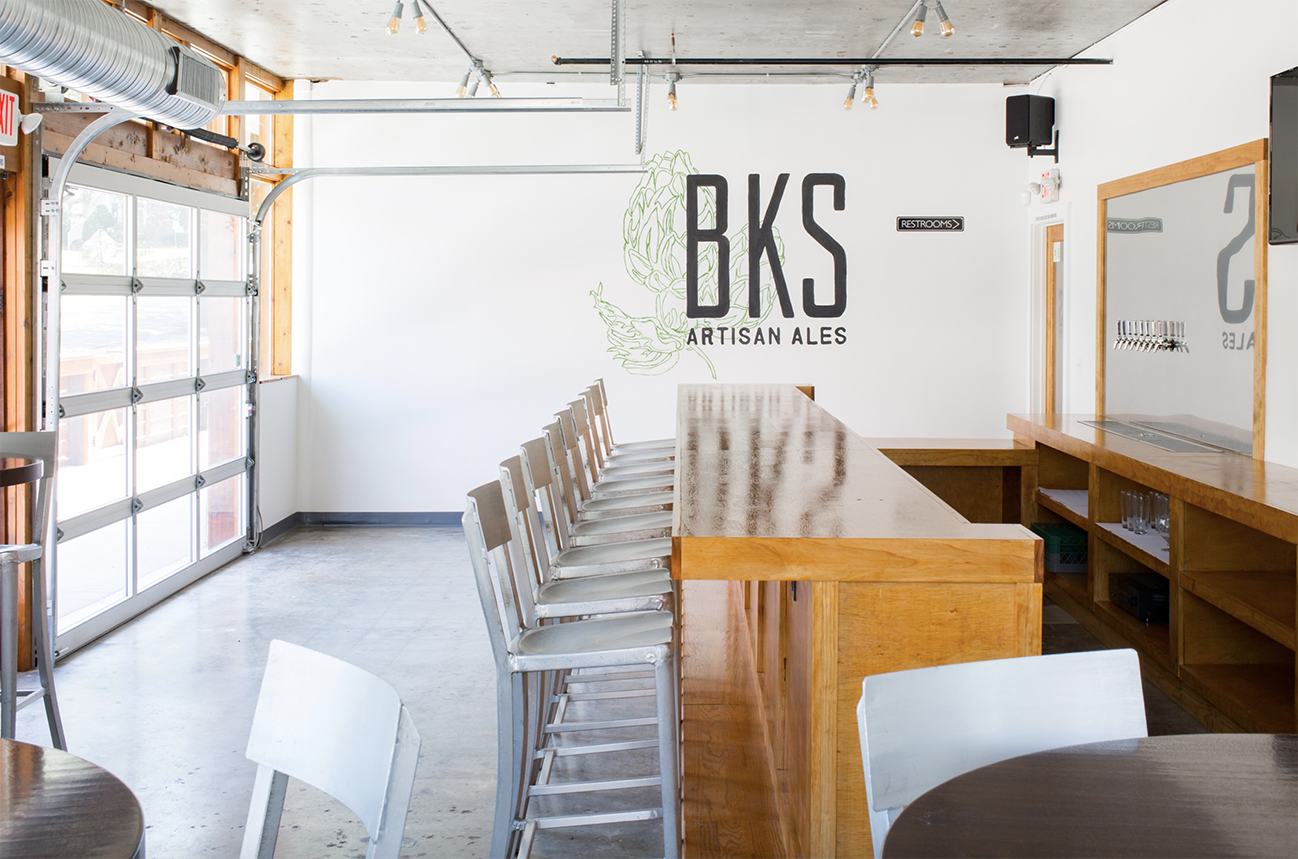
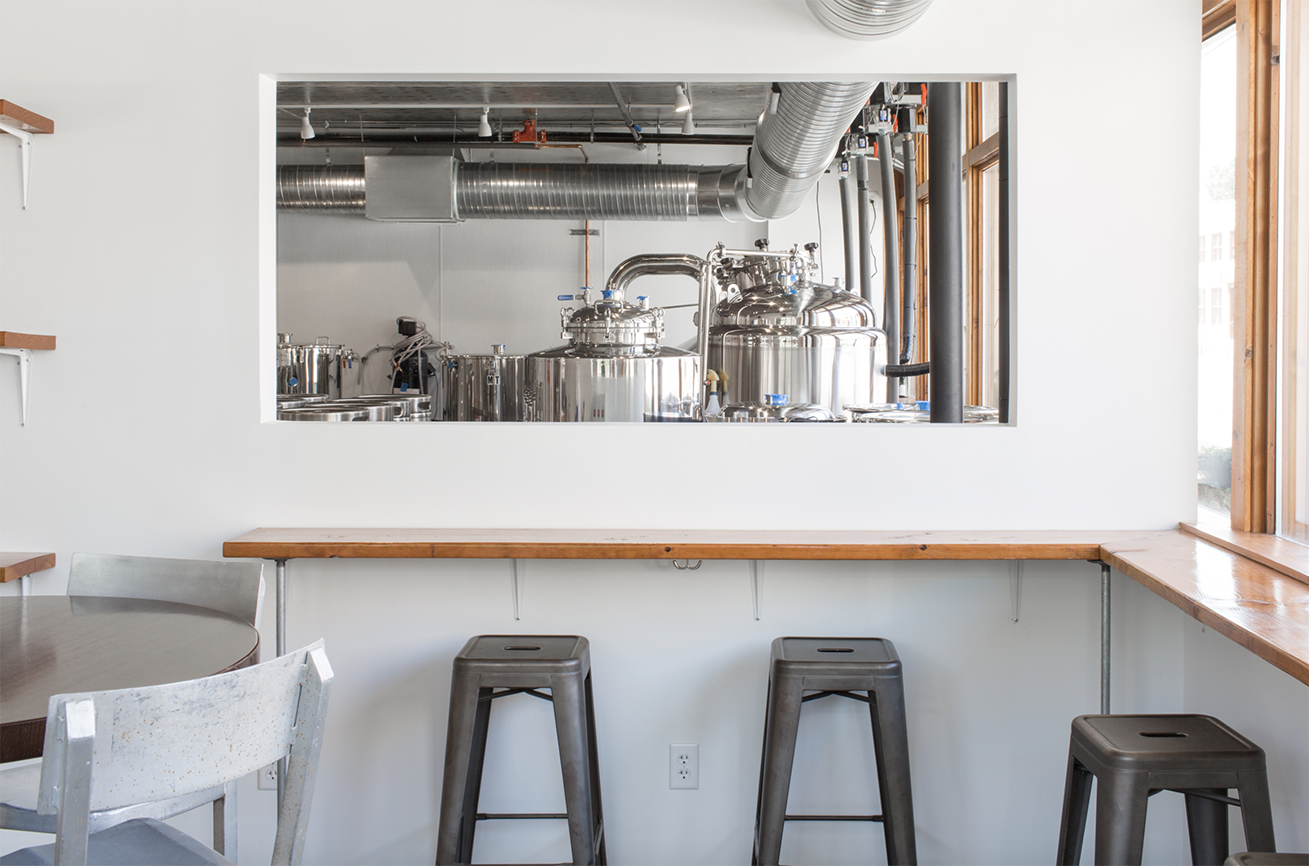
BKS celebrated its grand opening Dec. 16 and has seen steady crowds each subsequent weekend, the Rooneys said. The 2,000-square-foot artisan “nano-brewery” is open 1 p.m. to 5 p.m. Saturdays at 63rd Street and Holmes Road, drawing a mix of curious visitors, neighborhood residents and craft beer enthusiasts, Mary Rooney said.
Keeping the window of operation — as well as the distribution of beers brewed on-site — tight is an intentional move, they said. It’s about maximizing impact with the least wasted resources.
“The conversation among a lot of craft beer industry publications has shifted to on-premise sales, meaning selling all of your beer to-go from your tasting room,” Brian Rooney said. “That’s where your greatest profits are in the brewing industry. But you’re not going to have tremendous growth with that model.”
A brewer will, however, achieve a better sense of work-home balance with such an approach, he said.
“I value all of that more than growing for growth’s purpose,” said Brian Rooney, who left a corporate insurance industry job Nov. 22 to tackle the brewery full-time. “Our objective is to find something sustainable that we enjoy doing.”
Recipe based in reality
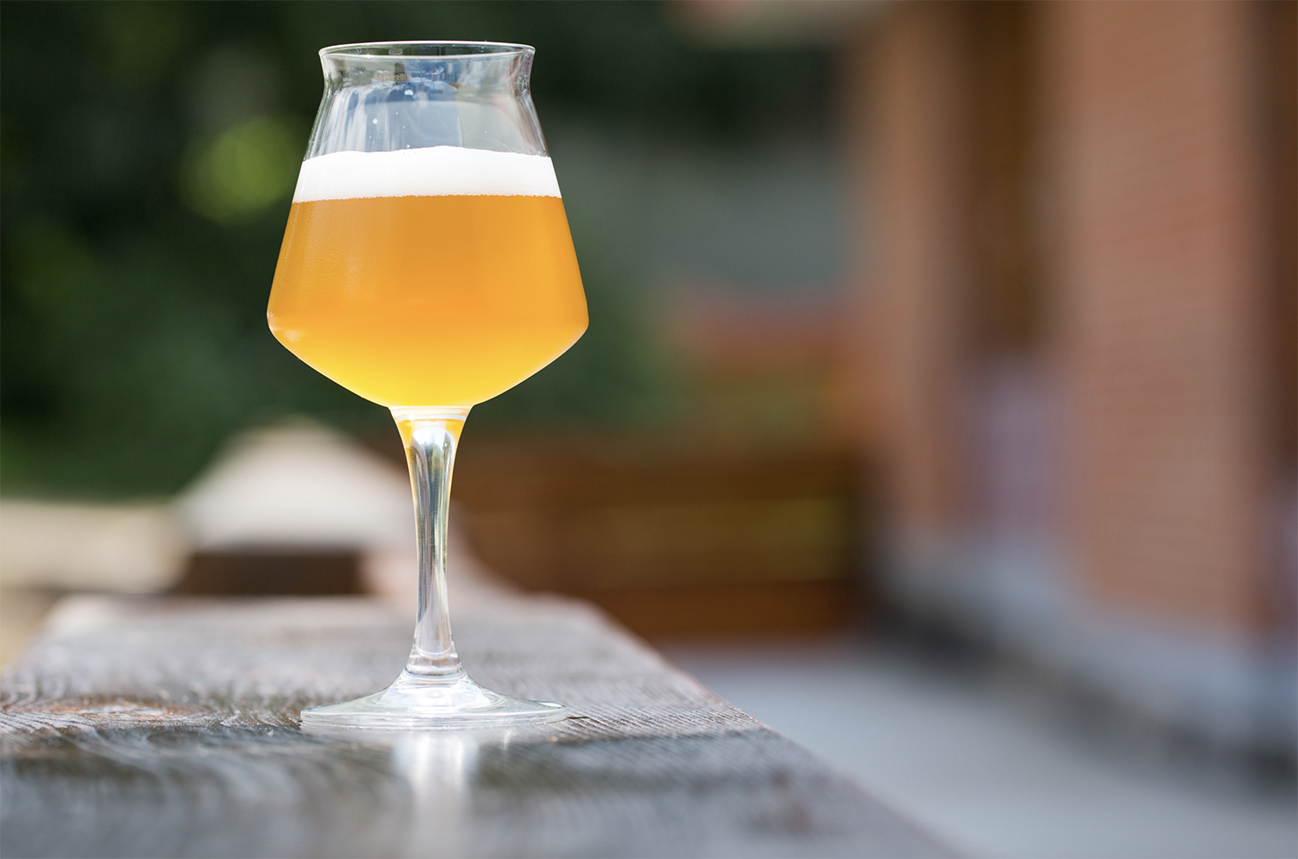
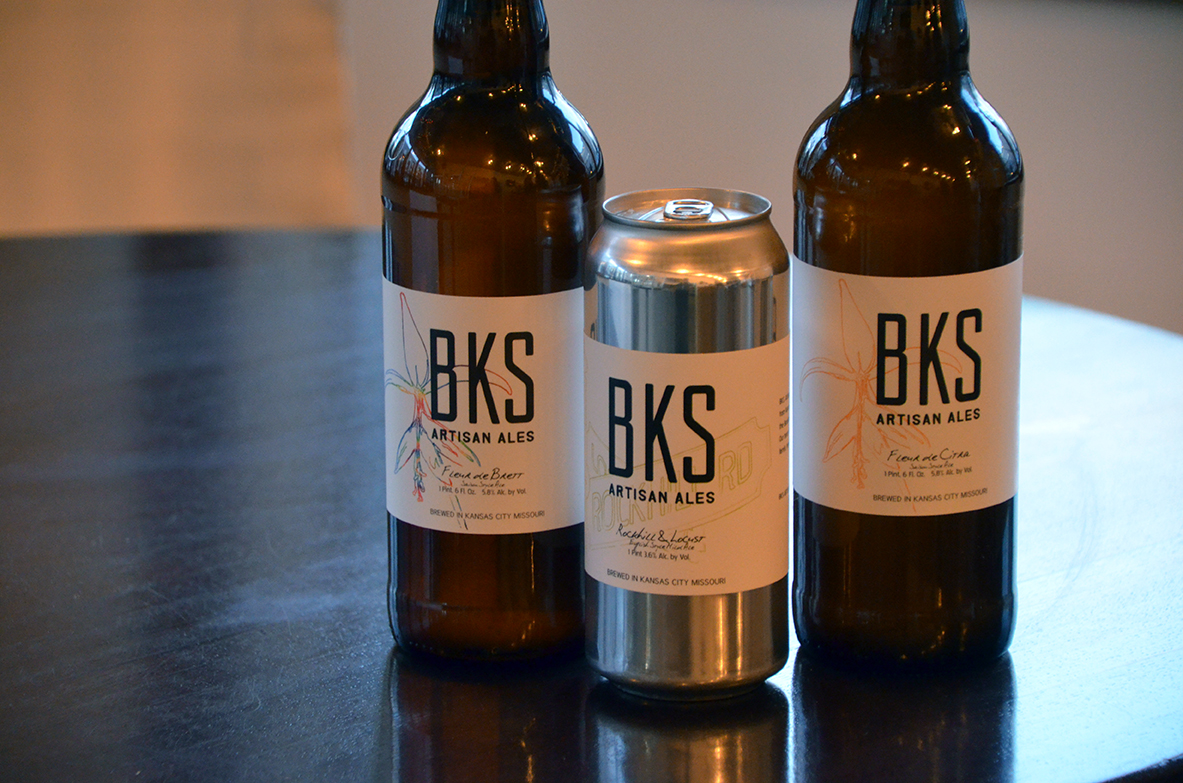
BKS Artisan Ales’ small-scale concept boils down to managing quality, limited time and assets, they said. For example, while customers will find a rotating menu of IPAs, stouts, sours and English pub ales and other brews on tap, they won’t be able to take them home in growlers or crowlers, an oversized 32-ounce can.
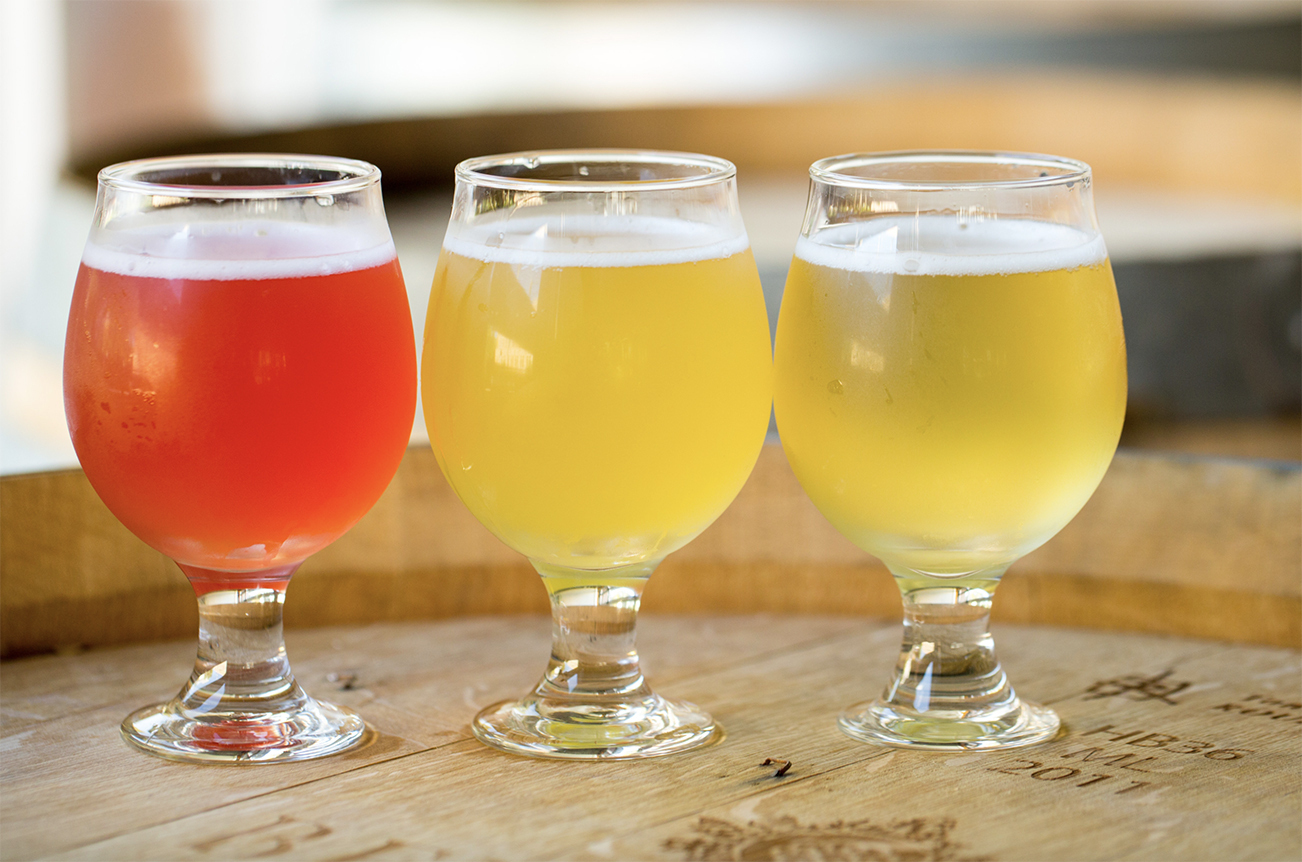
BKS Artisan Ales
“We could’ve done that, but from an efficiency standpoint, it doesn’t really work,” Brian Rooney said. “If you’re open on a Saturday — and this place is packed — to have to turn around to fill up a jug of beer on tap when there’s a line of people waiting for a beer isn’t going to make sense.”
The beer’s taste also could be compromised by such to-go options, he said.
“If someone is going to serve our beer — take it home and share it with their friends — and then that growler sits in the refrigerator for a week and the beer is flat, they’re going to think, ‘BKS Artisan Ales sucks and we don’t want any of that beer,’” he said. “So we want to package it in a format where we know when somebody gives it to someone else, it’s going to be fresh. It’s going to taste right.”
While BKS will certainly evolve, the Rooneys said, their business plan intentionally seeks balance against the risks of growing too fast.
“We’re taking things slow,” Mary Rooney said. “A lot of people don’t understand that. They don’t understand why we’re not open five days a week or why we’re not doing growlers. That’s great that they want the beer, but we’re being very deliberate in thinking through these phases so we don’t make a misstep that sets us back.”
“We don’t want to incur a lot of debt,” she added. “We don’t want to acquire a lot of equipment that we don’t need. We’re trying to be focused and talk through what can make us more efficient and productive instead of just buying a 30-barrel system.”
The concept is scalable, but it comes down to how far a craft brewer would want to take it, Brian Rooney said.
“Are you patient enough for what that scalability permits? Can you reserve the cash until you know the demands are there?” he said. “Or do you take a huge bank loan and grow too big, then guess what, you’re stuck with way bigger equipment than you needed because you were looking 10 years down the road, but demand isn’t there yet?”
Growing the neighborhood
An artisan nano-brewery in Brookside East — where such a business typically only would be allowed in an industrial manufacturing space — is possible because of an ordinance that allows such shops as nano-breweries, butchers, coffee roasters and carpenters in the neighborhood, Brian Rooney said.
“By updating our ordinances and cutting the red tape we can help new small businesses startup in Kansas City,” said Scott Taylor, councilman for Kansas City’s sixth district, at-large, who sponsored the ordinance in 2015.
A similar ordinance change was needed to allow other small breweries to open, including KC Bier Co. in Waldo, which has supported BKS, according to Taylor’s office.
“All the industrial spaces we looked at were like 10,000 square feet of raw space,” Brian Rooney said. “We didn’t have a budget for a build-out of anything like that. We were trying to do something smaller, so it was kind of frustrating. I didn’t think we were going to have any luck until the ordinance was passed. It also was hard to find a landlord who wanted a brewery as a tenant in their space. People think you’re trying to open the next Boulevard or something.”
Developer Butch Rigby ultimately aided the Rooneys in locating a space for BKS in one of his properties on the 63rd Street corridor, as well as helping them to navigate permits and zoning.
“It was a big thing for us to overcome,” Mary Rooney said. “Working with Butch got us open. Otherwise we probably would’ve been in a different part of town or maybe never would’ve found a space.”
Rigby heard about the couple’s plan and knew it would be a good fit for the area, the developer said.
“I was very excited because it’s an old-style neighborhood space. It’s not like a nightclub,” Rigby said. “It’s people who are craft brewers and passionate about what they’re doing. I knew we were talking about someone who would take great pride in their product.”
As a developer with a significant footprint on 63rd street, Rigby wanted a good mix of office space, residential, retail, food services and social services for the area, he said.
“In our neighborhood, BKS Artisan Ales is a perfect fit,” he said. “I’ve owned buildings all over town, and I’ve had a lot of startup businesses in them. I love startups. I love being part of watching them grow. Talking to Mary and Brian, I had a really good sense about them — just hearing their business plan, the thoughtfulness through which they planned to develop not only BKS, but the space.”
In addition to the first-floor area that BKS now occupies, a second floor of Rigby’s building will allow the brewery to double its brewing operation directly above in the spring, the Rooneys and Rigby said.
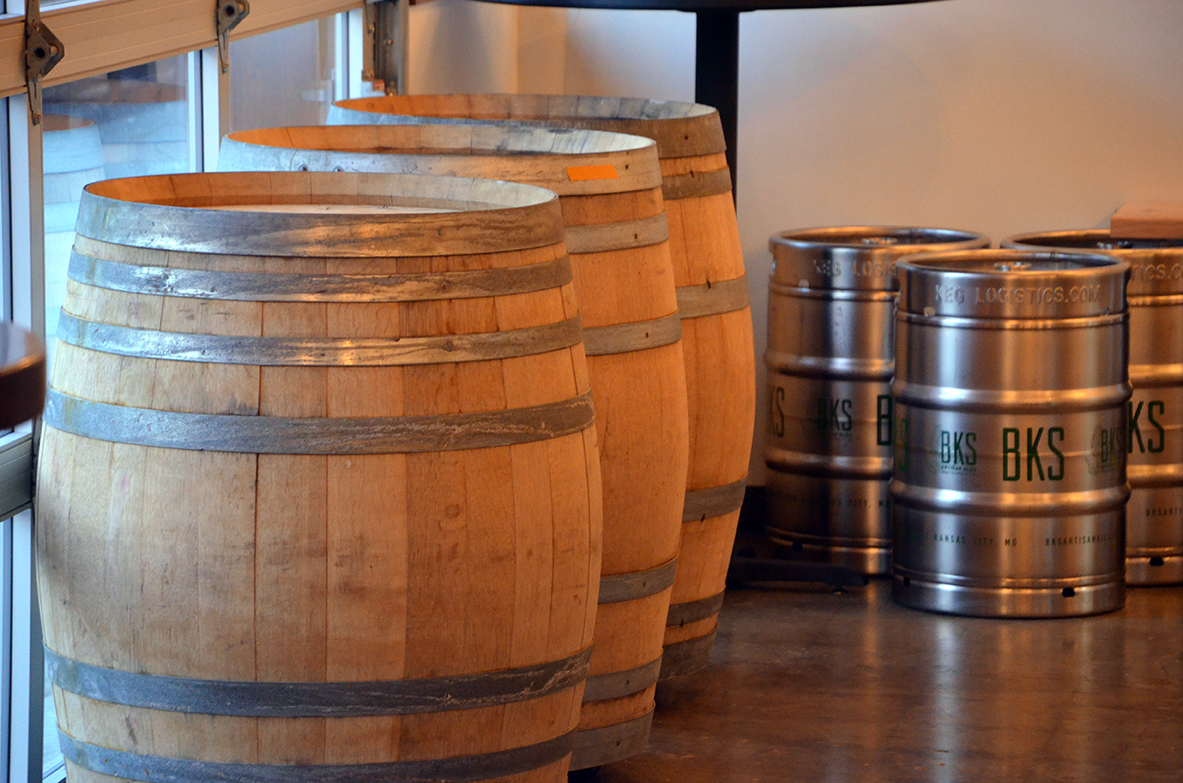
“It’s not going to be open to the public. It actually just expands our capacity to ferment beer,” Brian Rooney said. “The upstairs will house red and white wine barrels that you can put beer into and age them. Like farmhouse sour beers will age anywhere from three to 12 months up there. A quarter of the space will be walled off for bourbon, rum and apple brandy barrels for stouts. That will allow us to do even more interesting stuff for our tasting room.”
Rigby’s building also houses a retail home goods shop, home goods maker, hat maker, organic food shop and pilates studio. The second floor will feature a hair salon, the brewery extension and likely office space, the developer said.
“At a time when chains and big companies are taking over a lot of our neighborhoods, we really feel like this East Brookside area will be a great home for small businesses like BKS Artisan Ales and others,” he said. “We hope BKS attracts neighborhood people to come in and shop and be part of that 63rd Street corridor.”
“I think they’re going to be wildly successful,” Rigby added.
The Rooneys, who live only a few blocks from the business, are happy to add a creative space to Brookside East, they said.
“We’re from the neighborhood, so we’re really invested in this area of town from a business and home perspective,” Mary Rooney said. “For us, it’s great to be part of the community. We started this to give good quality beer to our neighborhood.”

Featured Business

2018 Startups to Watch
stats here
Related Posts on Startland News

‘Never settle’: He started small, now Drue Stewart is bringing TikTok-famous food to former Westport Ale House
‘Bigger, better, crazier; Never settle; The building had a dark cloud but we are going to bring new life to it’ Less than a year after opening Holy Brunch KC in Westport — and one small expansion — Drue Stewart is making an enormous leap. He’ll go from 2,000-square-feet on one floor, to a 16,000-square-foot…

Great Jobs KC leaps closer to its $100M goal with massive grant to support adult financial stability
A just-announced $60 million investment by the Ewing Marion Kauffman Foundation marks a significant step in a Kansas City-based nonprofit’s plans to support 50,000 adults on their journeys toward financial stability, said Earl Martin Phalen. The grant to Great Jobs KC serves three priorities outlined within the Kauffman Foundation’s new grantmaking strategy: college access and…

Teens tackle universal pain points: Junior Achievement competition pushes students to pitch biz ideas
A new student innovation competition linked to Junior Achievement not only challenges Kansas City teens to develop business solutions for immediate real-world problems, said Will Bowler; fostering entrepreneurial thinking develops longer-term impacts. “This program empowers them,” said Bowler, a teacher at Olathe East High School, as students wrapped up Tuesday’s 3DE Innovators Showcase at the…

Trio of early stage Kansas City startups tapped to join K-State Accelerator focused on boosting Kansas economy
MANHATTAN, Kansas — Seven startups are expected to begin work this month within the K-State Accelerator, earning funds, training and resources to turn their concepts into successful Sunflower State ventures. Three of the selected companies hail from the Kansas City area, including dScribe AI; 4D Leaders; and Rebound Jerseys. The eight-week, virtual Center for Entrepreneurship…