

Beyond Collisions: KCSourceLink duo craft book to build entrepreneurial ecosystems
January 12, 2018 | Bobby Burch
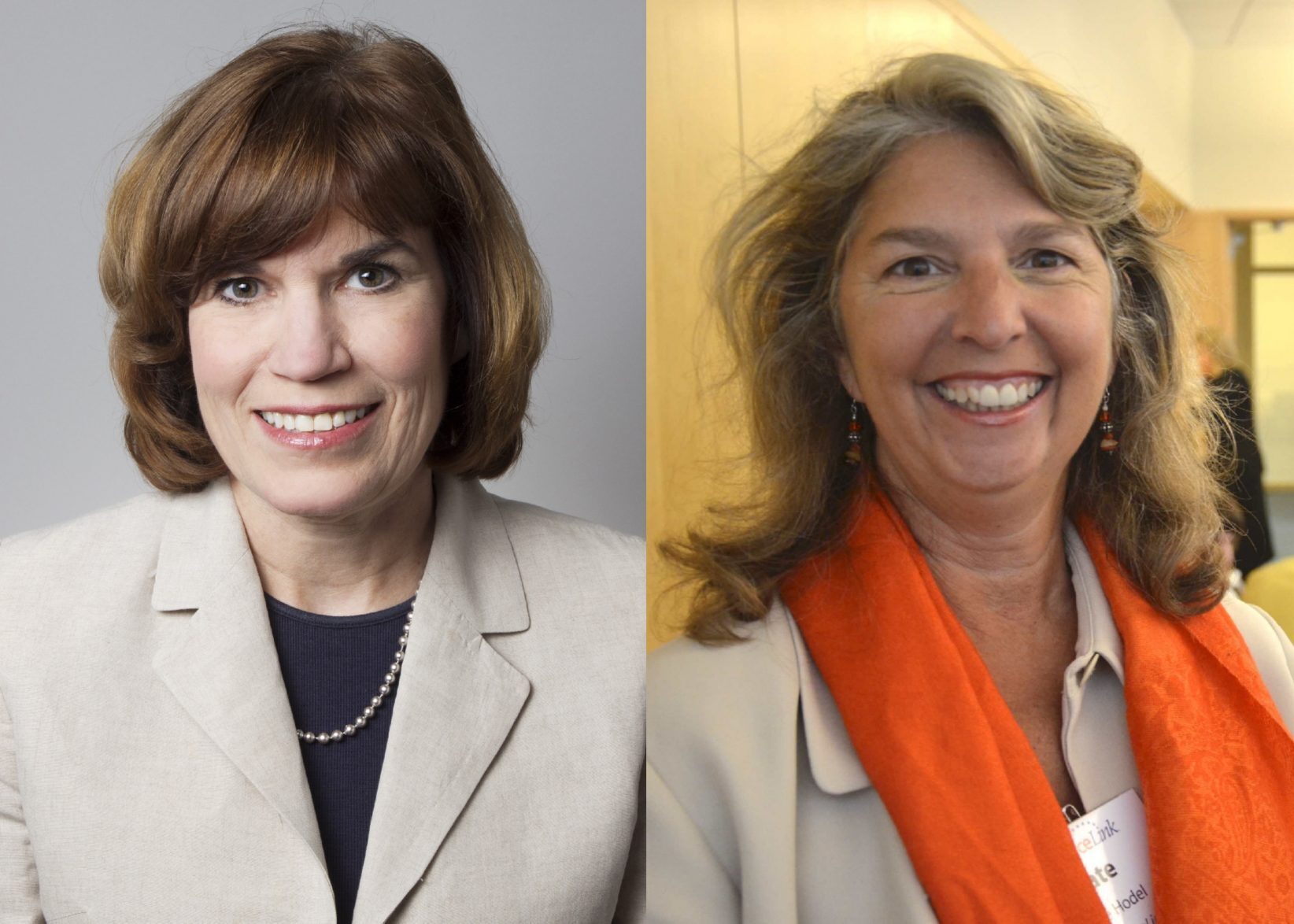
When you’ve worked more than 15 years cultivating an entrepreneurial community, you’re bound to pick up a wealth of tools and insight.
And in the case of Maria Meyers and Kate Hodel, the duo’s experience and knowledge have coalesced into a book that aims to provide cities a guide for how to broadly support entrepreneurs.
“Beyond Collisions: How to Build Your Entrepreneurial Infrastructure” posits that entrepreneurship is transforming modern economic development. The problem, however, is that entrepreneurial communities lack a roadmap for effective growth. But rather than prescribing a “silver bullet,” the book encourages an adaptive strategy to identify, connect and empower entrepreneurial support, and then measure the results.
Lessons in the book are derived in large part from Meyers’ and Hodel’s leadership at KCSourceLink, an entrepreneur support organization that connects business people with hundreds of resource partners in the Kansas City area, Hodel said.
“So much of the book is based on our experiences in building KCSourceLink,” said Hodel, “You could say that every one of our resource partners and all the entrepreneurs we’ve touched were contributors to this book.”
Startland News caught up with Hodel to discuss the book, its inspiration and how she hopes it helps other communities.
What’s your elevator pitch for this book?
In communities across America, people are trying to support entrepreneurs. They know entrepreneurs add jobs, character and vitality to a community’s economy. “Beyond Collisions: How to Build Your Entrepreneurial Infrastructure,” gets behind the meetups, the accelerators and the hackathons to provide a guide for how to support entrepreneurs — how to build the entrepreneurial infrastructure.
What can ecosystem builders expect from this book?
“Beyond Collisions” provides a clear, proven path to building the entrepreneurial infrastructure that can enable people to start and grow thriving companies. Section one addresses why a community should support entrepreneurship, what an entrepreneurial infrastructure looks like and who benefits. Section two provides practical, tactical steps to identify, connect, empower and measure the entrepreneurial infrastructure. Section three outlines strategies around marketing, funding and leadership.
Sprinkled throughout are stories from the field, firsthand accounts of building networks, encouraging entrepreneurs and analyzing outcomes.
What was your inspiration to write this?
The thousands of entrepreneurs we’ve worked with across the country, as well as the hundreds of people who get up every day and try to help entrepreneurs be successful. People from all over see Kansas City as a model for supporting entrepreneurs. They call us for help and we end up telling them the same stories. We thought it made sense to put that information into a book and make it more accessible, just like our networks make resources more accessible to entrepreneurs.
What was the biggest challenge in writing this book?
Deciding what to leave in and what to take out. There were so many stories we could tell, we had to find a way to focus. That’s why we started with those who support entrepreneurs as the audience, not the entrepreneurs themselves. This isn’t a book about how to start or grow a business. It’s about how to create the infrastructure that allows others to be more successful in starting and growing companies. We also used four key strategies — identify, connect, empower and measure — as an organizing framework.
What surprised you most while writing this book?
So many people were so generous with their time and expertise. We interviewed about 40 people for this book, and all were so willing to share their experiences. These people are the entrepreneurs of entrepreneurship. They’ve been working with entrepreneurs, trying new things, pivoting, for a lot of years. Their stories are educational and inspirational.
Is this your first book?
This is our first book. It’s the first in a series called “Changing the Economy.” We are starting to see more communities add creation to their two typical economic development strategies of attraction and retention. We believe there’s even more we can contribute in terms of how best to support entrepreneurs, and how to measure the impact of that support.
What was this project like to put together?
Writing this book was great fun. In some ways, it was like a reunion. We got to talk with people we’ve worked with over the 15 years since KCSourceLink was founded, and revisit with them some of their best ideas and some that did not work quite as well. … The entire SourceLink and KCSourceLink teams were instrumental, from suggesting interviews to editing copy to designing covers to doing the actual work that we write about. They are amazing!
What’s the Kansas City community meant to this project?
The Kansas City community deserves a share of the credit for what we’ve been able to accomplish in entrepreneurship, thus giving us something to write about. The spirit of collaboration here enabled us to take the seeds of an idea — a network of resources for entrepreneurs — and turn that into a hub for entrepreneurial infrastructure is something very special.

Featured Business

2018 Startups to Watch
stats here
Related Posts on Startland News

Biz class to barista: UMKC student’s mobile matcha cart hand-whisks crowds of thirsty fans
Editor’s note: The following story was published by KCUR, Kansas City’s NPR member station, and a fellow member of the KC Media Collective. Click here to read the original story or here to sign up for KCUR’s email newsletter. [divide] HerCafe, a matcha business founded by a University of Missouri-Kansas City student and her friend, has found success with its…
Tim Tebow to entrepreneurs: Embrace the heavy lift if you want to reap life’s real profits
COLUMBIA, Mo. — Business should be about driving impact, not just scoring another win, said former NFL quarterback Tim Tebow — challenging Midwest entrepreneurs, community builders, and investors to consider outcomes that boost others, not just one’s personal pocketbook. “Probably everybody in this room has been super blessed with skill sets, resources, relationships, opportunities, companies,…

Here’s how a Prospect renewal project invests in both those who built KC and the city’s future
Economic development initiatives are measured not just in buildings, but in opportunity, said Melissa Patterson Hazley, lauding the use of the Central City Economic Development (CCED) Sales Tax Program to transform underutilized parcels in Kansas City into modern, energy-efficient housing that support long-term neighborhood vitality. “Projects like Prospect Summit represent the intentional work of making…

Fusing talent, passion: Serial founder trades his Screamin Cow for offshore talent hiring platform
Brad Starnes’ itch to lean into a newly realized pain point at the end of 2024 led to the acquisition of his Screamin Cow Marketing Group and the launch of another passion project, the former UMKC Student Entrepreneur of the Year shared. With the move — which sees Screamin Cow transitioned to Builders of Authority…