

‘Be the Boss’ invites probation, parole clients into entrepreneurial ecosystem
January 20, 2018 | Tommy Felts
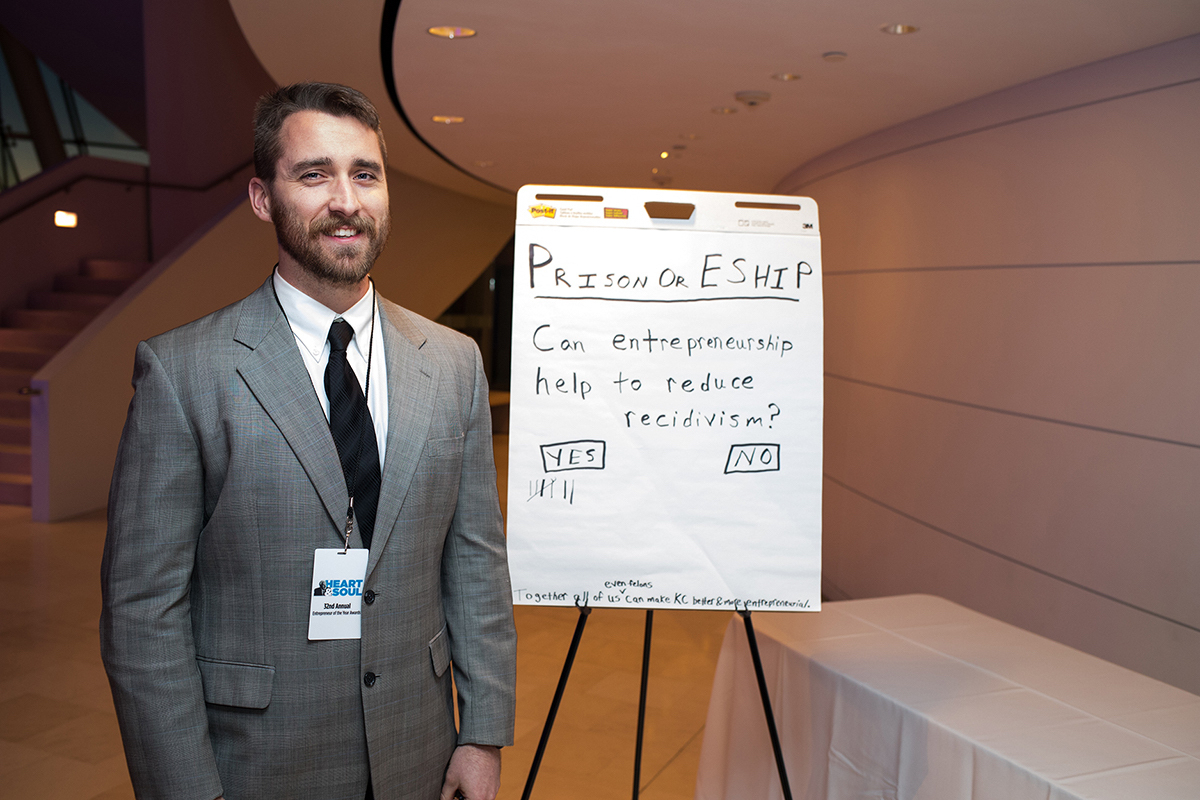
Would-be entrepreneurs who are returning from incarceration shouldn’t feel excluded from Kansas City’s startup ecosystem, Kyle J. Smith said.
Be the Boss, a support group launching next month under Smith’s leadership, aims to provide a welcoming environment free from the stigma associated with a criminal history, he said.
“When we’re being honest about the elephant in the room, people can breathe a little easier. And we can also figure out how to deal with their specific needs,” said Smith, senior communications coordinator at KCSourceLink and a community organizer for Kansas City’s One Million Cups.
While all local programs and resources for early stage entrepreneurs technically are already open to probation and parole clients, more can be done to attract talent from the pool of 350 citizens who return from incarceration to the Kansas City area each month, he said.
The idea is not only to strengthen the entrepreneur community, but to build businesses that ultimately will employ even more people returning from prison, Smith said. It’s an outcome that would reduce recidivism all around, he said.
“Like a lot of people, I look out at the criminal justice system and think about all of the folks who are incarcerated in the United States, and just say, ‘Wow. What a huge mess.’ It feels like there’s not much we can do as regular people,” Smith said. “Then it struck me that there was something small that I could do to help people here in Kansas City by leveraging the ecosystem and the connections that already exist.”
Be the Boss is expected to convene the second and fourth Thursdays of each month at the University of Missouri-Kansas City’s Innovation Center. A session for first-timers is set for 6:30 p.m., followed by the full group at 7 p.m., Smith said. The curriculum is based on self-preparation, business feasibility and goal setting.
“For those folks who might not be ready to take that next step down their entrepreneurial endeavor, if they still want to hang out and think through their business ideas, they can loop it in, and have a nice, supportive system where they can gain understanding of the entrepreneur mindset and the rigors of owning a business,” he said.
Smith’s approach requires cooperation between members of the entrepreneur and re-entry communities to address the unique challenges of returning citizens, he said.
“Yeah, the idea of starting a business is cool, but some of these folks are still trying to figure out housing, transportation and jobs,” he said. “The re-entry community is really big on getting folks into good, stable, living-wage jobs, if at all possible, so they have the support they need.”
Inspired by the Ewing Marion Kauffman Foundation’s Zero Barriers initiative and developed through UMKC’s E-Scholars, the program will serve as a test to see what kinds of entrepreneur support that probation and parole clients find most useful, he said. Smith’s long-term goal is to create a program to hire returning citizens to help fight blight in Kansas City, while teaching them entrepreneurial skills so they can become job creators, he said.
“I know when I actually start working with people through Be the Boss that I’m going to learn all sorts of things about what this looks like in real life,” Smith said. “I anticipate having to figure a lot of it out as each of these obstacles make themselves apparent. But so far in my research, I’ve been really impressed by the generosity of the entrepreneur community.”
Through his podcast, Prison or ESHIP, Smith further explores the power of entrepreneurship to reduce recidivism, he said.

Featured Business

2018 Startups to Watch
stats here
Related Posts on Startland News
FanThreeSixty teams with national champs, turning data into actionable plays to boost revenue, KU fan experience
Another national championship title isn’t the only banner win the University of Kansas Athletics is adding to its rafters this year. Weeks after scoring the NCAA men’s basketball title, the university has partnered with Kansas City-dunked FanThreeSixty to better connect with its fanbase in seasons to come. “By partnering with FanThreeSixty, not only will Kansas…

Small biz could be solution to supply chain woes, says Children’s Mercy CEO; Why shared economic prosperity catalyzes innovation
Editor’s note: The following story was sponsored by KC Rising, a regional initiative to help Kansas City grow faster and more intentionally, as part of a campaign to promote its CEO-to-CEO Challenge on supplier diversity. It’s all about the ripple effect of outcomes, said Paul Kempinski, diagnosing the community health potential (and business case) for supplier diversity efforts. Corporate…

Mary Shannon’s two words to describe the complexity of supplier diversity: Competitive advantage
Editor’s note: The following story was sponsored by KC Rising, a regional initiative to help Kansas City grow faster and more intentionally, as part of a campaign to promote its CEO-to-CEO Challenge on supplier diversity. Don’t try to fake your way through diversity initiatives for optics, advised Mary Shannon, noting half-hearted commitment to efforts like supplier diversity — which…

Why a social network for basketball players bounced off court to recruit STEM, solar players
In an industry where connections can mean as much as talent, DeMarcus Weeks envisioned a LinkedIn-type network to create exposure for athletes — specifically basketball players from historically Black colleges and universities, as well as other small schools. Put in his words: to give the small guys a voice by providing them a network to connect…