

Harvard University recognizes KCMO digital inclusion map
December 11, 2017 | Bobby Burch
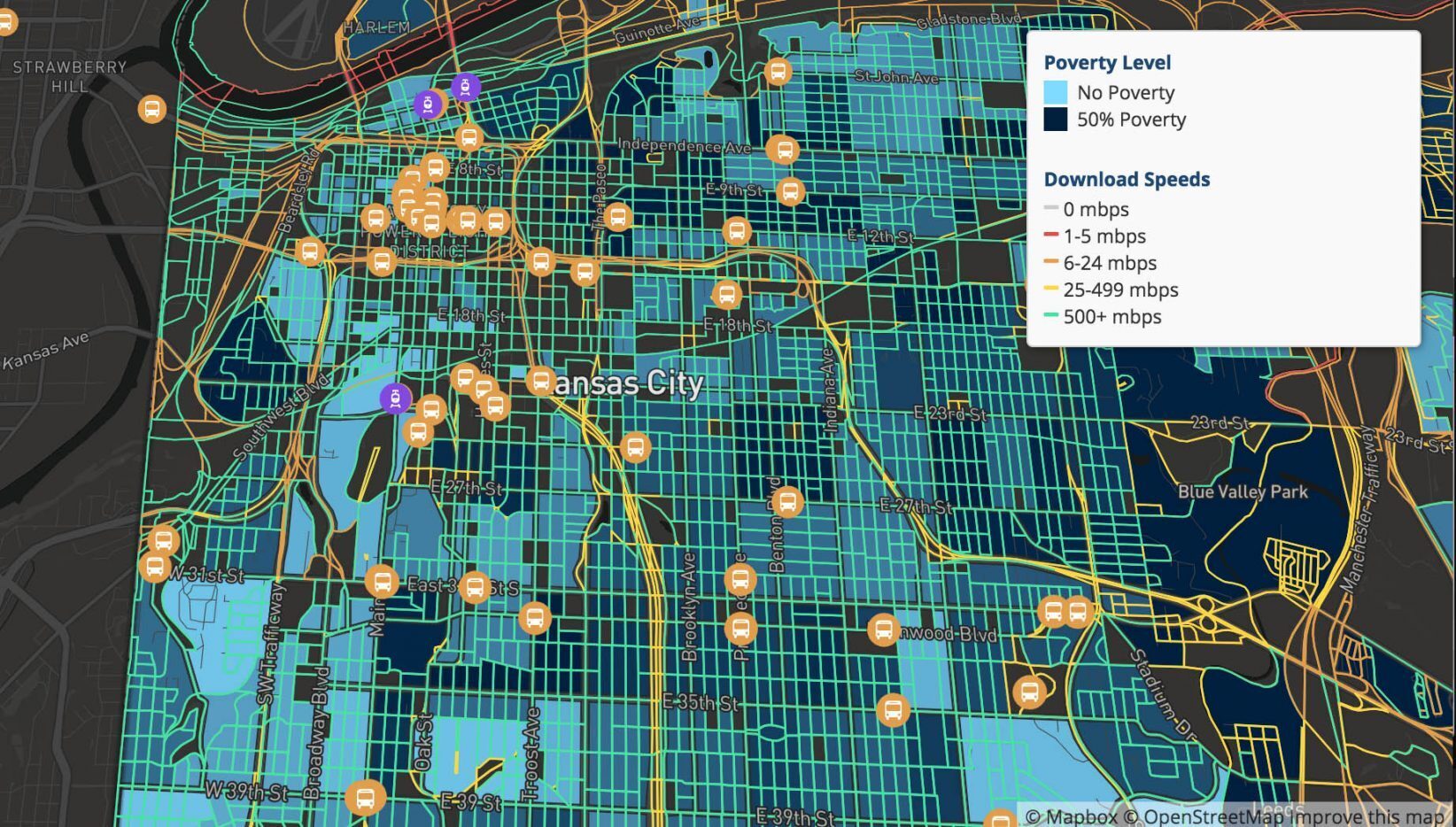
Kansas City’s geographic work to illustrate the area’s digital divide earned high praise from a prestigious university.
Harvard University recently highlighted the City of Kansas City, Missouri’s Digital Inclusion map, a tool that — at a block-by-block scale — detail residents’ access to internet connectivity overlaid with poverty levels.
“This visualization was chosen as Harvard’s Map of the Month for its ability to reveal insights on the far-reaching influence of Internet connectivity,” Harvard’s Chris Bousquet wrote. “By comparing broadband speeds and poverty data, the map shows a correlation between high-speed Internet and resident’s economic prospects, and displays this relationship in a striking UX.”
Created in collaboration with the KCMO Smart City initiative and software firm Xaqt, the map pulls data from the Federal Communications Commission and U.S. Census Bureau to show the correlation between internet access and poverty. Users can hover a cursor over various areas in Kansas City, Missouri, and compare poverty levels with the maximum advertised broadband speeds, as provided by various internet service providers.
Released in May, the tool was created to equip city officials, nonprofits and private organizations more information on how to most effectively connect residents to the internet.
Internet access has a profound impact on residents economic and educational opportunity, said Rick Usher, assistant city manager for small business and entrepreneurship for KCMO. While the Harvard recognition is satisfying, the city must continue pursuing its goal of digital equity for Kansas City’s more than 500,000 residents, Usher added.
“Our digital inclusion efforts should be focused on assisting residents of our most economically distressed neighborhoods in understanding the benefits and relevance of internet use in today’s economy,” he said. “The map has helped us recognize opportunities across city departments to collaborate in shared efforts to serve residents in neighborhoods that have suffered disinvestment and economic distress.”
Thanks to a HireKCYouth Internship project this summer, the map will be even more robust, Usher said. KCMO will soon be adding internet adoption data to the map, as well as Community Learning Center Network locations where residents can tap free access to computers and the internet, he added.
The map also marks a blossoming relationship between the KCMO Smart City initiative and the city’s digital equity efforts, Usher said. That collaborative spirit is spreading to other that are creating similar high tech efforts.
“It’s now becoming a positive trend in cities implementing smart city concepts across the U.S.” Usher said. “Our map underscores the capabilities of smart city data visualization tools to assist in informing decision making across city departments focused on improved quality of life for our residents.”
To learn more about the recognition, click here or to use the map, click here.

Featured Business

2017 Startups to Watch
stats here
Related Posts on Startland News

Brewkery closing its North KC kombucha taproom as ‘Lucky Elixir’ production heats up
Five years after opening its popular North Kansas City hot spot, the Brewkery — home of Lucky Elixir Kombucha — is moving and closing its taproom, co-founder Amy Goldman shared. With its lease about to end and rent increasing substantially, Goldman said, the move makes sense for the growing kombucha business. Although it’s bittersweet to…

Variety entertainer’s magic trick: Knowing whether his audience wants a clown (or Ruby in drag)
Dennis Porter’s success as a performer is scripted by the North Kansas City native’s talent at reading a room — adapting his jokes and wide variety of entertainment styles to fit the audience. If he’s doing it right, one of Porter’s characters brings a healthy grin to their happy faces, he said. “I am over-blessed…
Broadband internet is no longer a luxury; meet a group bringing access to KC’s most underserved children, families
Editor’s note: The following is the second in a series of stories focused on digital inclusion efforts in Kansas City, and is presented by Google Fiber. Those seeking change and equity in a rapidly evolving world of tech access must go directly to the people in need if they wish to truly eradicate the digital…

GIFT hopes NFL Draft visitors touch down at Saturday’s Black Business Market; nonprofit passes $1M in grants given
Packed streets for the NFL Draft around Union Station and downtown this week could mean added traffic to Saturday’s Black Business Market on Kansas City’s east side, said Brandon Calloway. “We’re gonna drive as many people over here so they see the vibrancy that can happen on Prospect, as well as exposing a lot of…