

Harvard University recognizes KCMO digital inclusion map
December 11, 2017 | Bobby Burch
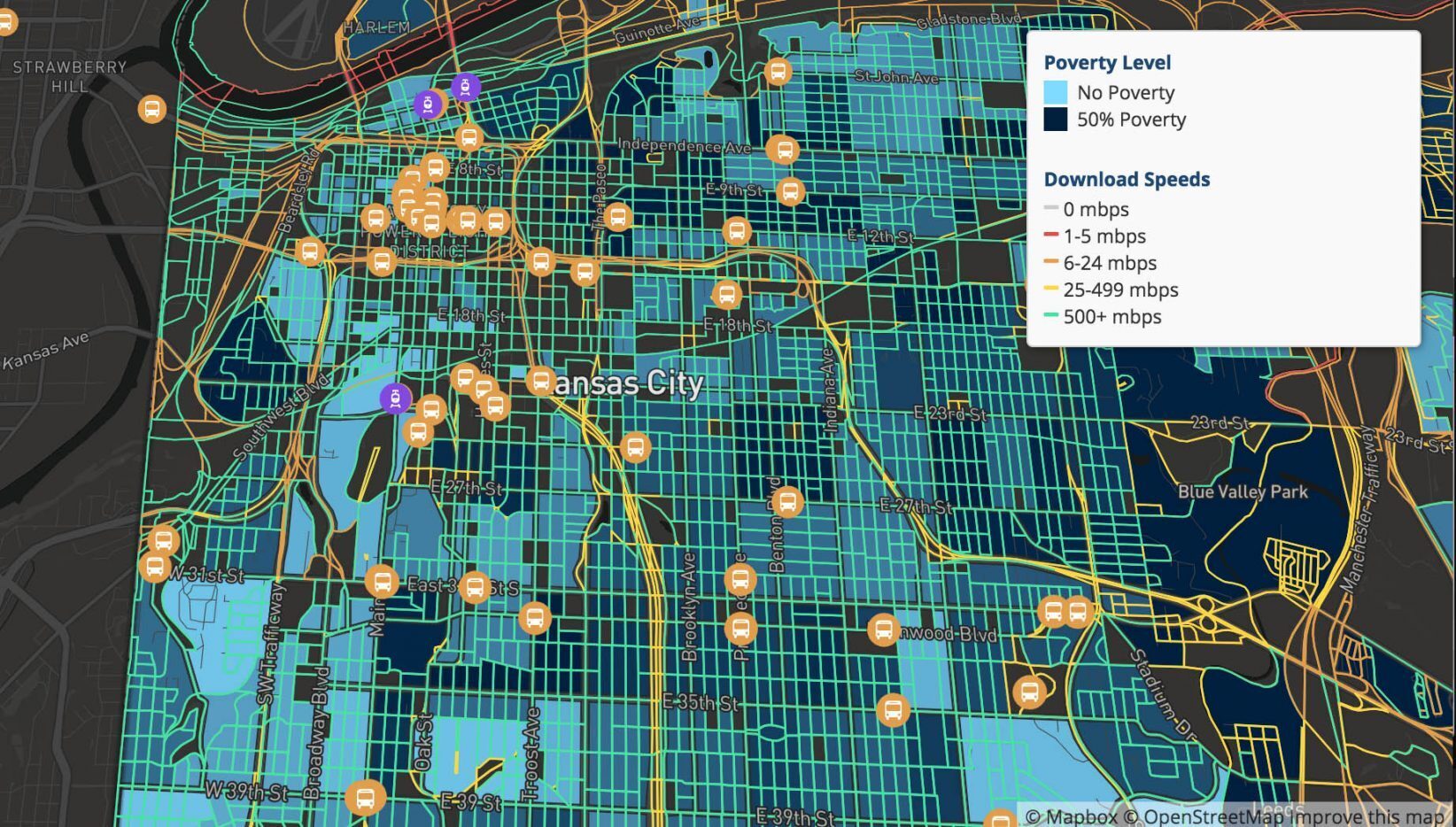
Kansas City’s geographic work to illustrate the area’s digital divide earned high praise from a prestigious university.
Harvard University recently highlighted the City of Kansas City, Missouri’s Digital Inclusion map, a tool that — at a block-by-block scale — detail residents’ access to internet connectivity overlaid with poverty levels.
“This visualization was chosen as Harvard’s Map of the Month for its ability to reveal insights on the far-reaching influence of Internet connectivity,” Harvard’s Chris Bousquet wrote. “By comparing broadband speeds and poverty data, the map shows a correlation between high-speed Internet and resident’s economic prospects, and displays this relationship in a striking UX.”
Created in collaboration with the KCMO Smart City initiative and software firm Xaqt, the map pulls data from the Federal Communications Commission and U.S. Census Bureau to show the correlation between internet access and poverty. Users can hover a cursor over various areas in Kansas City, Missouri, and compare poverty levels with the maximum advertised broadband speeds, as provided by various internet service providers.
Released in May, the tool was created to equip city officials, nonprofits and private organizations more information on how to most effectively connect residents to the internet.
Internet access has a profound impact on residents economic and educational opportunity, said Rick Usher, assistant city manager for small business and entrepreneurship for KCMO. While the Harvard recognition is satisfying, the city must continue pursuing its goal of digital equity for Kansas City’s more than 500,000 residents, Usher added.
“Our digital inclusion efforts should be focused on assisting residents of our most economically distressed neighborhoods in understanding the benefits and relevance of internet use in today’s economy,” he said. “The map has helped us recognize opportunities across city departments to collaborate in shared efforts to serve residents in neighborhoods that have suffered disinvestment and economic distress.”
Thanks to a HireKCYouth Internship project this summer, the map will be even more robust, Usher said. KCMO will soon be adding internet adoption data to the map, as well as Community Learning Center Network locations where residents can tap free access to computers and the internet, he added.
The map also marks a blossoming relationship between the KCMO Smart City initiative and the city’s digital equity efforts, Usher said. That collaborative spirit is spreading to other that are creating similar high tech efforts.
“It’s now becoming a positive trend in cities implementing smart city concepts across the U.S.” Usher said. “Our map underscores the capabilities of smart city data visualization tools to assist in informing decision making across city departments focused on improved quality of life for our residents.”
To learn more about the recognition, click here or to use the map, click here.

Featured Business

2017 Startups to Watch
stats here
Related Posts on Startland News

How one KC startup studio helps feel-good ventures grow impact while actually making money
Running a social venture comes with an inherent challenge for founders, shared Jacqueline Erickson Russell, emphasizing they must balance purpose and profit. Social Venture Studio — powered by LaunchKC — offers support along that journey, added Erickson Russell, the founder and CEO of Social Impact Advising Group and consultant for the Kansas City-based program. “Complex…

This hard swap plays easy: How one KC producer juggles community, breaking the club music cookie cutter
Tyler Jordan’s new spin on DJing: amplify fellow artists and unite people through music, he shared. Jordan — who produces electronic music and DJs under the name Oblivinatti (a mashup of his favorite video game growing up, The Elder Scrolls: Oblivion, and his interest in conspiracy theories) — is evolving his sound production business Vibration…

Art and technology too often butt heads, festival planners say; River Market event paints a reality where they coexist
The River Market Art Festival is back after a 20-year hiatus — with a nod to the past and an eye toward the future, shared The AI Hub’s Taylor Burris and James Spikes, startup founders who are hosting the event in partnership with the River Market Community Association. The revival of the art festival —…
PayIt co-founder: No one-size-fits-all formula for scaling one of KC biggest startup ideas
Mike Plunkett’s journey with PayIt came to an early, but critical crossroads when a wealthy entrepreneur offered half-million dollars to support the Kansas City-built govtech venture, he recalled. The catch: this investor insisted on imposing control and veto power as they committed more funds. Despite being low on funds, the PayIt team — led by…