

Harvard University recognizes KCMO digital inclusion map
December 11, 2017 | Bobby Burch
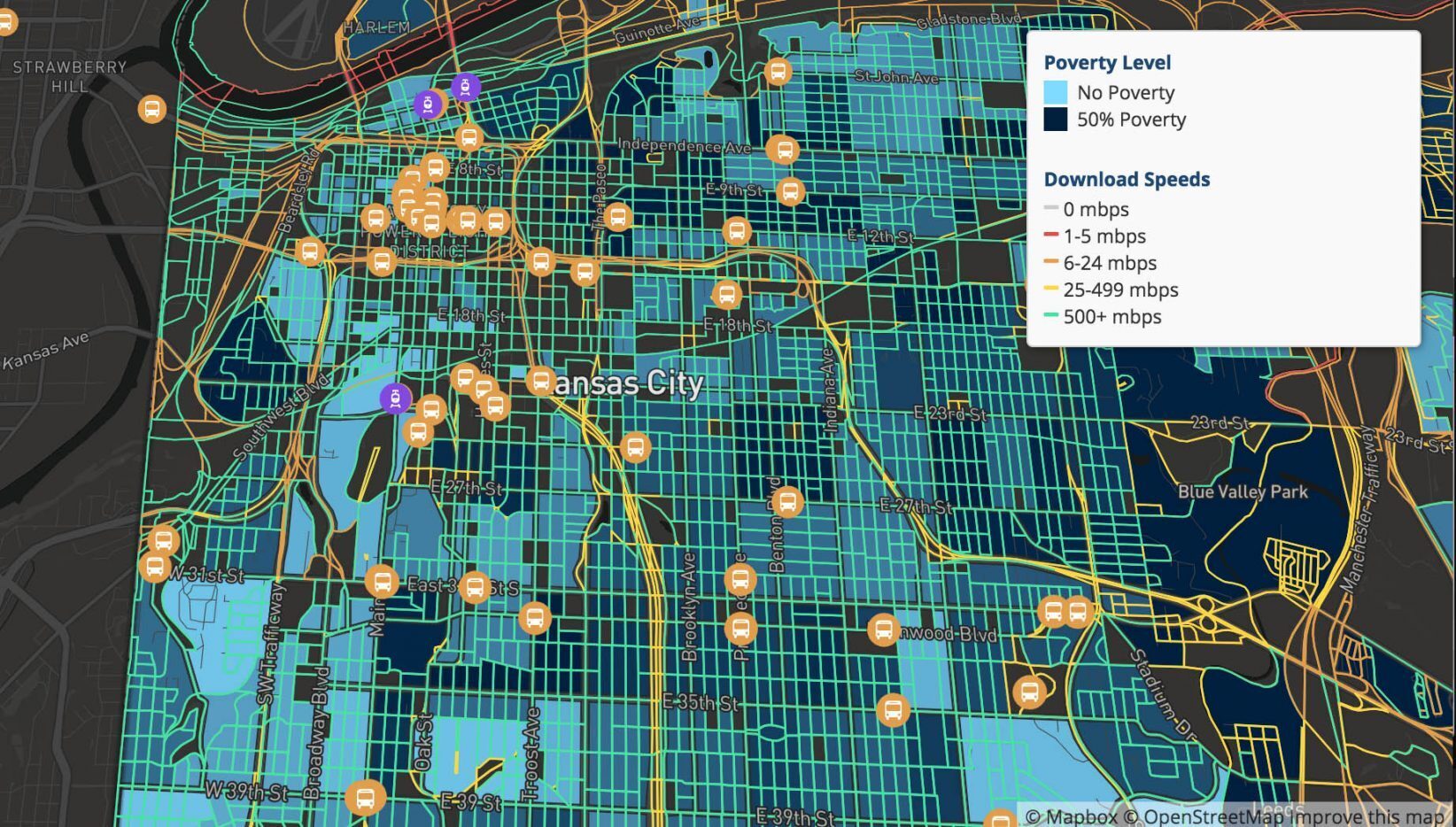
Kansas City’s geographic work to illustrate the area’s digital divide earned high praise from a prestigious university.
Harvard University recently highlighted the City of Kansas City, Missouri’s Digital Inclusion map, a tool that — at a block-by-block scale — detail residents’ access to internet connectivity overlaid with poverty levels.
“This visualization was chosen as Harvard’s Map of the Month for its ability to reveal insights on the far-reaching influence of Internet connectivity,” Harvard’s Chris Bousquet wrote. “By comparing broadband speeds and poverty data, the map shows a correlation between high-speed Internet and resident’s economic prospects, and displays this relationship in a striking UX.”
Created in collaboration with the KCMO Smart City initiative and software firm Xaqt, the map pulls data from the Federal Communications Commission and U.S. Census Bureau to show the correlation between internet access and poverty. Users can hover a cursor over various areas in Kansas City, Missouri, and compare poverty levels with the maximum advertised broadband speeds, as provided by various internet service providers.
Released in May, the tool was created to equip city officials, nonprofits and private organizations more information on how to most effectively connect residents to the internet.
Internet access has a profound impact on residents economic and educational opportunity, said Rick Usher, assistant city manager for small business and entrepreneurship for KCMO. While the Harvard recognition is satisfying, the city must continue pursuing its goal of digital equity for Kansas City’s more than 500,000 residents, Usher added.
“Our digital inclusion efforts should be focused on assisting residents of our most economically distressed neighborhoods in understanding the benefits and relevance of internet use in today’s economy,” he said. “The map has helped us recognize opportunities across city departments to collaborate in shared efforts to serve residents in neighborhoods that have suffered disinvestment and economic distress.”
Thanks to a HireKCYouth Internship project this summer, the map will be even more robust, Usher said. KCMO will soon be adding internet adoption data to the map, as well as Community Learning Center Network locations where residents can tap free access to computers and the internet, he added.
The map also marks a blossoming relationship between the KCMO Smart City initiative and the city’s digital equity efforts, Usher said. That collaborative spirit is spreading to other that are creating similar high tech efforts.
“It’s now becoming a positive trend in cities implementing smart city concepts across the U.S.” Usher said. “Our map underscores the capabilities of smart city data visualization tools to assist in informing decision making across city departments focused on improved quality of life for our residents.”
To learn more about the recognition, click here or to use the map, click here.

Featured Business

2017 Startups to Watch
stats here
Related Posts on Startland News

PopBookings rallies as KC startup looks for its own key hires: ‘We’re back in a big, big way’
After dialing back its event staffing platform’s operations during the pandemic, Kansas City-grown PopBookings is back online in the Midwest — ramping up hiring as it works toward a Series A funding round by year’s end. “Kansas City has a real nurturing feel to it. And this community is why I believe we’ll have our…

$11M renovation in the works for historic hub of Black entrepreneurship; project ties into 18th Street pedestrian mall plans
Editor’s note: The following story was originally published by AltCap, an ally to underestimated entrepreneurs that offers financing to businesses and communities that traditional lenders do not serve. For more than one hundred years, the Lincoln Building has served as a cornerstone of commerce and community in the 18th and Vine district. The historic district —…

MTC’s spring $1.4M investment cycle loops Facility Ally, DevStride into equity deals
Two Kansas City startups are among a handful of Missouri companies receiving a collective $1.4 million in investment allocations through a state-sponsored venture capital program. Facility Ally, led by serial entrepreneur Luke Wade; and DevStride, co-founded by Phil Reynolds, Chastin Reynolds, Aaron Saloff and Kujtim Hoxha; must now complete the Missouri Technology Corporation’s due diligence process…
Kauffman CEO: Foundation’s reset aligns Mr. K’s intent with KC’s needs of the moment
A recently announced strategy refresh for the Ewing Marion Kauffman Foundation will drive the organization’s collective impact in the community — honoring the vision of its namesake while recognizing the challenges Kansas City faces today, said Dr. DeAngela Burns-Wallace. “Mr. K had very distinct philosophies and ideas around how he wanted this work done,” explained…