

Procrastinating? Eat the frog, don’t chase the squirrels
November 14, 2017 | Bobby Burch
On the metal wall in front of my desk, I’ve magnetically fastened a famous recommendation from Mark Twain.
“Eat a live frog first thing in the morning and nothing worse will happen to you the rest of the day,” the humorist from Missouri wrote.
 Though it can become an aspiration rather than a rule, the quote nonetheless renders reflection as I settle in each day, weighing a sundry of shiny opportunities that might veer me into either productiveness or pointlessness.
All too often, the wart-covered frog of procrastination hops to the forefront of my day. Personally, it isn’t so much a metaphoric frog as it is a group of squirrels that distract me from what’s important. When I capture one, another tree rat cackles with laughter, ensnaring my attention.
Thus when it came to some last-minute, Friday-afternoon planning for a packed Global Entrepreneurship Week, an event titled “Eat That Frog!” immediately stood out.
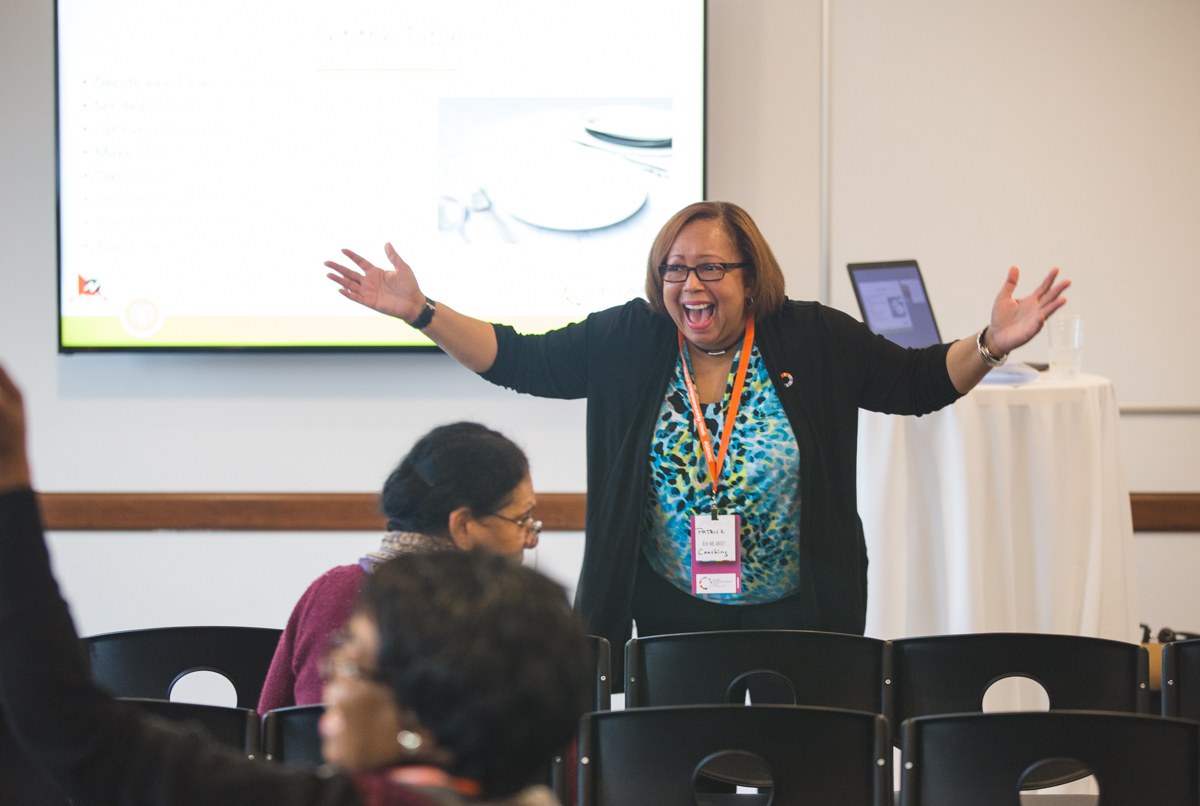
Led by Kansas City-based P/Strada CEO Patrice Manuel, the conversation jumped into a variety of tips to overcome procrastination found in “Eat That Frog!” by Brian Tracy.
With Manuel serving as reverend and counselor, the conversation blended a therapy session with a church service for the disciplines of self-improvement. Attendees shared challenges and stories with the group, as Manuel, a former U.S. Army officer, advised, consoled and disagreed with guests’ tactics.
Here are a few nuggets from the event that my fellow procrastinators might employ to help prioritize their days and become more productive.
Consider the consequences
Facing an array of tasks that seem equally important can be paralyzing when trying to determine how to spend your time.
What can help is to consider the consequences of doing or not doing something. The answers will be central to how important the task is to you, your team and your business. Once you have a clearer idea of the consequences, you should be able to better prioritize action.
“What’s the most valuable thing you can be doing right now?” Manuel told the group to ask itself when considering consequences. “Decide what you need to get done and be real about it.”
Let something go
Time is our most valuable resource, but it’s often what people are most willing to give away for free.
As professionals and entrepreneurs, we must be willing to embrace the word “no,” Manuel said. We also must be willing to delegate tasks to those on our team or to outsource services, she added.
“We get into this entreprenuer mode where we don’t want to ask people for help,” Manuel said. “But you need to ask for help. … Or outsource it.”
You only have so much time in a day, Manuel said, and if it isn’t vital, sometimes it must be cut. Alluding to the 80/20 rule, most people procrastinate on the top 20 percent of duties that are the most valuable but busy themselves with the least important 80 percent.
Let go some of that 80 percent, Manuel said.
“Is this going to change the course of my universe?” she asked, rhetorically. “If it’s not going to change the course of my universe, you may want to put it at a lower priority on your list.”
Identify your constraints
To conquer your true priorities, you must identify what’s holding you back.
To do that, Brian Tracy states in “Eat That Frog!” that you should ask yourself the following questions.
“What is holding you back? What sets the speed at which you achieve your goals? What determines how fast you move from where you are to where you want to go? What stops you or holds you back from eating the frogs that can really make a difference? Why aren’t you at your goal already?”
It’s important to know that many of our constraints are internal, and thus require reflection on personal responsibility. Once you identify the internal and external obstacles in front of your goals, you’re better able to move past them.
Upgrade your skills
Sometimes the best avenue to improve productivity is to enhance our abilities.
Be realistic about your skills and know when you might need to invest in yourself for the betterment of your organization. At times, procrastination can derive from a lack of confidence in an area, which can be an indication that it’s a skill you should upgrade, Manuel said.
“One of the most helpful of all time management techniques is for you to get better at your key tasks,” Tracy writes. “The better you are at a key task, the more motivated you are to launch into it. The better you are, the more energy and enthusiasm you have.”

Featured Business

2017 Startups to Watch
stats here
Related Posts on Startland News

Digital Sandbox expands to St. Joseph, partners with animal health incubator
Digital Sandbox KC will expand its efforts northwest to reach entrepreneurs in St. Joseph, Mo. The proof-of-concept program announced Wednesday that it has established a partnership with Innovation Stockyard, a St. Joseph-based animal science business incubator. Located inside the Christopher S. Kit Bond Incubator, Innovation Stockyard will offer grant recipients of Digital Sandbox office space…

Kansas Citian wins Missouri State Star for her business counseling
On Monday, a Kansas Citian was recognized by America’s Small Business Development Center as the State of Missouri’s most outstanding business counselor. Thanks to her contributions to the region’s business growth, Rebecca Gubbels was named the 2017 Missouri State Star. Gubbels is a business and program consultant at the University of Missouri–Kansas City’s Small Business…

KCRise Fund backs five more KC-area tech startups
Spurring engagement from dozens of area investors, the KCRise Fund has announced five new funding deals in area firms. Launched in 2016 in conjunction with the regional KC Rising economic initiative, the KCRise Fund has added ShotTracker, SMRxT, SquareOffs, Backlot Cars, and Bardavon Health Innovations to its portfolio of now 10 firms. The fund did…

Report: KC artists have spurred hundreds of millions for the region
It’s no secret that art has an impact on the heart and soul. But in Kansas City, art also has a significant impact on the economy. The art industry added a total of $276 million to the metro’s economy in 2015. The figure is a slight increase from the 2010 figure, according to a report…