

Procrastinating? Eat the frog, don’t chase the squirrels
November 14, 2017 | Bobby Burch
On the metal wall in front of my desk, I’ve magnetically fastened a famous recommendation from Mark Twain.
“Eat a live frog first thing in the morning and nothing worse will happen to you the rest of the day,” the humorist from Missouri wrote.
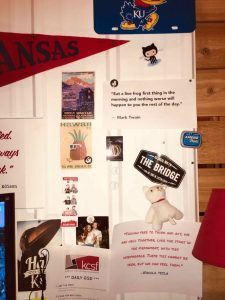 Though it can become an aspiration rather than a rule, the quote nonetheless renders reflection as I settle in each day, weighing a sundry of shiny opportunities that might veer me into either productiveness or pointlessness.
All too often, the wart-covered frog of procrastination hops to the forefront of my day. Personally, it isn’t so much a metaphoric frog as it is a group of squirrels that distract me from what’s important. When I capture one, another tree rat cackles with laughter, ensnaring my attention.
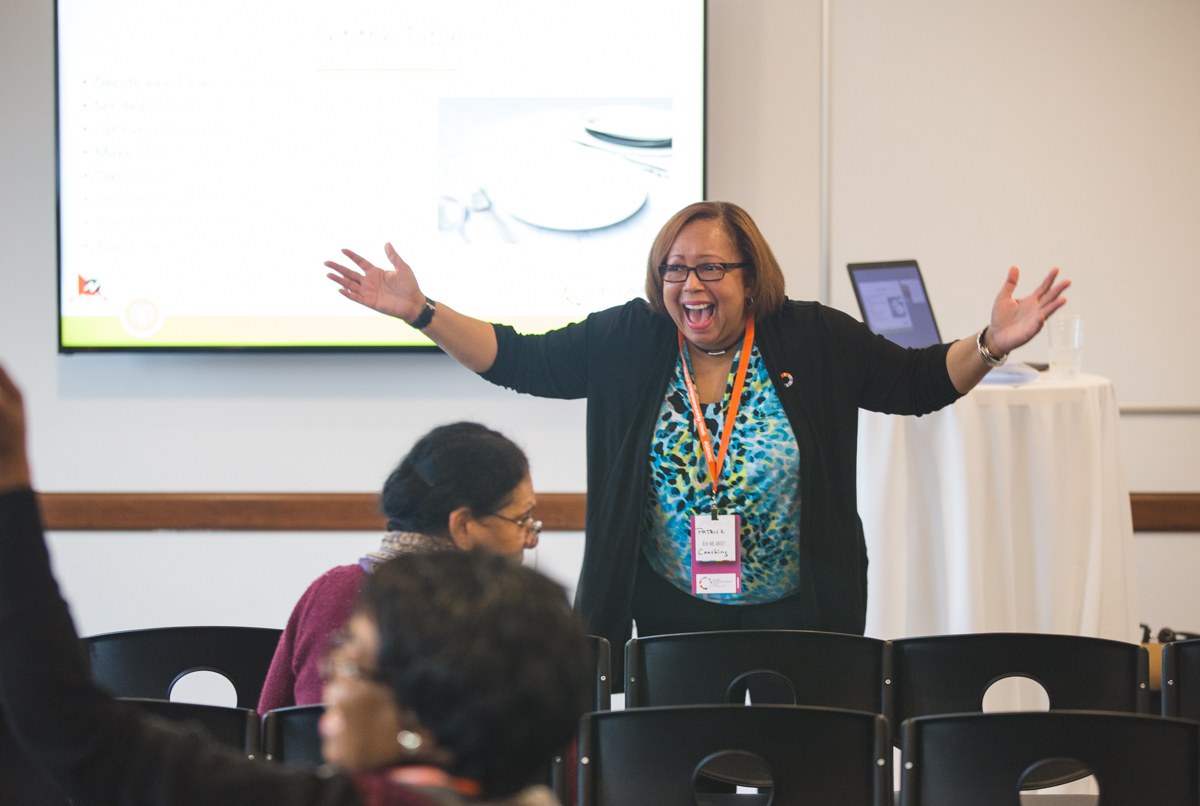
Thus when it came to some last-minute, Friday-afternoon planning for a packed Global Entrepreneurship Week, an event titled “Eat That Frog!” immediately stood out.
Led by Kansas City-based P/Strada CEO Patrice Manuel, the conversation jumped into a variety of tips to overcome procrastination found in “Eat That Frog!” by Brian Tracy.
With Manuel serving as reverend and counselor, the conversation blended a therapy session with a church service for the disciplines of self-improvement. Attendees shared challenges and stories with the group, as Manuel, a former U.S. Army officer, advised, consoled and disagreed with guests’ tactics.
Here are a few nuggets from the event that my fellow procrastinators might employ to help prioritize their days and become more productive.
Consider the consequences
Facing an array of tasks that seem equally important can be paralyzing when trying to determine how to spend your time.
What can help is to consider the consequences of doing or not doing something. The answers will be central to how important the task is to you, your team and your business. Once you have a clearer idea of the consequences, you should be able to better prioritize action.
“What’s the most valuable thing you can be doing right now?” Manuel told the group to ask itself when considering consequences. “Decide what you need to get done and be real about it.”
Let something go
Time is our most valuable resource, but it’s often what people are most willing to give away for free.
As professionals and entrepreneurs, we must be willing to embrace the word “no,” Manuel said. We also must be willing to delegate tasks to those on our team or to outsource services, she added.
“We get into this entreprenuer mode where we don’t want to ask people for help,” Manuel said. “But you need to ask for help. … Or outsource it.”
You only have so much time in a day, Manuel said, and if it isn’t vital, sometimes it must be cut. Alluding to the 80/20 rule, most people procrastinate on the top 20 percent of duties that are the most valuable but busy themselves with the least important 80 percent.
Let go some of that 80 percent, Manuel said.
“Is this going to change the course of my universe?” she asked, rhetorically. “If it’s not going to change the course of my universe, you may want to put it at a lower priority on your list.”
Identify your constraints
To conquer your true priorities, you must identify what’s holding you back.
To do that, Brian Tracy states in “Eat That Frog!” that you should ask yourself the following questions.
“What is holding you back? What sets the speed at which you achieve your goals? What determines how fast you move from where you are to where you want to go? What stops you or holds you back from eating the frogs that can really make a difference? Why aren’t you at your goal already?”
It’s important to know that many of our constraints are internal, and thus require reflection on personal responsibility. Once you identify the internal and external obstacles in front of your goals, you’re better able to move past them.
Upgrade your skills
Sometimes the best avenue to improve productivity is to enhance our abilities.
Be realistic about your skills and know when you might need to invest in yourself for the betterment of your organization. At times, procrastination can derive from a lack of confidence in an area, which can be an indication that it’s a skill you should upgrade, Manuel said.
“One of the most helpful of all time management techniques is for you to get better at your key tasks,” Tracy writes. “The better you are at a key task, the more motivated you are to launch into it. The better you are, the more energy and enthusiasm you have.”

Featured Business

2017 Startups to Watch
stats here
Related Posts on Startland News

Eyeing Midwest startups, Firebrand Ventures adds to advisory board
A Kansas City-based venture fund announced the addition of another distinguished advisory board member. Joining the team alongside Techstars CEO David Cohen, Kansas Citian Keith Harrington, who’s the managing director for Novel Growth Partners, and Brian McClendon, former Uber vice president of maps, Tom Ball is expected to bring his Austin-based investor experience to Firebrand Ventures. …
KCultivator: Plexpod founder Gerald Smith on Internet trolls, anti-gravity machines, man crush
Editor’s note: KCultivators is a lighthearted profile series to highlight people who are meaningfully enriching Kansas City’s entrepreneurial ecosystem. Check out our features on innovation coach Diana Kander, Victor & Penny’s Erin McGrane, SEED Law’s Adrienne Haynes, Code Koalas’ Robert Manigold, Prep-KC CEO Susan Wally and community builder Donald Carter. Plexpod is more than a shared…
LaunchKC $100K winner Cambrian Tech taking simple idea to new reality
After winning LaunchKC’s grand prize — $100,000 — Cambrian Tech has its virtual eyes on another prize: total interior home transformation. “The goal is to open your phone, walk around and visualize any project you may consider doing,” co-founder Joel Teply said. “From walls, countertops, backsplashes, flooring, cabinetry, appliances, hardware and landscaping.” DIY tech presents…
Techstars Spotlight: Somatic Labs’ sees freedom from distraction in touch tech
Somatic Labs is designing a technology for a future without screens, founder Shantanu Bala said. Imagine this: You’re driving in an unfamiliar neighborhood and instead of needing to look at your phone for directions, your wearable device uses physical sensations to direct you to your destination, keeping your eyes on the road. Or maybe you’re…