

Governor-in-waiting talks startup funding, Amazon and why entrepreneurism is bigger than KC
November 20, 2017 | Tommy Felts
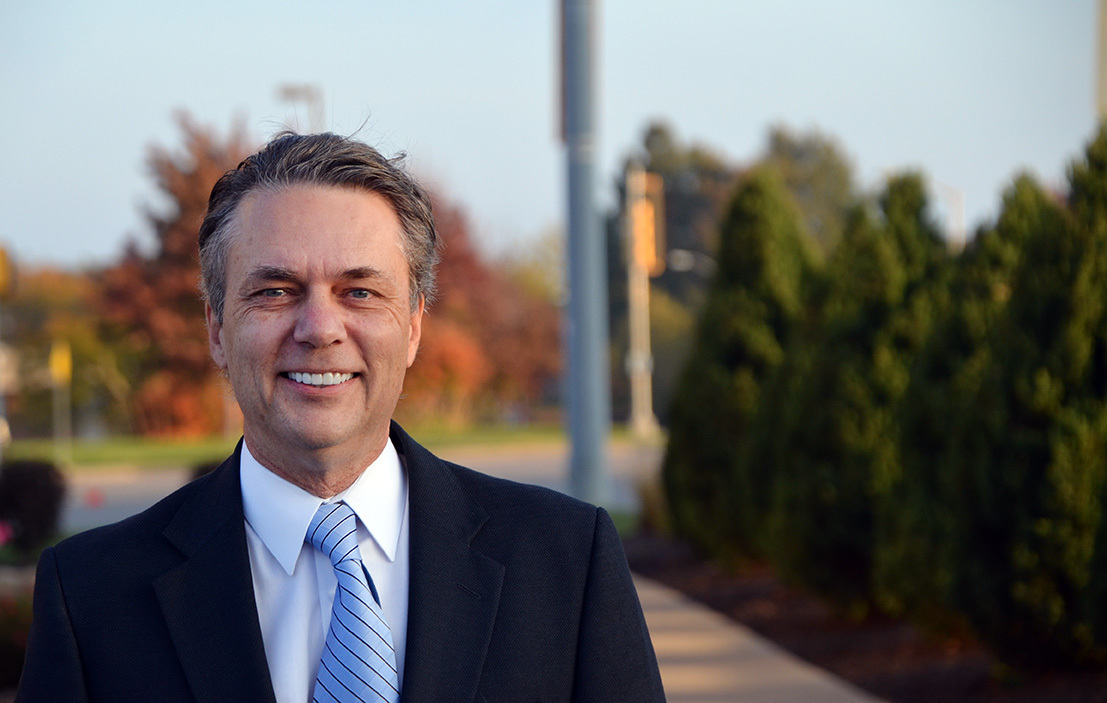
The strongest person in the room isn’t necessarily the loudest, Jeff Colyer said.
“Kansans are used to being overlooked,” he said. “My role as lieutenant governor was to be a little quieter. You give your best advice. And when decisions are made, you’re going to work to support them.”
Soon, however, he’ll be the state’s top decision maker.
With Gov. Sam Brownback expected to be confirmed before Christmas as ambassador at large for international religious freedom by the U.S. Senate, Kansas’ highest elected office will pass to Colyer, a 57-year-old suburban Kansas City doctor. Brownback’s term was to run through 2018.
On a chilly November morning, the governor-in-waiting sat down with Startland News at a Johnson County coffee shop to discuss the state of entrepreneurism in Kansas.
Enabling the ecosystem
“The startup mentality is something that is really very Kansan, and it’s pretty exciting for us,” Colyer said. “It’s something that we haven’t celebrated enough.”
Reaping the benefits of entrepreneurism requires the navigation of a complex puzzle, he said, adding it takes the right mix of talent, persistence and funding.
“Access to capital is a really critical piece and something that is more difficult in the Midwest,” Colyer said. “I think there are some things we can do there.”
While the lieutenant governor wouldn’t delve into specific policy points, citing his respect for his current position and that of Brownback, he made clear his view on the different roles private investors and the government play in supporting the entrepreneurial ecosystem.
“The supply of capital is largely a private sector piece. It comes through a whole variety of sources. Private sector can evaluate the situation. They can respond very quickly,” Colyer said. “Government plays a role in that too. Our role sometimes is, in many ways, trying to help set the environment so these different things can happen.”
The state of Kansas should be in the business of enabling entrepreneurs, not creating jobs directly, he said.
“Our tax policy has an impact on capital and how much money is in your pocket. That allows people to invest,” Colyer said.
Often, government just needs to get out of the way, he added.
“If you have a light touch on the regulatory side, the business owners know what they’re dealing with,” Colyer said. “You encourage entrepreneurism. You encourage capital to come.”
Programs like Kansas’ now-dissolved KTECH and the still-in-flux Missouri Technology Corporation, both of which provided state financing for early stage startups, are the wrong approach, he said.
“Those things have not been very successful in our state,” Colyer said. “The capacity of a state to be a private equity fund … we don’t possess that skill set. The real question: How do we grow as a state?”
More than the metro
What works in Kansas City doesn’t always translate to places like Colyer’s hometown of Hays, Kansas, he said.
“Our ability to see a company that grows to 1,000 employees is difficult in those communities,” Colyer said. “So they’re going to rely much more on small business entrepreneurs.”
How one defines success — and even the term “startup” itself — must be viewed through the lens of opportunity and access to capital, he said.
“For me, being a startup is a great, wild life. ‘Wild’ in the good sense of the term: You’re growing, you’re exploring,” Colyer said. “If you’re somebody that is starting up a restaurant or a cleaning crew or you’re a doctor that is literally just getting out of residency and starting on your own, that’s very entrepreneurial. There’s a lot of skill sets and energy. The vast majority of jobs in our state are small businesses. That’s a great strength.”
Noting the steps taken to begin some of his own businesses — a medical practice, home building operation, and a bone marrow transplant and gene therapy technology project with his wife, Ruth — Colyer said cost of entry continues to be a barrier for many.
But such challenges haven’t stopped those with grit and a vibrant entrepreneurial spirit, he said.
“When you look at startups and small businesses in Kansas, 43 percent of those are minority and women owned. And that’s about five points above the national average,” Colyer said. “What’s happening in Kansas over the past few years, the number of new small businesses that have registered has been going up in the double digits.”
An enticing option for Amazon
Kansas City’s bi-state bid for Amazon’s second headquarters proves the region — which Colyer dubbed “the intersection of smart and nice” — is prime for high-growth, game-changing companies, he said.
“That’s a moonshot operation. But we actually can compete,” Colyer said. “The things Amazon was looking for: a great education system that could produce the number of people in their skillsets; They wanted a good highway system. We have one of the top three in the United States right here. We already have 2,000 Amazon jobs in the Kansas City area. They already know us on the Kansas side really well.”
He agreed with fellow economic development leaders that just completing the regional proposal was a positive step forward for Kansas and Missouri, better preparing all involved for future opportunities.
“One of our advantages is our location. We may not have mountains and oceans, but we’re the exact center of the United States,” Colyer said. “With the Gardner-Edgerton intermodal, by train you can provide supplies to anywhere in the continental U.S. in 18 hours. That’s a tremendous advantage for us in some sectors. We have Sprint and Cerner on the technology side, along with a variety of startups on both sides of the state line. And they attract different people. I like that synergy. I want us to work together.”
But more important than luring a company like Amazon, he said, is Kansas’ need to show its young people what they can achieve at home.
“The fact that we’re starting to see some growth is really important so that people can see the future,” he said. “My whole goal is that my daughters see their future here in Kansas, that they can do wild and exciting things around the world, but it can come from here.”
Behind the scenes no more
Colyer spoke softly, but firmly during his conversation with Startland.
As coffee shop customers bustled past — chatting, checking their phones, singing along with music played from the business’ overhead speakers — none seemed to recognize the two-term lieutenant governor, former state representative and senator, and longtime Overland Park craniofacial/plastic surgeon.
That relative anonymity will come to an end once Colyer assumes his new role in the governor’s office, if not before, he said, conceding he has a mix of challenges and opportunities ahead. The coming year not only will be his first as governor, presuming Brownback is confirmed, but also an election year pitting Colyer against such foes as high-profile Republican Secretary of State Kris Kobach.
“I have a lot of people who’ve said, ‘Jeff, you’re walking into an impossible situation.’ But I’m honored to do this,” he said. “It will be the first time we’ve had a lieutenant governor move to governor and then run for election. We’re giving people the opportunities to kick the tires, so to speak. It is a challenge, but that’s what we do as Kansans. We face challenges.”
“I get a year’s head start in some ways,” he added.
Drawing upon his experience as a doctor and small business owner, Colyer said, he knows the path to the most healthy outcome will be full of zigs and zags.
“There are lots of lessons that government can learn from business,” he said. “You’re going to see us operating Kansas a lot more like a business. There are some great opportunities to make us more efficient and more responsive.”


2017 Startups to Watch
stats here
Related Posts on Startland News

Watch: Nomad App founders ‘scratching our own itch’ with travel tech
After an inspiring but at times complicated adventure in Latin America, the founders of a Kansas City startup are aiming to ease the burdens of traveling to exotic locales. During a Central- and South-American tour of more than 5,500 miles, Nomad App co-founder Juan Campos said his team realized there are common logistical challenges for…

New, wireless Google project could make KC the most connected city on earth
Google apparently likes Kansas City a lot — a whole lot. Now four years after it launched its gigabit Internet service in the area, Google is planning to build a massive wireless broadband network in Kansas City that could make it one of the most connected cities on earth. Google — which already has determined the…

Five startups hop into the Digital Sandbox KC
Another batch of early-stage firms are planning to accelerate their businesses via Digital Sandbox KC. Kansas City business incubator Digital Sandbox KC on Thursday announced that five startups have received its proof-of-concept funding support. Digital Sandbox, which invests up to $25,000 in area businesses for specific projects that help the firms secure additional funding, has…
Overland Park startup Member Jets crowdsources private flights to cut costs, save time
An Overland Park tech firm is bringing charter flights to the masses with its crowdsourcing platform that reduces the costs to fly in swanky private jets. Founded in 2015, Member Jets created a private aviation community that connects travelers to discounted private flights by aggregating available seats and travel opportunities. Now used at Kansas City’s…