

What KC’s startup community can learn from Leonardo da Vinci
October 31, 2017 | Meghan LeVota
Why is the sky blue?
Modern-day scientists know it’s because of the way the sun interacts with air molecules when sunlight enters the Earth’s atmosphere. In Leonardo da Vinci’s time, however, the answer wasn’t so clear. He questioned assumptions of the day, even those that seemed simple.
“It’s that type of always asking ‘Why?’ that led (da Vinci) to be the self-taught genius he is,” said Walter Isaacson, journalist and author. “An ordinary guy who sometimes procrastinated on his projects, but always loved the connection of beauty to nature to engineering and always asked the big why.”
Isaacson, author of the 2017 book “Leonardo da Vinci,” spoke to a crowd of more than 1,000 local leaders Friday at the Kansas City Area Development Council’s annual meeting: The Big Why. A former CEO of CNN and managing editor of Time magazine, Isaacson has also written biographies of Steve Jobs, Benjamin Franklin, Albert Einstein and Henry Kissinger.
The da Vinci book is set to inform a coming high-profile biopic in which Paramount Pictures has selected Leonardo DiCaprio to portray the famed Renaissance man. Dissecting the mind of da Vinci, Isaacson gave the Kansas City audience tips on building creativity, curiosity and collaboration.
“It’s a great privilege to be back in Kansas City,” he said to a crowd at the Kansas City Convention Center Grand Ballroom. “Creativity and imagination is the mark of all great cities and it’s the mark of all creative geniuses.”
Always be curious
Innovation is spurred by curiosity, Isaacson said. Da Vinci proved this by constantly asking questions about the world around him.
Not only did he ponder the color of the sky, da Vinci’s notebooks include questions from “Why does water ripple when it hits an obstacle?” to “What does the tongue of a woodpecker look like?”
“You don’t just wake up one morning and want to know what the tongue of a woodpecker looks like unless you’re a deeply curious person,” Isaacson said. “Leonardo was always asking ‘Why?’ Always questioning things, always challenging authority and thinking outside the box.”
Da Vinci’s curiosity stems from being self-taught, he said.
“He didn’t get into any of the upper-middle-class universities,” Isaacson said. “But this type of asking why that led him to be a self-taught genius.”
Celebrate diversity
Florence, Italy, was a city of great diversity in the 1450s, Isaacson said.
“It was a place where people of different and diverse backgrounds and values could fit. Even Leonardo, who was quite a misfit,” he said. “As Steve Jobs would say, he is one of those misfits and rebels that is like fitting a square peg in a round hole.”
Da Vinci was born out of wedlock, which back then deemed him “illegitimate.” He was also left-handed, gay and walked around wearing purple and pink tunics
“He was a very flamboyant guy,” Isaacson said. “But, he was accepted in Florence. He was totally embraced by a community. Creativity comes from tolerance and different types of people collaborating together to create new things.”
Collaboration
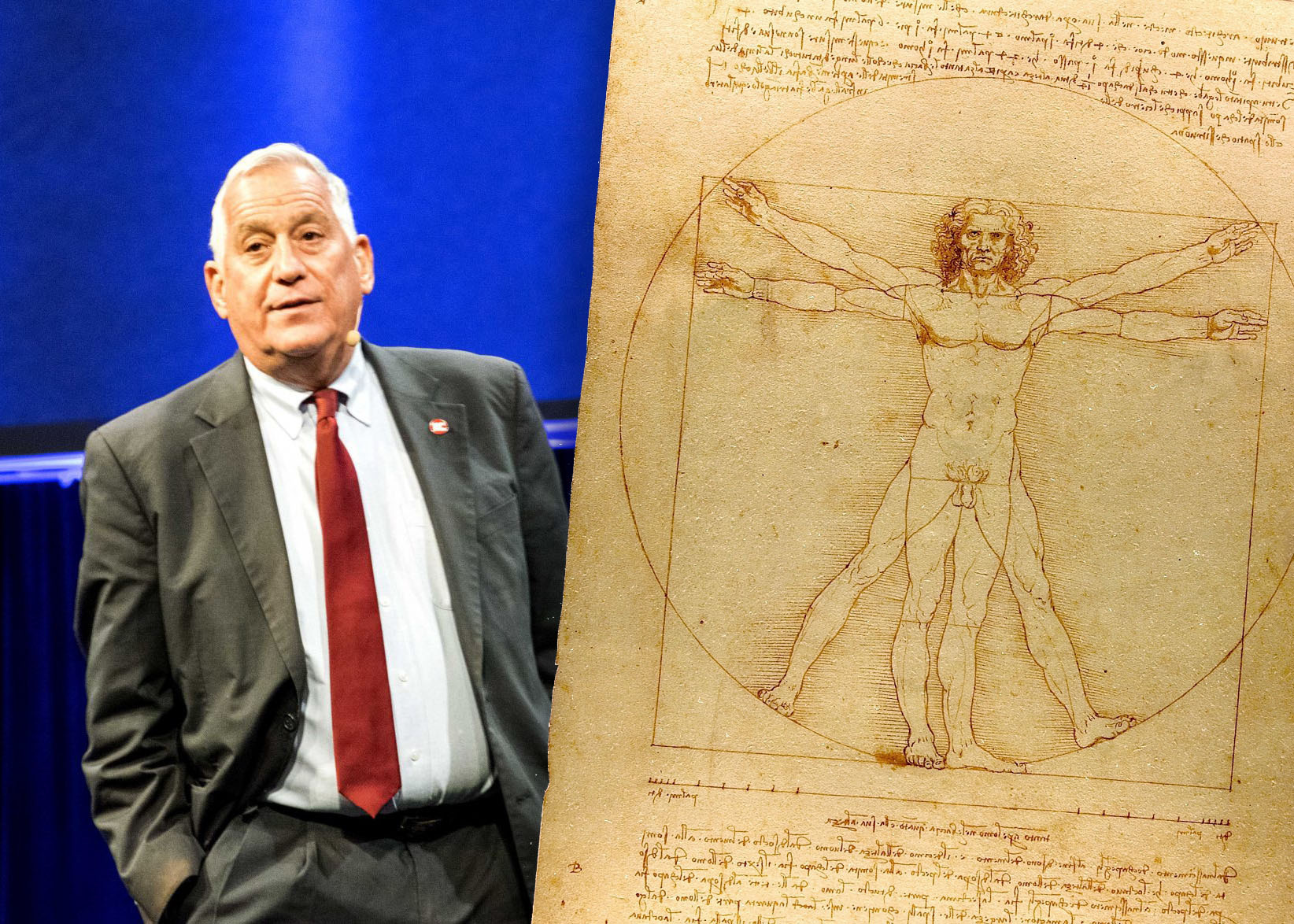
Da Vinci may be famous for the drawing of the Vitruvian Man — based on mathematical, human proportions depicting a man inscribed in a circle and square — but he couldn’t have completed the project alone, Isaacson said.
“One of the things that struck me most about the story of this drawing was that it was very collaborative,” he said. “We know that creativity is a team sport and innovation is a collaborative effort.”
Da Vinci worked with many friends, most notably Italian architect and engineer Donato Bramante, to bounce off ideas including mathematics, engineering, art and science in the making of the Vitruvian Man, Isaacson said.
Breaking down silos
To create a thriving, entrepreneurial ecosystem, Kansas City should look no further than da Vinci’s hometown during the Italian Renaissance, Isaacson said.
“Florence in the late 1400s showed how to connect creativity to all industries,” he said. “They didn’t just silo themselves. People saw beauty in all parts of creation. These are the things that make Kansas City today so special, and all the great places all through the millennium.”
Da Vinci and his friends’ participation in Florence’s city-life mirrors modern day coworking and makerspaces.
“There were places where artists were working with chemists and cloth weavers, people working with bankers and builders in order to infuse beauty into everything they did,” Isaacson said. “Of the things Leonardo and his fellows did was create costumes for the parade, for plays and the sporting events that would come along. Like all great cities, Florence loved its plays and performances. It’s part of a vibrant, civic community.”
The combination of art and science
Creativity requires the use of both the right and left brain, Isaacson said. True innovators recognize how to achieve a balance.
“It’s a mark of all creative geniuses to stand at the intersection of the arts and the sciences,” he said. “Connecting the arts and sciences is the quest of how humans can be more creative, why we are here and why we fit in.”
In Isaacson’s opinion, da Vinci’s drawing of the Vitruvian Man is the perfect metaphor to describe such a dichotomy.
“Every single proportion is exactly right to the proportions to the human body,” said Isaacson of da Vinci’s drawing. “An icon of connecting creativity to science and connecting creativity to technology.”
Cities like Kansas City can learn from the centuries-old drawing, he said. As technology continues to advance, the arts cannot be forgotten, Isaacson added.
“That, to me, is the genius of creative people everywhere,” Isaacson said. “That is why this drawing has become such a symbol of where beauty, technology and business can all work together for a higher purpose.”


2017 Startups to Watch
stats here
Related Posts on Startland News
HERImpact awards $50K: Prize money expected to help pop-up scale into its own space
Editor’s note: 1863 Ventures is an advertiser with Startland News, though this report was produced independently by the nonprofit newsroom. Tirza Design allows consumers to support cause-based brands and survivors of human trafficking, exploitation, and other forms of abuse, detailed Nikkie Affholter, noting her venture also meets the need of bringing dignified employment to women who’ve escaped…
City OKs plan to replace urban farm near Plexpod in Midtown with 100-unit Park 39 apartment project
Editor’s note: The following story was originally published by CityScene KC, an online news source focused on Greater Downtown Kansas City. Click here to read the original story or here to sign up for the weekly CityScene KC email review. The City Plan Commission narrowly endorsed a planned apartment project that would replace the Cultivate KC urban farm in…
Sisters open Lao-Thai kitchen in KC’s Crossroads, but to taste their laab beef, you’ll have to order from the cloud
A sister-led Lao and Thai food restaurant in the Crossroads hopes to deliver an authentic taste of southeast Asian culture to Kansas City. Among its first challenges: picking which family recipes win a spot on the menu. Nang Nang Lao-Thai opened in late February at the Crossroads Food Stop, a “cloud kitchen” with 10 local…
This startup designed roads that pay for themselves (and charge your electric vehicle while driving)
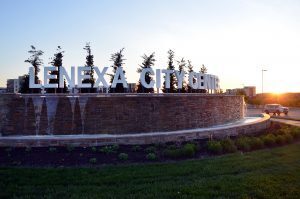
Longtime Kansas City startup Integrated Roadways is earning recognition for the company’s plans to transform roads into “smart roads” by embedding digitally connected technology directly into the pavement — coming soon to Lenexa City Center. Called the smart pavement system, Integrated Roadways’ patented precast concrete pavement slabs provide Internet connection and sensing technology to vehicles driving…