

Techstars KC demo day: How to build inclusive teams that give first
October 13, 2017 | Meghan LeVota
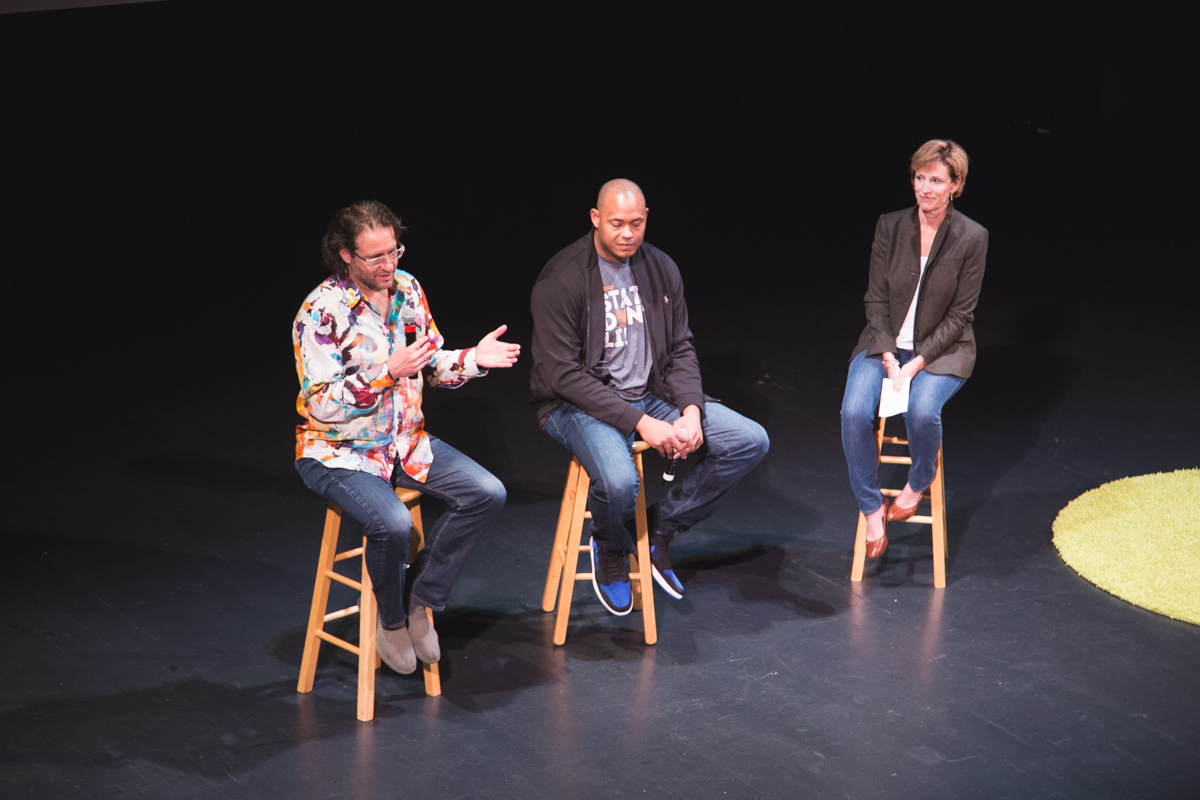
When Lesa Mitchell first learned she’d be managing director of the inaugural Techstars KC program, she thought to herself, “Wow, I’m going to have the most inclusive program in the world,” she said Thursday at the program’s demo day event.
As it turns out, diversity and inclusion can be difficult to apply — even with the best intentions, she said.
“I care a lot about the topic,” Mitchell told the crowd gathered at the Folly Theater. “But to be honest, I sucked at that. I think part of it is I didn’t spend enough time traveling to the places that I needed to travel. … I tried. The final 20 had a lot of inclusion, but the companies didn’t get selected because they weren’t far enough along.”
The Techstars KC cohort companies have reasonably inclusive teams, but diverse people are not represented at the CEO level, Mitchell added.
Based in Boulder, Colorado, Techstars is a global accelerator firm with 32 programs across the globe, in such cities as Los Angeles, New York City, London and Paris. In exchange for 6 percent equity, Techstars startups receive $120,000, participation in the three-month accelerator program, as well as access to an impressive network of mentors and Techstars’ global network.
Before hearing company pitches from members of the cohort, Mitchell kicked off the program’s demo day by facilitating a conversation featuring Techstars co-founder Brad Feld and ShotTracker co-founder Davyeon Ross.
“(Davyeon) and I talk about the topic of inclusion a lot,” Mitchell said. “I asked him to school me on this topic right now on stage and, frankly, school the companies.”
Some people think that to build a diverse team, you must hire somebody who isn’t the best person for the job, Ross said. That’s not the case, he said.
“My team comes in all shapes, all sizes, all colors and all levels of intelligence,” Ross said. “We wanted the best most hustling people and we got them. … It’s a matter of bringing people to the table. You need to be deliberate and realize that a diverse team is needed to serve the diverse customer base of today.”
Part of being deliberate about diversity includes reaching out to networks in which you don’t already belong, Ross said.
“It’s really important for people not to hit the easy button,” he said. “I think that there’s going to have to be a lot of coming across networks to make this work. There are a lot of different networks of people who are looking for jobs that want to engage with you.”
Even with intentionality and focus, you should always hire the best person for the job, Ross said.
“We didn’t deliberately go out there and say ‘Hey, our next hire has to be this exact type of person,’” he said.”You may get to the point where the best engineer may not be a minority and that is just the reality. But, we did go out there and deliberately bring people to the table from the very beginning.”
If you do that, your team will grow more diverse over time, he added.
By 2030, a majority of customers, as well as people graduating from college, will not be white men, Mitchell added. She urged the Techstars KC companies to take note of that fact moving forward, and be deliberate in their hiring.
Give first mentality
Techstars is known for its “give first mentality,” said its co-founder Brad Feld.
The topic was first introduced in Feld’s 2012 book, “Startup Communities: Building an Entrepreneurial Ecosystem in Your City,” he said.
“The notion of ‘give before you get’ is that you put energy into others without defining transactionally what you’re going to get back,” Feld said. “We later shortened it to ‘give first,’ because it sounded better.”
The give first mentality is different than philanthropy, he said.
“It’s not charity and it’s not altruistic because you expect to get something back when giving first,” Feld said. “You just don’t know when, from whom, over what time period, what consideration and what magnitude.”
Giving first is also different than “paying it forward,” he said. When you pay it forward, it is because somebody else has given to you before. Feld says that in a healthy startup community, people must begin to give now.
“If you get everybody in the startup community behaving in a give first way, and they are putting energy into the system without defining these transactions, you get this incredible amount of activity that starts spinning off awesome amounts of value,” Feld said.
Some people have a difficult time giving first because they respond to areas of improvement with negativity.
“I think one of the problems is when people use constraints as an excuse,” Feld said. “You hear over and over again from people, ‘There’s nothing successful here. There’s no capital here. There’s no talent here.’ … I think that it is very productive to not use the things that are missing as a constraint, instead of an opportunity.”
Mitchell hopes that the 2017 Techstars KC class will walk away with a giving mentality, she said.
“We consider ourselves the best global ecosystem that helps entrepreneurs succeed,” Mitchell said. “We do that through collaboration with the community, with mentors, education and workshops and by providing access to capital.”


2017 Startups to Watch
stats here
Related Posts on Startland News
Why a City Market favorite is jumping the state line — to the food court at Oak Park Mall
Its Brazilian dishes — using recipes the owners grew up eating in São Paulo — have been a City Market draw for more than a decade. Now Taste of Brazil restaurant is expanding to Johnson County, but as a quick-serve kiosk with a limited menu. Taste of Brazil Express plans a late September opening in…

Spiced side hustle gives this Kansas culinary teacher a kick (and a growing market)
Richard Wilks is bringing heat to Kansas’ food scene. A chef and community-builder at heart, Wilks created Burro, a line of chili and garlic crunch oils, sauces, and seasonings designed to fuel real connection around the table. His growing lineup can be spotted at the Overland Park Farmers Market, where loyal customers keep coming back…

Animal health innovators: Building on a new frontier means do-overs, even when you got it right first
Kansas City-based ELIAS Animal Health earned full USDA approval for its bone cancer therapy for dogs earlier this year, but the road to commercialization has been long and anything but straight, Tammie Wahaus shared. The veteran CEO shared her story of pivots — including switching from human health to animal health and adapting to ever-changing…
Development leaders laud HQ expansion for organization that opens workforce to Kansas Citians with autism
A new multimillion-dollar, 80,000-square-foot headquarters along Kansas City’s Brush Creek marks a major milestone for Behavioral Health Allies, strengthening the organization’s workforce training efforts and its belief in the potential for individuals with developmental disabilities and autism spectrum disorders, officials said Wednesday. “This expansion is exactly the kind of investment Kansas City needs,” said Tracey…