

Looping back? Missouri partners with Hyperloop to study 23-minute KC-St Louis route
October 3, 2017 | Bobby Burch
Missouri’s prospects for landing a Hyperloop route apparently aren’t off the rails after all.
Despite the company revealing four U.S. finalist routes in September — which did not include a proposed route through the Show Me State – Hyperloop One announced Tuesday it has entered into a public-private partnership with the State of Missouri to conduct a feasibility study of a route connecting Kansas City and St. Louis. At only 23 minutes, the route would be a supersonic alternative to I-70.
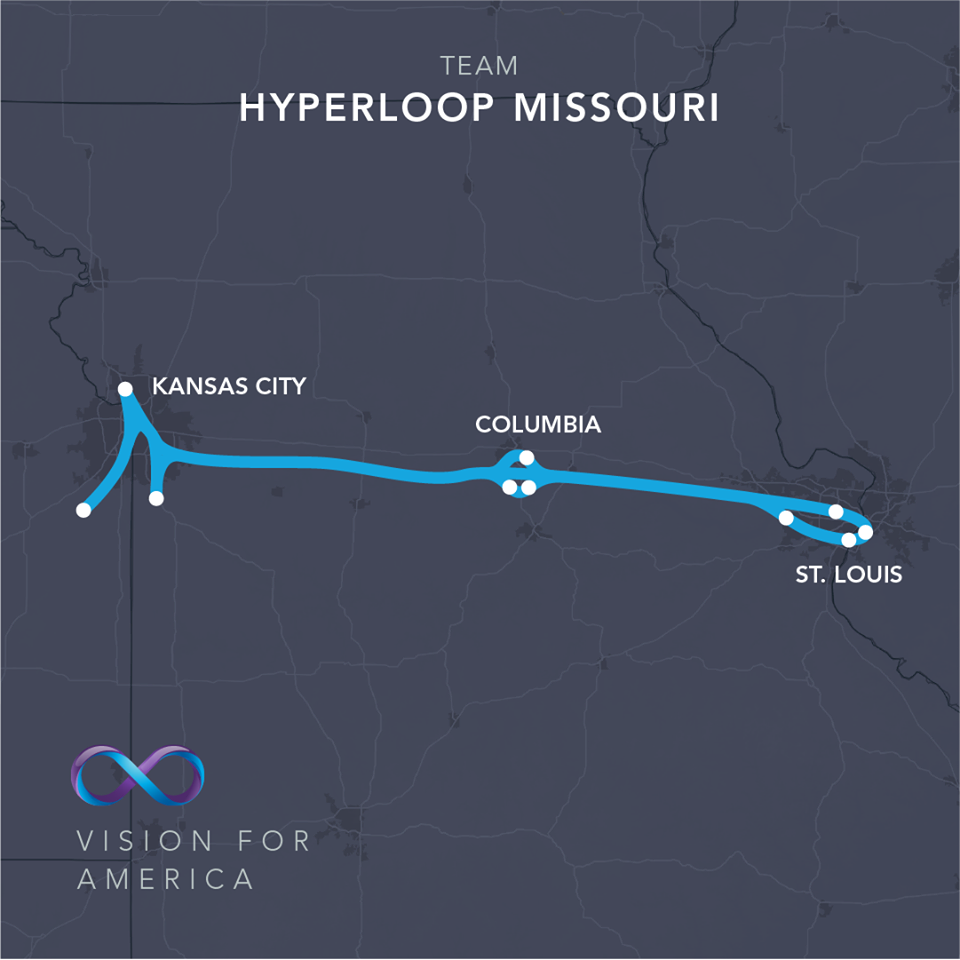
A group of Missouri governmental and private organizations have formed the Missouri Hyperloop Coalition to advance the building of a Hyperloop route along the I-70 corridor, connecting Kansas City, Columbia and St. Louis. The feasibility study is expected to cost between $1 million and $1.5 million, according to Patrick McKenna, commissioner of Missouri Department of Transportation.
The Missouri Hyperloop Coalition is comprised of MDOT, the St. Louis Regional Chamber, the KC Tech Council, the University of Missouri System and the Missouri Innovation Center in Columbia. No Kansas governmental or private agencies are a part of the effort.
“This public-private partnership demonstrates Missouri’s commitment to building one of the first Hyperloop systems in the world,” Rob Lloyd, CEO of Hyperloop One, said in a release. “We look forward to working with the Missouri Hyperloop Coalition in continuing to develop Missouri’s Hyperloop One proposal from Kansas City to St. Louis.”
In Mid-September, Hyperloop announced its four “winning” U.S. routes, indicating that Missouri’s prospects were shot. The announcement Tuesday, however, appears to buck the notion that Missouri lost out on the opportunity.
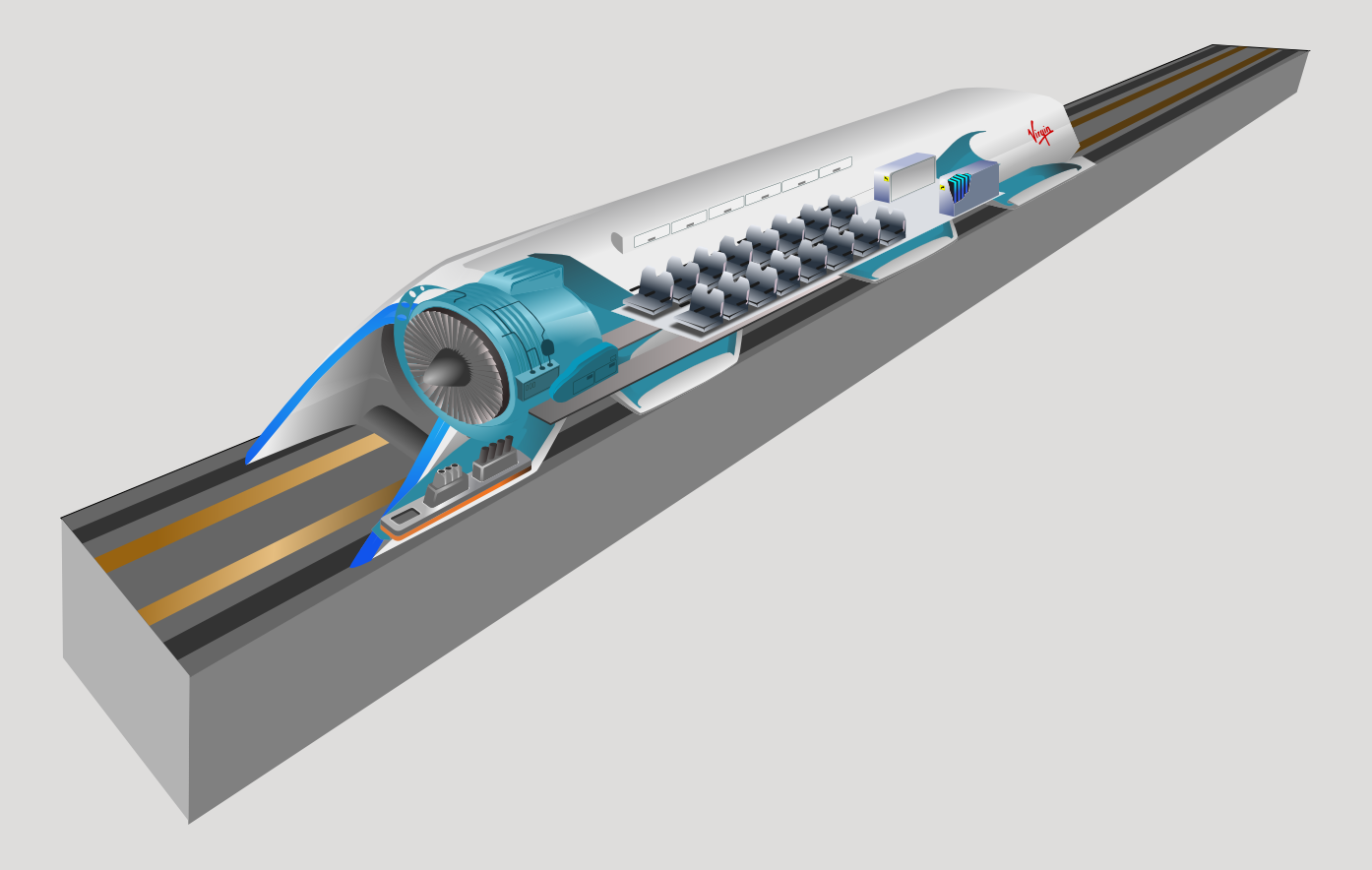
Think of the Hyperloop system as high-speed rail travel in a vacuum. Levitated pods are propelled by electric motors through a series of interconnected tubes that create a low-pressure environment, allowing the pods to glide with limited friction at speeds that surpass air travel.
SpaceX CEO Elon Musk once described the technology behind Hyperloop as “a cross between a Concorde, a railgun and an air hockey table.”
Missouri landing a Hyperloop would be transformative for the regional economy, said Ryan Weber, president of the KC Tech Council.
“Linking Kansas City, Columbia, and St. Louis in this way would strengthen collaboration across the entire state of Missouri and make us one of the most attractive destinations in the country for new businesses as well as businesses looking to relocate,” he said.
Hyperloop is also now conducting a feasibility study for the Pueblo-Denver-Cheyenne route, which spans 360 miles and is accessible to about 4.8 million people, according to Hyperloop.
“Governments in the U.S. and around the world are embracing the idea of building Hyperloop One systems to strengthen economic development and improve passenger mobility in their respective regions,” said Josh Giegel, co-founder and president of engineering of Hyperloop One. “We’re excited to work with the Missouri Hyperloop Coalition in exploring the feasibility of a Hyperloop One system and bringing our new mode of transportation to the masses.”
Here’s the proposed Missouri route.


2017 Startups to Watch
stats here
Related Posts on Startland News

Talent pipeline: Missouri Hyperloop could be a light at the end of the tech jobs tunnel
A high-speed Missouri Hyperloop route connecting Kansas City and St. Louis would power a state-spanning metro area with fluid access to tech jobs and talent, as well as a region pumped for economic growth, leaders familiar with the proposed project said. “You could easily live in St. Louis and work in Kansas City, and have…

Collaboration in the air: Cough detection sensors combine Sickweather, Mycroft tech
You can’t manage what you can’t measure, said Sickweather CEO Graham Dodge, describing the need for cough detection sensors that are slated to be rolled out in public places across Kansas City in 2019. Illness forecaster Sickweather is teaming up with fellow Kansas City startup Mycroft, a leader in artificial intelligence-infused tech, to develop the…
Pet innovators unleash market built on experiences, evolving relationships with dogs (Photos)
Meaningful relationships are no longer only between people, said Davide Rossi, discussing the rise of pet innovators and an emerging market built on experiences with four-legged family members. “They key thing is to recognize that the relationship between us and our pets has been changing,” said Rossi, co-founder of FitBark, a Kansas City-based pet tech…

Human capital: KC Mythbusters challenges Kansas City to rethink how it supports startups
A thriving startup ecosystem requires more stakeholders with skin in the game, said Eric Jorgenson. That means increasing direct participation — those actively and directly building or investing in startups that can potentially exit and see a talent and capital explosion that results in even newer startups — and de-emphasizing the need for and dependence…