

KC female STEM leader: Sexual harassment in the workplace is ‘far too rampant’
October 11, 2017 | Meghan LeVota
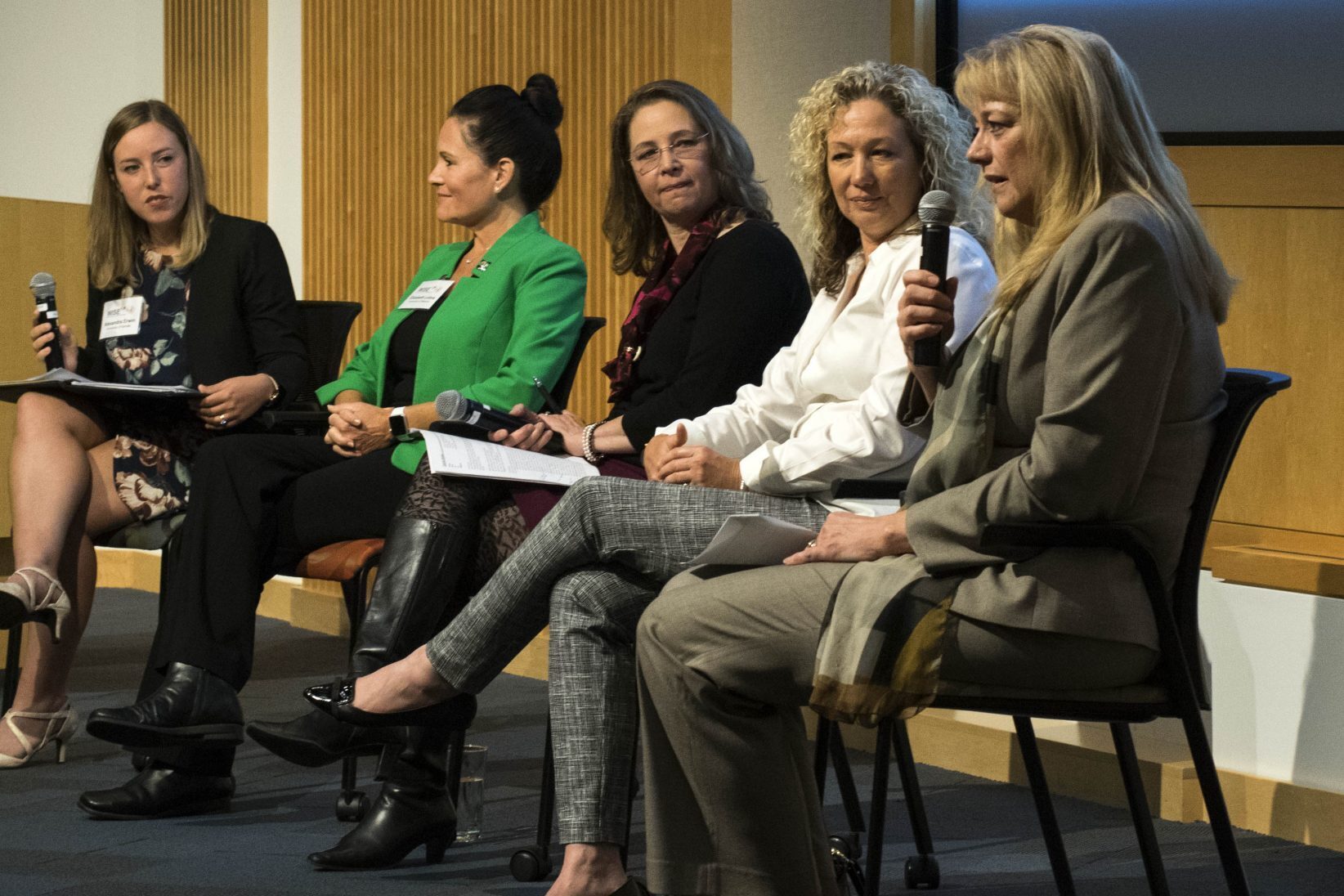
Society must empower women in the face of harassment, Elizabeth Loboa said.
“Sexual harassment is not something that happens just because you’re good at your job,” said Loboa, dean and professor of Bioengineering at the University of Missouri. “It happens at all levels and at all ages. It happens to our female students across this country and around in the world when they feel powerless.”
A Kansas City Area Life Sciences Institute mini-conference on Women in Science and Entrepreneurship organized Tuesday at the Ewing Marion Kauffman Foundation to address gender-based challenges in STEM. The morning breakfast featured Loboa as a keynote speaker, as well as a panel discussion that included local STEM leaders.
Cosmopolitan magazine conducted a study in 2015 that found that although one in three women have been sexually harassed at work, most cases go unreported.
The STEM expert panelists had differing perspectives on how to approach such statistics. When an audience member asked about what society can do to eliminate sexual harassment, Rebecca MacKinnon, founder of 5th Dimension Strategies, urged women to look within.
“I’m not going to talk about what society can do about that question, but I’m going to talk about what you can do individually,” she said. “In my world, I never decided to call out sexual harassment. I simply decided I was going to continue to navigate past that person who had done that. In my opinion, harassment is just another intimidating factor and you get to decide what you’re going to do about it. … It’s just one of the brutalities that exists in this world.”
Loboa disagreed, encouraging women to report sexual harassment when it happens.
“I will always work toward a day when our females do not have to deal with harassment in the workplace,” Loboa said. “In STEM in particular, it is far too rampant. We need to put a stop to it.”
Kansas City has been ranked the second-best metro area for women in tech, yet women in STEM are still the minority according to the study. Despite positive advancements through the years, women in the STEM field still don’t have the same opportunities as their male counterparts.
On finding mentors and sponsors
While a mentor is someone who can advise you along a career path, a sponsor is someone who will risk their own reputation to vouch for your abilities and make you more visible. While most women might have no problem finding a mentor in the 21st century economy, sponsorship is still an issue, panelists said.
Throughout her schooling, Loboa couldn’t find a female mentor until graduate school, she said.
“My mentors and sponsors have mostly been male ‘allies,’” she said. “It’s exceptional to see so many men in the room today. I’ve been fortunate to have risen through the ranks at a time where there were not many women. It is our responsibility as women in STEM to make sure that we continue to reach out and make sure we are serving as mentors and sponsors to young women.”
MacKinnon agreed that sponsorship is crucial. Young women ought to be proactive in finding them, she added.
“Anyone who’s successful, if you’re being honest, has had a number of sponsors throughout your life,” MacKinnon said. “If you’re really insightful, you went and found mentors, sponsors, angels — any person who want to see success in your career or company.”
On imposter syndrome
Women are less likely to apply to job openings than men, Loboa said.
“Imposter syndrome means that no matter how well you’re doing you still think you’re not doing good enough,” she said. “Studies have shown that if a man is applying for a job and doesn’t fit all the requirements, they will say, ‘Oh, I fit most of those – I’m applying,” and a woman will say, ‘I don’t fit those 100 percent,’ and they don’t apply.”
Loboa has seen imposter syndrome firsthand in her students, she said.
“I think there are some real issues with imposter syndrome. I’ve worked extra hard to keep some of my female students in graduate school,” she said. “It just shocked me, because they are brilliant. There’s still some hurdles we are trying to overcome that have a huge impact to getting more women into college engineering.”
MU’s college of engineering is planning to hire 40 more faculty members and double its number of graduate students, she said. In doing so, Loboa plans to use empowering language in job descriptions and cultivate diverse student communities, she said.
On dealing with implicit bias
The most successful companies are those that have a diverse workforce at all levels, said Tammie Wahaus, CEO of Elias Animal Health.
“We have to do what we can do on an individual basis to reach out and bring more women up, providing more opportunities, she said. “We all have our implicit biases and if you’re in a company without a lot of diversity, you’re not achieving the level of innovation that is possible to be achieved.”
Wahaus is always thinking about what she could do to help, she said, adding that if every person thought that way it could go a long way to defeat implicit biases.
Implicit bias is a hot topic these days, but MacKinnon said that women should remember to keep an open mind.
“The reality is to first of all give everybody a break: We all have biases,” MacKinnon said. “My personal opinion is that each of us has a right to be respected and to go to people who will respect you, even if you have to knock on a whole lot of doors.”
MacKinnon is thankful for the men in her life through the years whose criticism has “toughened her up,” she said.
“Listen hard to the person across the table. Are they really being biased or are they just telling me something I don’t want to hear?” she said. “Remember to go into the conversation just as open and willing to learn as you are asking the other person to be.”

Featured Business

2017 Startups to Watch
stats here
Related Posts on Startland News

KC’s first innovation officer reflects on work, city’s tech future
After more than two years of service, Ashley Hand is leaving the driver’s seat of Kansas City’s innovation efforts. Hand, who soon will be departing as Kansas City’s chief innovation officer, was tasked with implementing innovative strategies to improve how city government can better serve Kansas Citians. The city will be accepting applications for the…

Welcome to Startland News
Scrappy. Determined. Gritty. Those often were the words attributed to the Kansas City Royals as the team unexpectedly surged into the 2014 World Series and captured the national spotlight. Those very words are apt for this city, which has been built on the grit and determination of successful entrepreneurs like Ewing Kauffman, Joyce Hall, Henry…

Kansas budget woes render uncertainty for angel tax credits
As state budgetary concerns loom in the background, early-stage firms in Kansas are hoping a bill to extend the Sunflower State’s Angel Investor Tax Credit program will become a priority for legislators. Scheduled to sunset after the 2016 fiscal year, the program annually allocates $6 million in credits to entice investments in early-stage, growth-oriented companies…

KC virtual reality firm partners with KU, NFL coaches
A Kansas City-based virtual reality company hopes some marquee partnerships will plug it into a market projected to reach $150 billion in five years. Founded in 2013, Eon Sports VR recently landed the University of Kansas football team as a client for its mobile virtual reality platform to help players train without the risk of…