

From Google to KC, Beth Ellyn McClendon’s advice to startups: Test everything
October 26, 2017 | Meghan LeVota
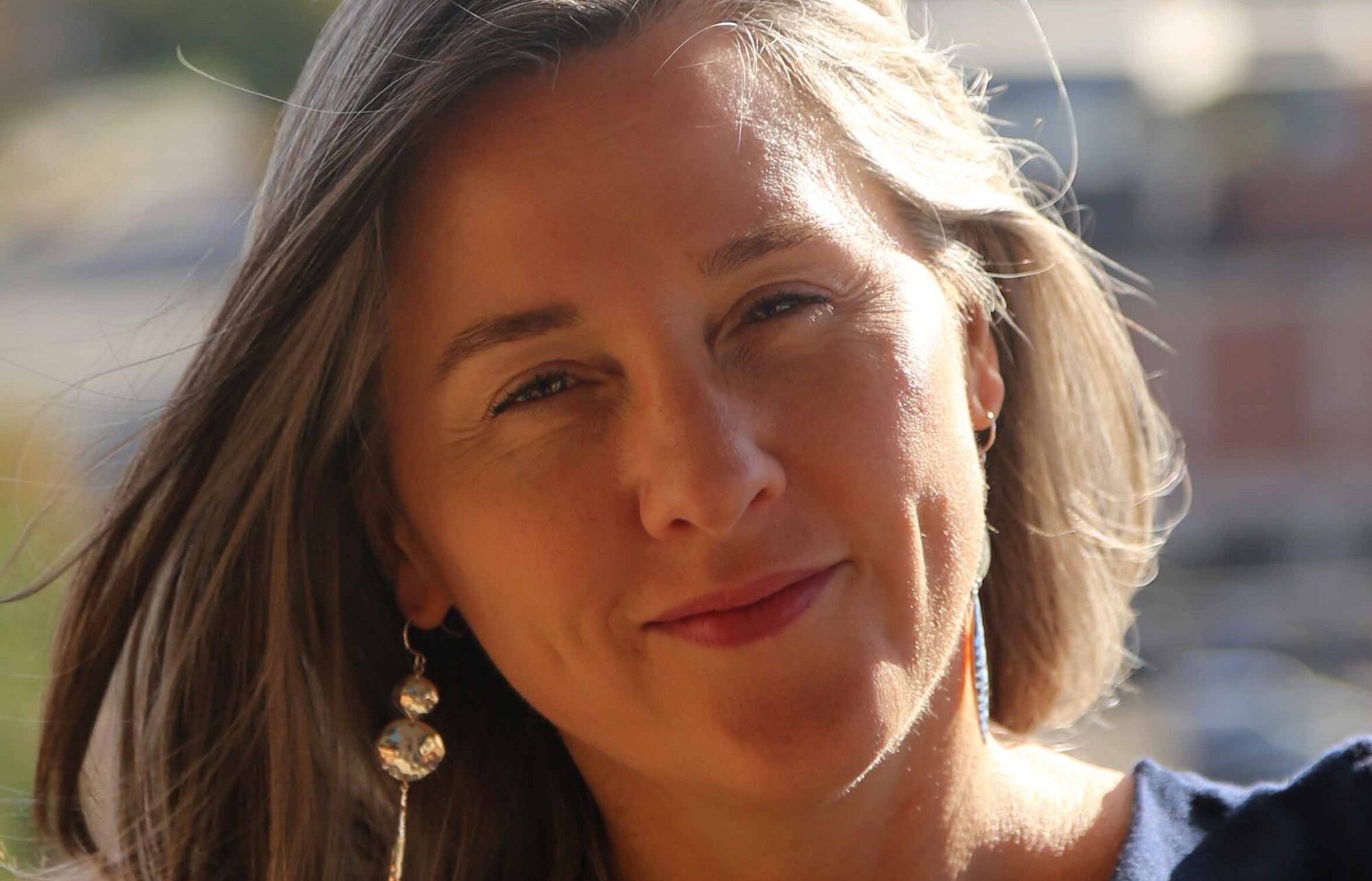
Don’t fall in love with an idea, Beth Ellyn McClendon said.
“Test everything, especially your assumptions, and allow yourself to be persuaded by data,” said McClendon, a seed investor who formerly worked with Google, Android, YouTube, Cisco and Netscape. “Try to remember — tattoo it on your eyelids if you have to – anecdotes are not data, and you are not your users.”
Having moved from Silicon Valley to Lawrence, Kansas, in March, McClendon is focusing on how to best pay it forward in the Kansas City startup community.
“Seed investing just feels like a natural extension of my career,” she said. “I was lucky enough to work at great companies with brilliant engineers on products that were used by hundreds of millions of people. That only happened because some investor decided to help some founder ‘will’ an idea into being. It’s just my turn to be on the other side of that equation.”
A Techstars KC mentor, McClendon is currently on the advisory board of Somatic Labs and invested in CasaIQ, both graduates of the 2017 Techstars KC cohort. She has also invested in AngelList, LightBox as well as Kansas City’s Bixy.
Her husband, Brian McClendon, a Lawrence native, resigned earlier this year from Uber’s executive board, following a decade at Google’s mapping department. He is the former vice president of maps and business platforms at Uber, and now is on the advisory board of Kansas City’s Firebrand Ventures and an advisor at the local Just Play Sports Solutions.
Startland synced up with Beth Ellyn McClendon to find out more about her plans for Kansas City as well as tips for investors and entrepreneurs.
What attracted you to investing in seed stage companies?
At one point, I was consulting for a startup that was trying to keep its burn rate low. They didn’t need me full time and they didn’t have cash to spare, but they were willing to spend some equity to get me involved. So my first startup equity was actually sweat equity — and that worked out for me. After that, I invested in some founders I knew personally, and it spread out from there.
What is your favorite part about investing as an individual?
Startup investing is inherently risky. A strong background in technology, deep experience with entrepreneurs, good market intelligence, good due diligence, steady and quality deal flow over time — all of that de-risks a portfolio. If you don’t have the background or time to spend in those areas, you should probably follow-on behind someone else who does.
I’ve invested in a few funds over the years either because they gave me more reach than I had on my own, or because that particular VC had an exceptional eye for talent. But, in general, I don’t like to be removed from the deal flow. I really want to meet the founders, hear their ideas and gauge the risk myself, first hand.
What qualities, characteristics, and indicators of traction do you look for in founders?
I’m generally looking for a level of technical competence from all the founders, and for at least one founder who’s comfortable taking the reigns in business, and being the public face of the company. I’m looking for a clear chain of command, a clear process for decision making.
That aside, I’m looking for resilience. Not so much stubbornness, as persistence. Adaptability. Flexibility. If you have good founders, they will naturally pivot to a better idea. They will course-correct their way to a successful business.
What is a common mistake that you often see early-stage entrepreneurs make?
They hire friends that they’ve never worked with before, or they hire too many too quickly, or they hire someone out of sheer desperation. Then, on the other side of that, they’re reluctant to fire someone when they really need to. Those issues are always hard to manage in any company of any size, but I think they’re especially difficult in a small group under a lot of pressure.
What led you to get involved with Techstars KC mentor network?
I met Nathan Kurtz of the (Ewing Marion) Kauffman Foundation back in 2015, and I went back to him again last spring asking for some advice on how to get involved. He made a lot of introductions for me — really put himself out there for me — and he introduced me to Lesa Mitchell, the managing director of TechStars KC. Lesa also made some great introductions and was kind enough to roll me into the Techstars mentor network.
How did you enjoy the mentorship experience?
Techstars KC was a blast. Lesa runs a really good program. She and Alex Krause went out of their way to make mentors feel welcome and very much a part of the process. I basically set up camp there on Tuesdays and met with any of the teams that wanted feedback. This batch was amazing — a lot of good ideas, some really great engineering, very open to feedback, very willing to adapt and evolve.
What might the greater Kansas City region do to address a capital gap in the Midwest?
I’m not sure the issue is capital so much as a willingness to put capital into this particular kind of an investment. Most startups fail. Those that succeed usually take five to 10 years to pan out for investors. So, on the face of it, that sounds terrible. But if you look at it through a long lens, if you look at what happens to a community, to an economy, over decades of nurturing education and entrepreneurship, you can see the payoff.
Right now, the investors most willing to get involved with founders are former founders themselves — and that’s great. You want to help that virtuous cycle along. You want to create a wave of founders who will invest in and mentor the next larger wave of founders. But it will be the work of decades.
What advice would you give to Kansas City startups who are concerned with a lack of capital in the region?
It would be great if entrepreneurs who need capital could find it at home. But if they can’t find it at home, then they just have to find it elsewhere. But that doesn’t mean they need to relocate. In fact, there are some tremendous advantages to being based in the Midwest. But it probably means they need to network much more deliberately with startup communities and funding sources outside the region. That’s important for raising capital. but it’s also be important for sourcing talent.
What are attributes and resources needed for an entrepreneurial ecosystem to thrive?
Well, the obvious elements are funding, founders, and a good pool of available engineering talent. Maybe less obvious is the need for some ancillary services. For example, user experience design and legal expertise in corporate financing, intellectual property, licensing transactions… that kind of thing.
I also think you need an environment that is a bit risk tolerant. If you have a good job and you believe it’s the only good job available to you, you won’t risk leaving it for a new venture. But if you think there is a market for you, that you can land on your feet, that people will look kindly on taking a risk, even if that risk fails — you’ll be more willing to jump.


2017 Startups to Watch
stats here
Related Posts on Startland News

Black farmers are losing ground in the fight to feed their communities, advocates say
More than a century of systemic land dispossession and discriminatory practices has left Black farmers with less than 0.6 percent of U.S. farmland — less than a third of the 16 million acres they operated in 1910, according to local urban farming advocates. They gathered Tuesday at Independence Boulevard Christian Church to confront this history…

Cracking egg-flation: How farmers, substitute ingredients help restaurants mitigate price spike
Editor’s note: This story was originally published by Kansas City PBS/Flatland, a member of the Kansas City Media Collective, which also includes Startland News, KCUR 89.3, American Public Square, The Kansas City Beacon, and Missouri Business Alert. Click here to read the original story. Whether ordering an omelet, French toast, chicken n’ biscuits, chilaquiles, corned beef hash…

Soccer tennis comes to KC ahead of World Cup; here’s how a weekend street festival is kicking it across the map
Ryogoku Soccer Academy — with the help of local businesses like MADE MOBB, Café Ollama, and Café Cà Phê — is taking soccer from the pitch to the streets of Kansas City’s historic Northeast, Brad Leonard shared. As the metro gears up for hosting World Cup games in 2026, the neighborhood-based international school and soccer…
KC celebs, sports icons and tech stars stick around; a hall of famer’s interviews reveal why
Sportscaster Frank Boal could’ve just retired; his wife (and Kansas City’s pull) made other plans Former sports broadcaster and Pittsburgh native Frank Boal knows a thing or two about the pull of Kansas City, he shared. The longtime media personality moved here in 1981 for work and never left. Now, Boal and his wife, Sarah…