

Techstars Spotlight: Planetarians’ hunger for tasty snacks blooms with Sunflower State secret ingredient
September 8, 2017 | Meghan LeVota
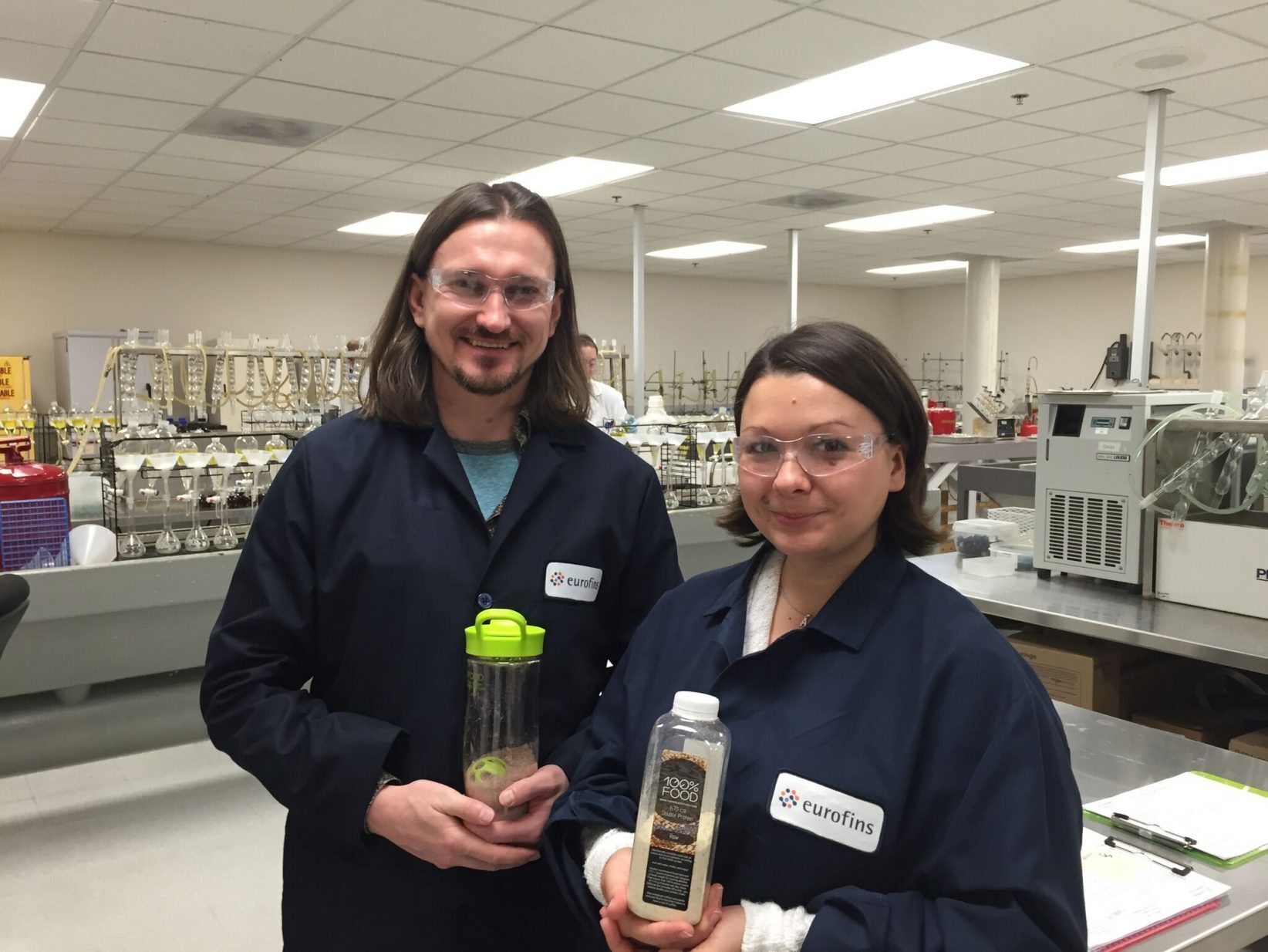
It’s a simple solution: Eat your fruits and vegetables.
Treating diseases caused by poor diet costs the United States about $1.4 trillion each year, Aleh Manchuliantsau said.
“Fiber and plant protein have been shown to prevent diabetes, heart disease and obesity,” said Manchuliantsau, co-founder and CEO of Planetarians. “But despite the effort to get kids and adults to eat healthy foods, there is still some pushback. People don’t always think it tastes good.”
The unhealthful habits of the standard Western diet starts early, he said. About 60 percent of vegetables and 40 percent of fruit served in school cafeterias end up thrown away, Manchuliantsau said, citing a 2012 study by the Harvard School of Public Health.
As a serial entrepreneur with experience in the food industry, Manchuliantsau said he knew he would have to get creative if he expected to offer a solution to such a widespread problem.
“You need to eat 10 apples to get your daily intake of fiber, but kids do not like fruits and vegetables,” he said. “Then I thought, ‘What if instead of forcing parents to feed their children broccoli and apples, we could create other healthy snacks that are also high in protein and high in fiber?”
In early 2017, Manchuliantsau and Anastasia Tkacheva tried to answer that question, co-founding Planetarians. The venture is a pivot from a previous company Manchuliantsau and Tkacheva spearheaded selling meal replacement shakes, which garnered about $4.5 million in revenue.
“Healthy snacks is a significantly larger market in front of us than just the meal replacement,” Manchuliantsau said. “We want to help more parents give children yummy snacks and help kids to get the right nutrients.”
Planetarians — which was selected for Techstars KC’s 2017 cohort — launched its initial snack prototypes in May on Amazon. The offering included cereal, chips, puffs and other snacks.
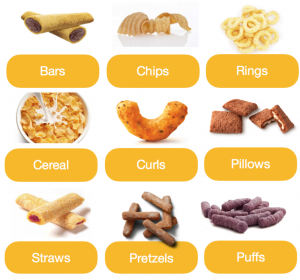
Planetarians snacks
“We almost sold out of our first run, selling more than 300 cases,” Manchuliantsau said. “It was a limited series just to help us understand the market and get a first impression, and we received 4 stars on Amazon.
With such flavors as chili lime, cheese and herb, cinnamon toast, and cappuccino, every snack is made with plant-based protein and fiber. The ingredients are gluten-free, non-GMO, soy-free and allergen-free. In addition, each product is vegetarian and most are vegan.
And it’s all possible because of one secret ingredient: sunflower oil cakes.
“Last year, we sourced the new ingredients for the formulation and stumbled upon a very interesting ingredient — the oil cakes extracted from sunflower seeds,” Manchuliantsau said. “It is made up of 35 percent protein, which is more than beef.”
Sunflower oil cakes is a fraction of the price of most protein sources, he said, which would allow the company to make healthy snacks affordable for more customers. Yet, oil cakes are more typically used for animal feed, as they are generally too difficult for humans to digest, he said.
“I thought, ‘What if instead of protein isolation, we could break the fiber down?’” Manchuliantsau said. “We decided to use steam explosion: an effect that occurs when overheated liquid is exposed to the ambient environment, expands very fast and crushes everything in its path.”
The Planetarians team tested the theory in April by partnering with the University of Minnesota and completing tests at General Mills Medallion Lab. They verified the Planetarians’ nutritional facts and that the sunflower oil cake-based snacks were a graded food product.
Manchuliantsau and Tkacheva have filed applications for two patents — one for the use of oil cake as the first ingredient in a food product, and another for steam explosion as a method to break the fiber down in food preparation.
Originally from Belarus, the team has spent time living in Los Angeles and other locations across the globe, moving the Planetarians’ headquarters to the Kansas City area at the start of the Techstars KC program.
“Lesa (Mitchell, managing director of Techstars KC) told me that if we were in the sunflower chips business, we need to be in the Sunflower State,” Manchuliantsau said.
During the Techstars program, the Planetarians team is focused on its coming launch. The firm is expected to release more products in October on Amazon, his time including more flavors and styles of snacks. In addition, the firm is seeking partnerships with two to five schools to pilot healthful snacks in cafeterias, Manchuliantsau said.
With both Missouri and Kansas home to many leaders in the food business, Manchuliantsau has access to excellent mentorship, he said. Yet, he sees room for growth in Kansas City.
“Kansas City has a lot of bright entrepreneurs, but the communication between them is not so good,” he said. “It needs to be improved. The city has very good potential, but it’s not like San Francisco where there are very quick movements. There aren’t as many meetups.”
Manchuliantsau currently expects the firm to stay in Kansas City, although he will do whatever it takes for the company’s traction, he said. Planetarians has raised $120,000 to date and is also looking to add to its growing team.


2017 Startups to Watch
stats here
Related Posts on Startland News

Kauffman Foundation rolls out $1.2M microlending program to help underserved entrepreneurs
Amid a swarm of 160 events as part of Global Entrepreneurship Week, the Ewing Marion Kauffman Foundation announced a new microlending program to spur investment in underserved entrepreneurs. In partnership with four microfinance lenders, the foundation issued a series of grants totaling $1.2 million that a will change the way the nonprofit microlenders capitalize their…
Scared away from networking events? Anti-social introverts can turn to tech
Networking strength comes in numbers — even for anti-social introverts, Jeremy A. Smith told a crowd Tuesday at Global Entrepreneurship Week. “Anti-social people, myself included, hate events,” he said. But like all other entrepreneurs, such introverts still must build and maintain actionable professional networks from which they can request and receive value, Smith said. In-person networking…
Longfellow Farm coworking the soil amid KC’s urban food desert
In a city ripe with coworking office spaces, there’s a hunger for similar environments outdoors, Ami Freeberg said. As with maintaining individual workplaces, traditional urban farming also can be isolating and expensive, the Longfellow Farm manager said. By working together, however, the collaborative process allows for shared resources, greater human expertise and, of course, more…
Procrastinating? Eat the frog, don’t chase the squirrels
On the metal wall in front of my desk, I’ve magnetically fastened a famous recommendation from Mark Twain. “Eat a live frog first thing in the morning and nothing worse will happen to you the rest of the day,” the humorist from Missouri wrote. Though it can become an aspiration rather than a rule,…