

Sprint Accelerator alum trades Miami HQ for KC
September 6, 2017 | Meghan LeVota
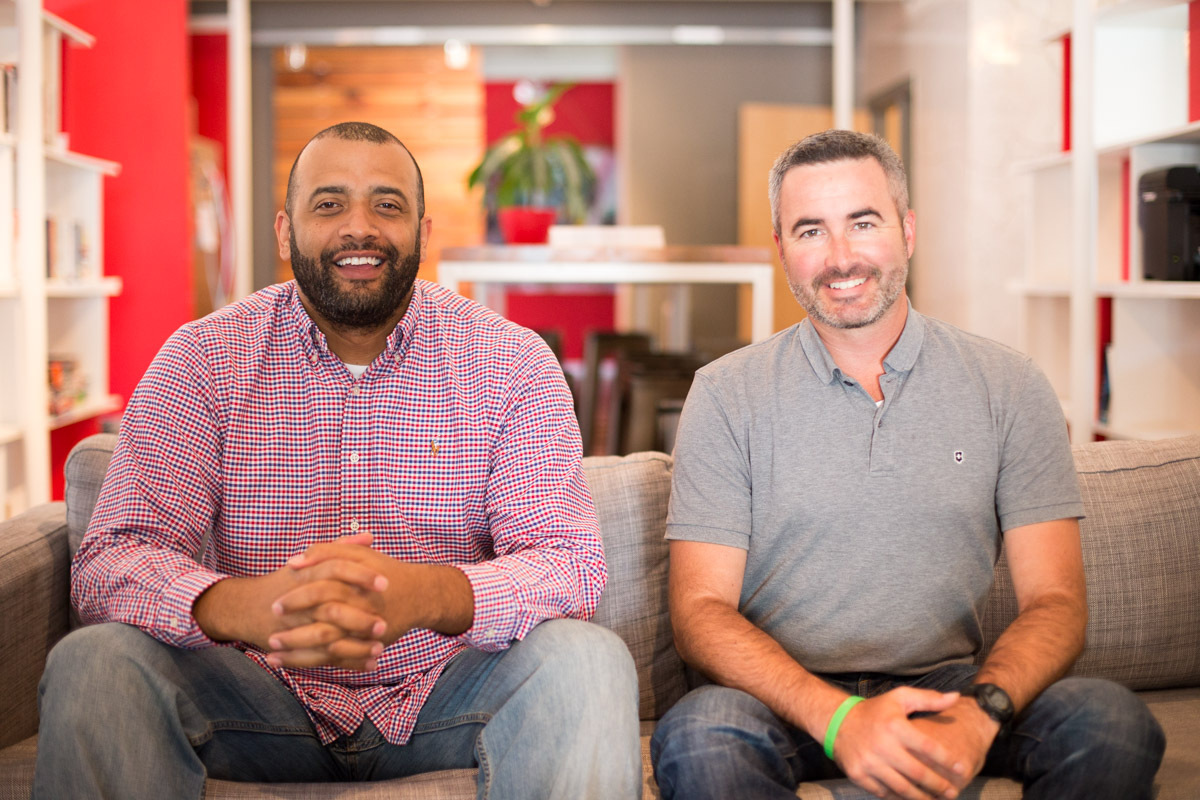
TradeLanes’ move from Miami to the Midwest is about proximity.
“In Kansas City, we’re closer to customers and closer to everyone on our list of prospective customers,” TradeLanes co-founder Vijay Harrell said. “The closer we are to our customers, the faster we can learn, spot their problems and then solve them.”
The global trade firm, a Sprint Accelerator alum and a 2017 Under-the-Radar KC startup, announced Wednesday it has officially relocated its company headquarters from Miami, Florida, to Kansas City, Missouri.
The decision to move was customer-driven, Harrell said. After working closely with the Dairy Farmers of America during the accelerator program, TradeLanes now looks forward to continuing building relationships with potential clients in the agricultural and commodities shipping industry, he said.
“If you look at the top 100 exporters in the nation, the majority of them are concentrated in the Midwest,” Harrell said.
Founded in 2015, the TradeLanes platform automates global trade focused on agriculture firms, lowering costs and removing days from the supply chain. To date, more than 90,000 cargo units have been shipped using the platform, Harrell said.
“Everything around you that you touch on a day-to-day basis has been in a shipping container once in its lifetime,” he said. “That’s how important this problem is.”
Originally a Silicon Valley-based tech entrepreneur, Harrell moved the startup to Miami in 2015, aiming to tap into the area’s ports. Tackling the entirety of the global trade industry proved challenging, prompting TradeLanes’ pivot to an agriculture focus in 2016.
Today, a Midwestern location just makes more sense, he said.
The Sprint Accelerator program — and the Kansas City community itself — exceeded Harrell’s initial vision, he said. The area also afforded a unique opportunity to build TradeLanes’ business network.
“I didn’t have any expectations when I moved here (for the accelerator program), I was just focused on the customers and Dairy Farmers of America,” he said. “The opportunity to have a relationship with a world player is worth its weight in gold, and the fact that there is an opportunity that could turn into a longer relationship will be a great catalyst for us.”
Two weeks into the accelerator, Harrell met Delvin Higginson, now vice president of business development at TradeLanes. Higginson’s familiarity with trade, logistics and the Kansas City business community made him a perfect hire, Harrell said.
“I thought that maybe I would end up moving the company here when I first entered the accelerator,” Harrell said. “But, after being here a while and then Delvin coming on board, it became a no-brainer. … Every entrepreneur I’ve met here can go toe-to-toe with any entrepreneur I’ve met in Silicon Valley.”
Higginson is excited to help solve the global trade problem that TradeLanes mitigates, he said. The United States imports more goods than it exports, a trade imbalance that leaves millions of shipping containers empty.
“It’s more of an opportunity than a problem,” Higginson said. “This is like if a semi-truck of freight coming to Kansas City from somewhere was full of stuff and it left empty. Of course, the freight company’s preference would be to refill the truck and come back, so that they could be making money both ways.”
TradeLanes wants to fill the unused capacity by making it easier on small businesses to trade internationally, Higginson and Harrell said.
Of about 305,000 global exporters in the U.S., 98 percent are small businesses, Harrell said. Yet, small businesses only export about 30 percent of goods. The number of documents required and the lack of awareness discourages small businesses from shipping internationally, he added.
“The TradeLanes software-as-a-service platform removed the barriers small businesses face by not only digitizing and automating the documents, but also ensuring that they get paid,” Harrell said. “The primary reasons businesses don’t export is because they are worried about those two things.”
Not only does TradeLanes aim to make shipping simpler, the company wants to support local businesses and encourage global trade, Harrell said.
“We want to empower the producers of the world to control their supply chain,” he said. “Because if you can control your supply chain, you can control your profits.”
Harrell is optimistic about the future of TradeLanes and the firm’s ability to establish partnerships with Kansas City agricultural corporations. The startup has earned about $139,000 in capital thus far and is currently raising a seed round.

Featured Business

2017 Startups to Watch
stats here
Related Posts on Startland News

Events Preview: SMCKC gatherings, Lean Lab workshop
There are a boatload of entrepreneurial events hosted in Kansas City on a weekly basis. Whether you’re an entrepreneur, investor, supporter or curious Kansas Citian, we’d recommend these upcoming events for you. WEEKLY EVENT PREVIEW SMCKC Breakfast When: March 4 @ 7:30 am – 9:00 am Where: Grand Street Cafe Hear Katie Leas, Online Marketing Manager of…

PresentR taps the Kinect to boost public-speaking skills
A Kansas City startup is plugging into popular gaming technology to improve users’ public speaking skills. Founded by Tim Wikstrom, PresentR taps Microsoft’s Kinect to analyze a presentation, scrutinizing everything from poor posture to counting how many times you say “um.” Founded in 2013, PresentR’s tech evaluates a user’s eye contact, gestures, voice and posture to…

Niall goes ‘all in’ on new retail location, high-tech pen
Well-known in Kansas City for gifting Royals manager Ned Yost a snazzy timepiece, Niall will soon be offering a host of new luxury products — including a high-tech pen — and a new store to feature them. Led by CEO Mike Wilson, Niall on Wednesday announced an expansion of its product line to include a…

Cue the palpitations: Bobby’s taking a (free) coding class
Only a few weeks in Kansas City, and LaunchCode is already making good on its promise to improve the area’s coding competency with a free, 16-week computer science course. And this mathematically-challenged, technically-inept journalist is going to do his best not to embarrass himself while attempting to learn the science of computing. Open to all…