

Prospect to prosperity: Blue Hills boosting neighborhood entrepreneurs (Video)
September 11, 2017 | Tommy Felts
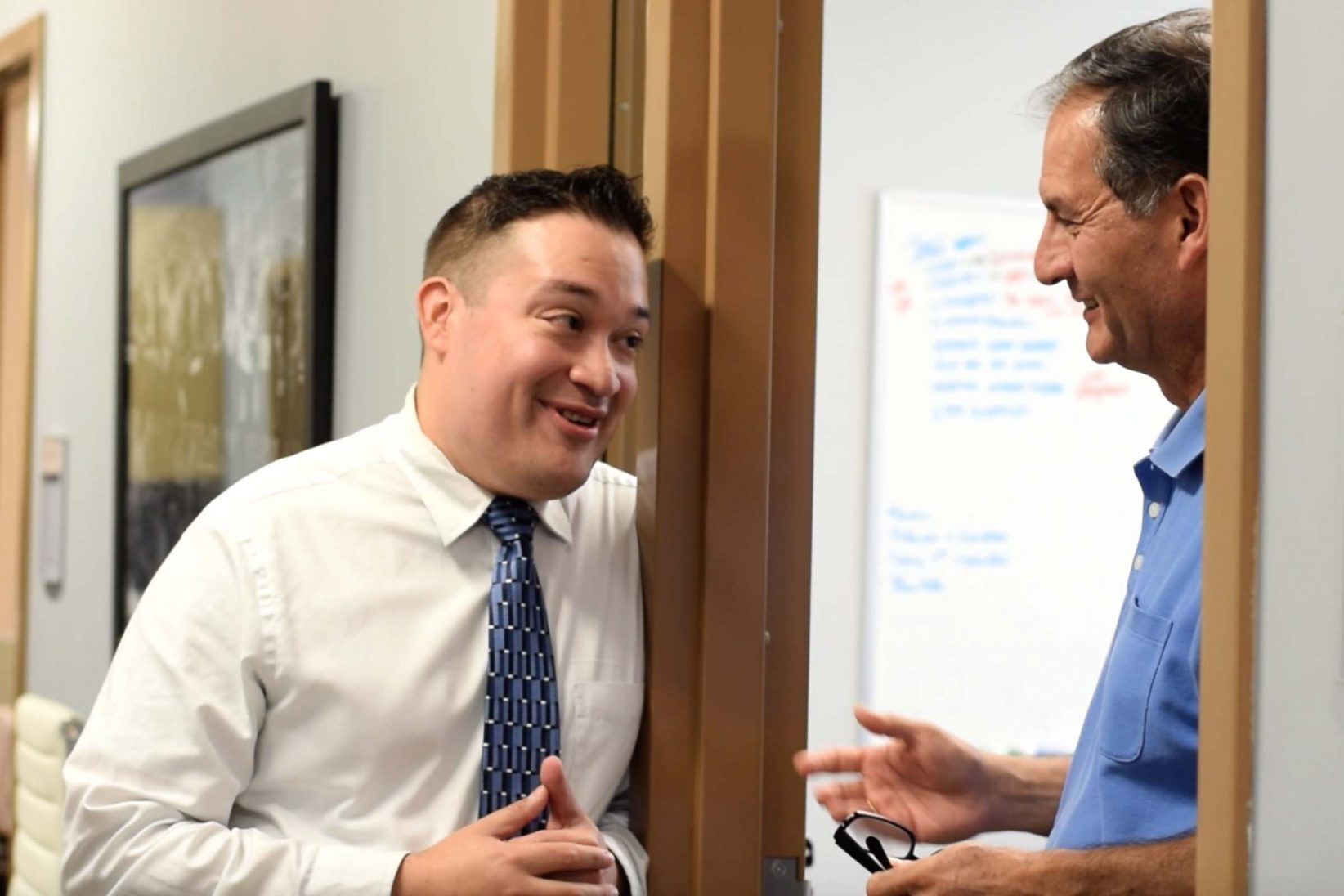
Economic development along Prospect Avenue requires a chain reaction across the community, Edgar Palacios said.
“People need jobs to afford homes, so we need to create those jobs. We need to create some catalysts in this community,” said Palacios, Blue Hills Community Services executive director. “If we can have storefronts along Prospect, that attracts other businesses, that attracts larger capital investment.”
For Blue Hills, it all begins with housing — and the contractors who can build affordable, safe, energy-efficient homes.
The not-for-profit organization is set to graduate the final four companies in its current 10-member, three-year contractor incubator program, Palacios said. Made possible by a grant from the U.S. Department of Health and Human Services, the incubator provides education, support and physical space for the participating businesses.
“The contractors help spur business, and the incubator program offers opportunities for those who are aspiring entrepreneurs to have a safe place to grow their businesses,” he said.
Of the 14,000 square feet of space at Blue Hills’ facility on Prospect, 7,000 square feet has been used for storage bays for those in the incubator program, Palacios said. The site also includes offices available for participants. Because it’s subsidized space, the rental rates are low, further aiding the contractors in establishing themselves.
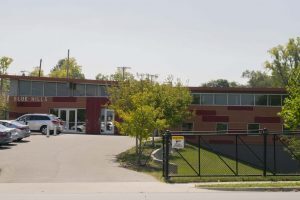
Blue Hills Community Services
“It helps contractors focus on the business, instead of just doing the business,” he said.
The effort has been successful in adding jobs to the neighborhood, Palacios said, noting the 10 contractors in the program have added 26 full-time and 3 part-time positions during the incubator’s run.
“We’re now looking at how we can expand our incubation services in the near future, and how we can create more access for people in this neighborhood to create businesses and hopefully hire from this neighborhood as well,” he said. “We can keep the economic cycle growing.”
Built for freedom
Carol Espinosa went from working in isolation at home to building her small business into one of Blue Hills’ success stories.
When her firm, Freedom Interiors, graduates the incubator this fall, she and her now-four-person team will move to a 7,000-square-foot showroom at 4000 Washington Street — Westport’s original Post Office building, she said.
“The intent since we joined the incubator was to keep growing and develop Freedom into a business that was scalable, so for three years that’s what I’ve worked really hard on,” Espinosa, Freedom principal, said.
While her company is leaving the Prospect corridor, she isn’t leaving her fellow contractors behind, she said. Along with general contractor JE Dunn, Freedom is picking local minority- and woman-owned companies as subcontractors for the buildout.
“And every company who is in the incubator now is working with us on the showroom,” said Espinosa, who also is a graduate of JE Dunn’s 2015 Minority Contractor Business Development Program.
Freedom, a workplace interior design company, benefited most from Blue Hills’ network when establishing a banking connection, she said.
“Getting a good bank and having access to capital was probably the biggest challenge as I was growing Freedom,” Espinosa said. “It was really nice to be able to take advantage of Blue Hills’ resources, connections and network to keep us growing.”
Video by Meghan LeVota
‘Community of choice’
An eighth-cent sales tax initiative approved by voters in April could help Blue Hills continue its mission after the conclusion of the incubator’s federal grant in October, Palacios said.
“It’s no secret that east of Troost, east of Prospect, these areas have been forgotten, in terms of development,” he said. “So we’re excited the eighth-cent sales tax passed recently because that’s going to be a huge catalyst to development in the area.”
The initiative slates tax money to address the commercial and residential development gap along Prospect. With Blue Hills stretching from 47th to 63rd streets and from the Paseo to Prospect, Palacios hopes to see the tax dollars used to encourage more services like grocery and entertainment offerings, as well as to address education-related challenges.
“We want to make sure we have a seat at that table, to make sure our neighbors are well represented when those decisions come to fruition,” he said.
In addition to managing two properties and aiding local school districts with Title II and Title III education contracts, a big part of Blue Hills’ mission is advocating for a stronger Prospect corridor, Palacios said. It’s about redefining the neighborhood as one that can attract families and businesses long term.
“The purpose for Blue Hills Community Services is to build this as a community of choice, a place that people want to move to and invest long term through home ownership,” he said.

Featured Business

2017 Startups to Watch
stats here
Related Posts on Startland News

Photos: Kauffman’s ESHIP Summit sees strength in numbers, diversity
Despite a living legacy of ongoing entrepreneurial support, even the Ewing Marion Kauffman Foundation doesn’t have all the answers, Wendy Guillies told a 600-strong crowd at Wednesday’s ESHIP Summit kickoff in Kansas City. “We approach our work with a great deal of humility,” said Guillies, Kauffman Foundation president and CEO. “We need to listen and…
Rewriting the playbook: ESHIP Summit eyes new model of economic development
Whether it be in art, technology or science, fledgling fields of study often face challenges of legitimacy when they enter the mainstream. Such is the case for the domain of ecosystem building, which struggles to find validity for and unity among those working to create vibrant communities in which entrepreneurs thrive, said Victor Hwang, vice…
Manual entrepreneurship, refuge: ‘Farming is just the vehicle,’ says BoysGrow founder
“What’s the word?” “Respect!” shouted the teenage farmhands at BoysGrow, a two-year program dedicated to teaching entrepreneurship to urban youth through agriculture and farming. The 10-acre BoysGrow farm outside Grandview plays host to 30 to 40 boys, ranging in age from 15 to 17. They work, eat and learn on the nonprofit farm three days…
OP greenlights Edison District walking community envisioned by former startup executive
Less than a month after announcing the launch of a second coworking location in Johnson County, the former startup executive behind Edison Spaces revealed news of a new project: a mixed-use district that repurposes a block previously defined by its church grounds. Centered around a five-story office building that features a chef-driven food hall, the Edison…