

KC smart city leader: Only one city ‘smart’ enough for Amazon HQ2
September 27, 2017 | Meghan LeVota
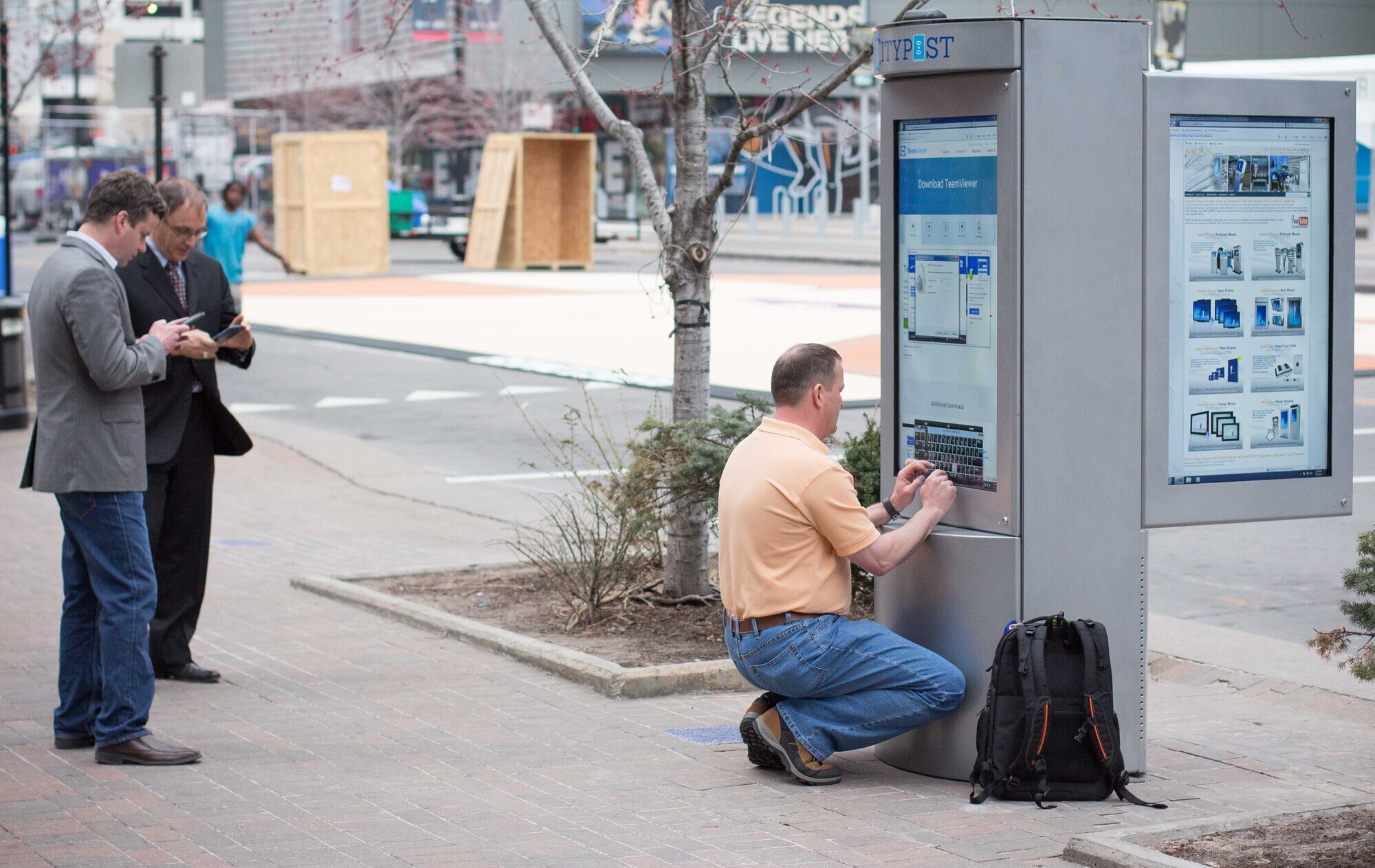
Kansas City’s smart city excellence stands out among a crowded field of major U.S. cities vying for Amazon’s second headquarters, Bob Bennett said.
“San Diego has a crazy amount of smart street lights, but they aren’t connected to anything except themselves. New York City has a great Wi-Fi network,” said Bennett, chief innovation officer at the City of Kansas City, Missouri. “But, there’s only one city (Kansas City) that has Wi-Fi tied to an analytics platform, tied to traffic, tied to predictive analytics for potholes. … We think of the comprehensive whole.”
Amazon announced earlier this month that it plans to invest more than $5 billion in a new headquarters that could create as many as 50,000 jobs in which staffers would make $100,000 or more.
The Kansas City Area Development Council is organizing the regional effort to attract Amazon, Bennett told a group of leaders at City Hall Wednesday at September’s Smart City Advisory Board meeting.
“It’s going to be a very forward-looking, regional application,” he said, “One that accentuates our positives and articulates how we as a city are going to allow Amazon to take their next steps here. … Instead of saying, ‘We will give you a bunch of stuff,’ we’ll say, ‘Here’s how we can serve as a community partner for you and how you can grow with.’”
The development council plans to tout the metro area’s smart city efforts as a major selling point. Since the launch of the smart city initiative in 2016, downtown Kansas City has slowly been transforming into a hotbed of sensor networks and Wi-Fi connectivity on and around the 2.2-mile streetcar line.
“Our application will reflect the area’s key differentiators,” Bennett said. “We want to convey in the application, ‘Hey listen — you’re the smartest company on the planet, or so you say. Well cool, welcome to the smartest city in the United States.”
In its request for proposals, Amazon said it has a preference for a metro area with more than one million people, a stable and business-friendly environment, urban or suburban locations with the potential to attract and retain strong technical talent and communities that think big and creatively when considering locations and real estate options. The application is due Oct. 19 and area leaders are working rigorously to prepare, Bennett said.
“The process is very fast paced and all hands on deck,” Bennett said. “The good news is we have a lot of hands.”
The smart city project wrapped up Phase 1 in April and leaders discussed current plans for Phase 2 during Wednesday’s meeting, in addition to Amazon H2Q application plans, Techweek KC takeaways and the ongoing smart city corridor project assessment.
The $15.7 million public-private smart city initiative is a collaboration between Kansas City, Sprint, Cisco and Think Big Partners. In 2016, the effort established 328 Wi-Fi access points, 178 smart lighting video nodes and 25 smart kiosks, laying the foundation on which the city can begin to collect data on downtowners’ behavior.
Smart City Phase 2
The smart city initiative is taking steps toward building out one of Kansas City’s underdeveloped corridors, Bennett said.
“We are moving ahead with the digitization of Prospect MAX,” he said. “All of the fiber that needs to go in has been planned. Seven thousand light poles are set to be installed, replacing existing lights with LED lights.”
The new MAX rapid bus line would increase mobility throughout the Prospect corridor, creating faster bus routes and installing interactive kiosks offering real-time transit information and wireless internet access. The corridor extends south from Independence Avenue to 75th Street.
The Kansas City Area Transportation Authority currently operates two MAX lines — Main Street MAX and Troost Avenue MAX. With sleek designs and larger bus stops, MAX offers faster and more reliable service, Bennett said. The Prospect corridor project is expected to cost $54 million, which includes $8 million in federal funding already.
Installation of the 7,000 new light poles will pave the way for sensor and wifi connectivity, Bennett said.
“The light poles are set up to be adaptable and it allows us to put the basic infrastructure in place,” he explained. “The next priority for the Prospect line is Wi-Fi. Right now, we are waiting to hear back from a potential private partner.”
Two kiosks are expected to be built along Prospect as early as October, Bennett said. In addition to the Prospect MAX project, smart city leaders also announced that streetcar expansion progress has been made.
“We are now advancing the technical work on the southern streetcar extension to UMKC,” said Tom Gerend, executive director at Kansas City Streetcar Authority. “The process will be much more visible in the coming months.”
Techweek KC takeaways
During Techweek KC, the City of Kansas City played host to its second annual innovation partnership demo day.
Partnering with Techweek for the event was a good move for the city, Bennett said.
“Not only did our five partner companies get a chance to tout their successes, but they had the opportunity to pitch to some of the venture capitalists that were in town for Techweek,” he said. “We will definitely hold demo day on the first Monday of Techweek again next year.”
Techweek KC also saw a greater number of attendees than in previous years, Bennett said.
“This year, there were satellite conferences on-going that were attached to Techweek,” He said. “That proved to be a pretty effective model for bringing in more people here and for adding depth to the conversation. Next year we will take advantage of doing more of that.”
Smart city corridor assessment
Kansas City Digital Drive’s Aaron Deacon is organizing an overarching assessment on the city of Kansas City’s smart city initiative.
“Over a year since the Cisco+Sprint smart city corridor went live in downtown Kansas City along the streetcar line, the time is right for an assessment of the project’s progress, outcomes, impact and potential,” Deacon said.
Deacon plans to begin stakeholder interviews and focus groups this month to review project goals and objectives. By December, he expects to offer a narrative summary of the project as well as a detailed outline with future recommendations.
By March 2018, Deacon aims to complete the final written report, he said.
“Hopefully, we will have the report ready to present at the Smart Cities Connect conference in March,” he said. “The report will include use cases, research and, hopefully, nice examples of tactical things we have accomplished.”
Following the report, the Smart City Advisory Board is expected to cultivate its ongoing community engagement strategy as well as future smart city project ideas.

Featured Business

2017 Startups to Watch
stats here
Related Posts on Startland News

How this Andre’s Valentine collaboration celebrates the friendship that sparked Kate Spade
The favorite hometown chocolate of one Kansas City’s best-known fashion designers and entrepreneurs serves as just one ingredient in a new Valentine’s Day collaboration from André’s Confiserie Suisse. The local chocolatier just rolled out a limited edition line alongside Frances Valentine to mark the holiday, as well as celebrate the friendship between Elyce Arons and…

Electric Americana: How singer Teri Quinn broke from the pack (and found her own in KC)
Members of the Kansas City-based band Teri Quinn & The Coyotes are carving a distinctive space within the local music scene. From Appalachian banjo riffs to punk-inspired beats, their sound reflects diverse influences — howling loudest from the woman in front. Attendees at Startland News’ Jan. 23 reception for the Kansas City Startups to Watch…
C2FO hits its first billion-dollar day; marks $400B in funding to customers as global finance shifts
A record-breaking year for C2FO serves as a proof point itself, said Sandy Kemper, revealing the Kansas City-built fintech surpassed $400 billion in lifetime funding to its customers in 2024 and achieved $1 billion of daily funding for the first time. “The success of the past year only demonstrates the tremendous need for more efficient…
KC Biohub leader bullish on Tech Hubs funding after region missing from latest grants list
Kansas City is still in the running for a chunk of the remaining $280 million in expected funding for federal Tech Hubs implementation grants, said Melissa Roberts Chapman, emphasizing the region remains primed and competitive in the process despite the KC BioHub not being among the latest awardees announced by the program. Six other projects…