

Universe of ‘things’ expanding rapidly, Big Bang says
August 18, 2017 | Meghan LeVota
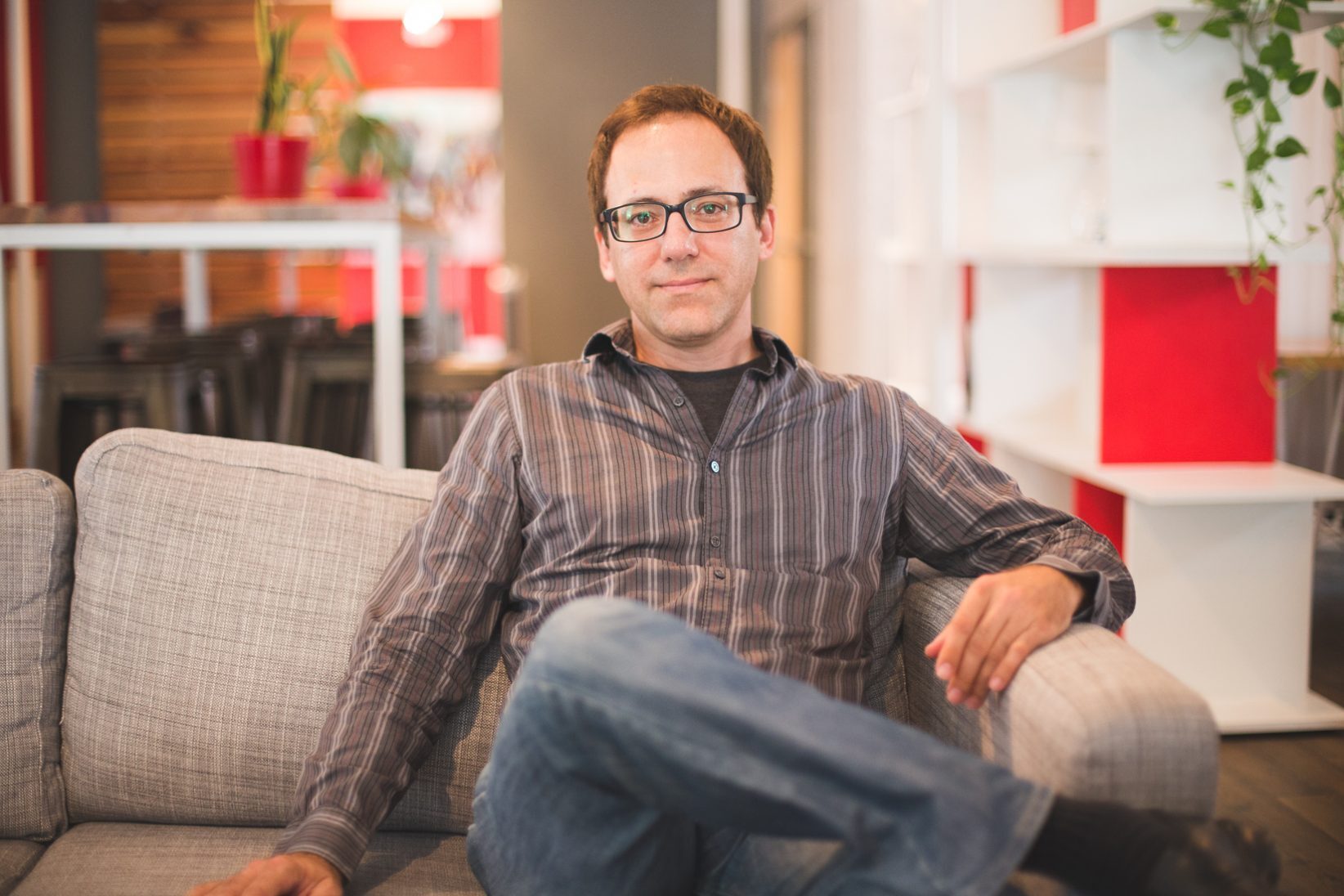
Editor’s Note: To stay in consistent contact with founders, Startland News is launching a weekly follow-up series featuring top area startups and entrepreneurs.
Imagining the future of the “Internet of Things” — a universe of connected devices — is as impossible today as accurately fathoming in 1995 how then-fledgling Internet technology would change the world, Jonathan Wagner said.
“I’m constantly discovering more possibilities each day,” said Wagner, CEO of Big Bang. “I don’t have this incredible vision of what the connected world will be like, but the more I talk to people and clients, you learn things that you didn’t realize exist. My work is uncovering what it will look like.”
More than 8 billion existing “things” — phones, watches and cars — are already connected. That number is expected to reach more than 50 billion connected devices within five years.
Founded in 2014, Big Bang aims to serve as the “central nervous system” for smart city and other Internet-connected devices. The firm provides Internet of Things software to tech companies that are looking to create a connected device.
The firm’s revenue has more than doubled in a year, Wagner said. A 2016 LaunchKC recipient, an innovation partner for the City of Kansas City and a Digital Sandbox KC company, Big Bang has made a name for itself within the Kansas City startup community.
“The growth has been exciting. We’re learning a lot,” Wagner said. “Especially as we begin to work with different types of customers and really try to understand what their challenges are. That’s what we’ve been focusing on the most the past year.”
Startland decided to check back in with Big Bang to learn more about the firm’s progress.
Expanded capacity
In 2016, Big Bang co-founder Jason von Nieda moved back to Kansas City from Seattle. Nieda’s hardware expertise complemented Wagner’s strengths in software, Wagner said, doubling the firm’s capacity.
“Folks were coming to me with problems that couldn’t just be solved with software. It needed hardware as well,” Wagner said. “(With Nieda here,) we’ve been speaking to a lot more customers that need assistance through the entire lifecycle of their product. We provide the cloud platform and provide assistance to develop hardware on the side.”
Some of the firm’s clients include the smart home company Homebase AI — which recently raised a $500,000 round led by JE Dunn Construction Group and Sunflower Development group — and solar solutions firm 17° 73° Innovation Co.
“It’s been really fun to work with them,” Wagner said. “It’s especially great how Homebase AI and I work in the same building [Think Big], and if they’ve got any questions they can just walk over to me, which is great for immediate feedback. When people talk about things like collision density, I agree that it is much easier to work when you’re not in a vacuum.”
Engaging education
Big Bang paired up with the Austin-based nonprofit Changing Expectations via the Mozilla Gigabit Community Fund to bring connected robots to Kansas City students.
The robots were piloted in classrooms within the North Kansas City and Lee’s Summit school districts. Wagner assisted students in building their own the robotic devices, called “Gigabots.’’
“Really the idea is to let students get to experience what we believe is going to be the next generation of computing and connected devices,” Wagner said. “It’s not going to be just phones and tablets that are connected — it’s going to be everything. To give them that experience in the classroom is pretty useful.”
Finding focus
One of the greatest challenges in growing Big Bang has been finding its focus, Wagner said.
“Originally when we first started the company a few years ago, I was thinking too broadly and would tell clients, ‘Here are a lot of things you can do that might be interesting,’” he said. “Now there is focus — ‘These are the tools you use to make connected devices.’”
Focus can be difficult, and it is a trait with which many entrepreneurs struggle, Wagner said.
“The more you talk to people that are customers or potential customers the better at focus you will be,” he said. “I’m a talker, so I am working hard to listen and ask questions so I can get an understanding of the challenges people have. It’s something I’m continuously improving on.”
The Internet of Things community in Kansas City is growing, and Big Bang wants to be a central part of that growth, Wagner said.
“Kansas City has a growing community of folks who are interested in connected devices, so we want to continue to foster that,” Wagner said. “I think that there is a real opportunity for us to try and create an ecosystem where people can test their smart city or connected products.”
The firm is currently raising funds for its seed round. In addition to Big Bang, Wagner was the tech lead in creating foundational smart city infrastructure called Digital Town Square, a project by KC Digital Drive.

Featured Business

2017 Startups to Watch
stats here
Related Posts on Startland News

This Brookside hotspot touts best chicken sandwich in KC, putting chef’s eye on fast casual food
The chicken sandwich wars of the 21st century aren’t limited to fast food restaurant chains, Chef Charles d’Ablaing declared, touting his local lineup of comfort food classics and laying claim to serving the best spicy chicken sandwich in all of Kansas City. “I did it as a special, just kind of, ‘Haha, funny,’” said d’Ablaing,…
KC software group ventures into sports tech with new college athlete endorsement platform
With a new law in effect this summer allowing student athletes to sign sponsorship deals and profit off of their name, image and likeness, Artisan Technology Group jumped at the opening to help young people navigate such new opportunities, the company said. Artisan teamed with Opendorse, a Lincoln, Nebraska-based sports tech firm, to help them…
‘Prognosis is pointless’: Journey Pro KC wrestling owner forces cancer statistics to tap out
Story and photos by Channa Steinmetz, Startland News | Video by Catherine Hoffman, Flatland Two years after his diagnosis, DJ Stewart still has never googled “glioblastoma.” “I have Grade 4 glioblastoma — meaning the highest, most aggressive grade. If you go down that rabbit hole on the internet, it’s a terrible thing to do.…
Pantry Goods brings wall-to-wall organic, European-style shopping to Midtown micro market
The expansion of Pantry Goods from an online service into a Midtown micro market has brought with it a bushel of changes — all organic — for Marcelle Clements as she continues her mission to grow support for small businesses and sustainable living. “It was a great move,” said Clements, founder of Pantry Goods, recalling her…