

TEDxKC speaker Louis Rosenberg: Hive mind key to battling alien threat
August 23, 2017 | Startland News Staff
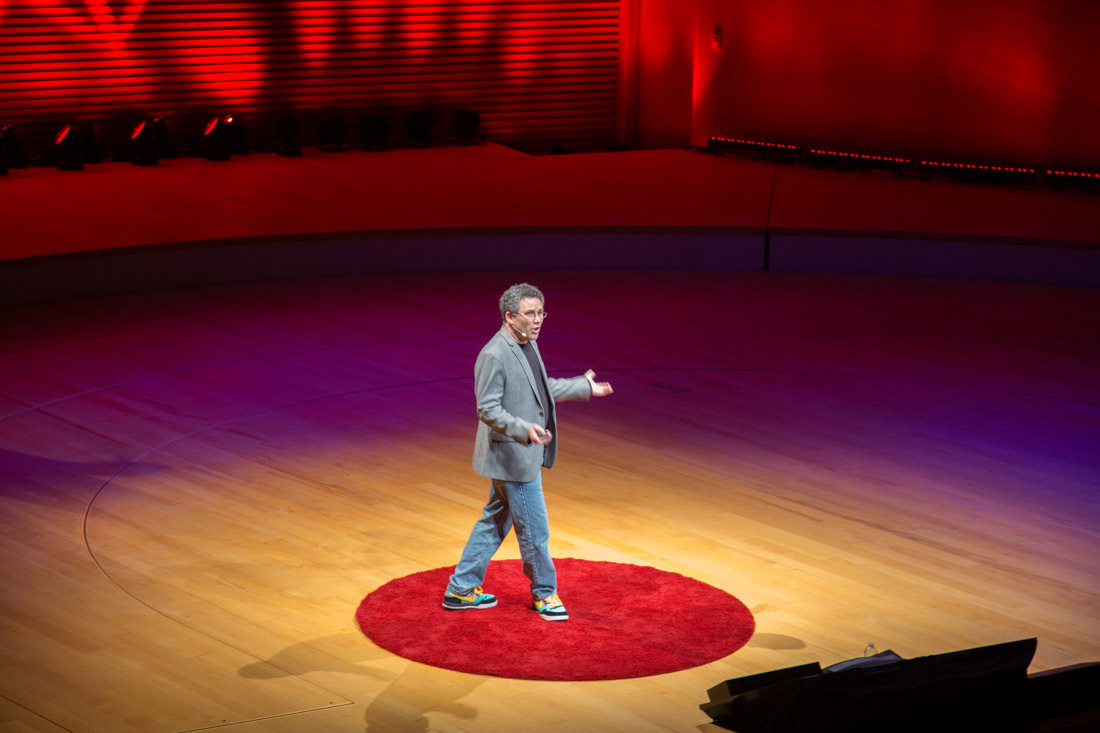
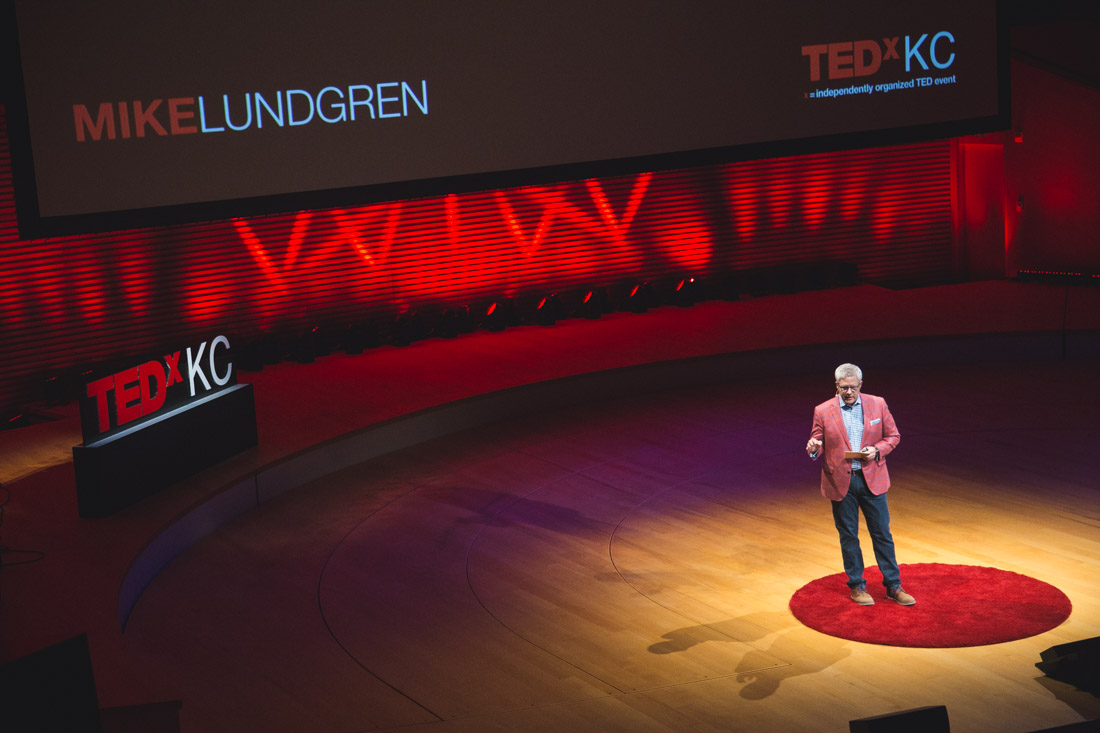
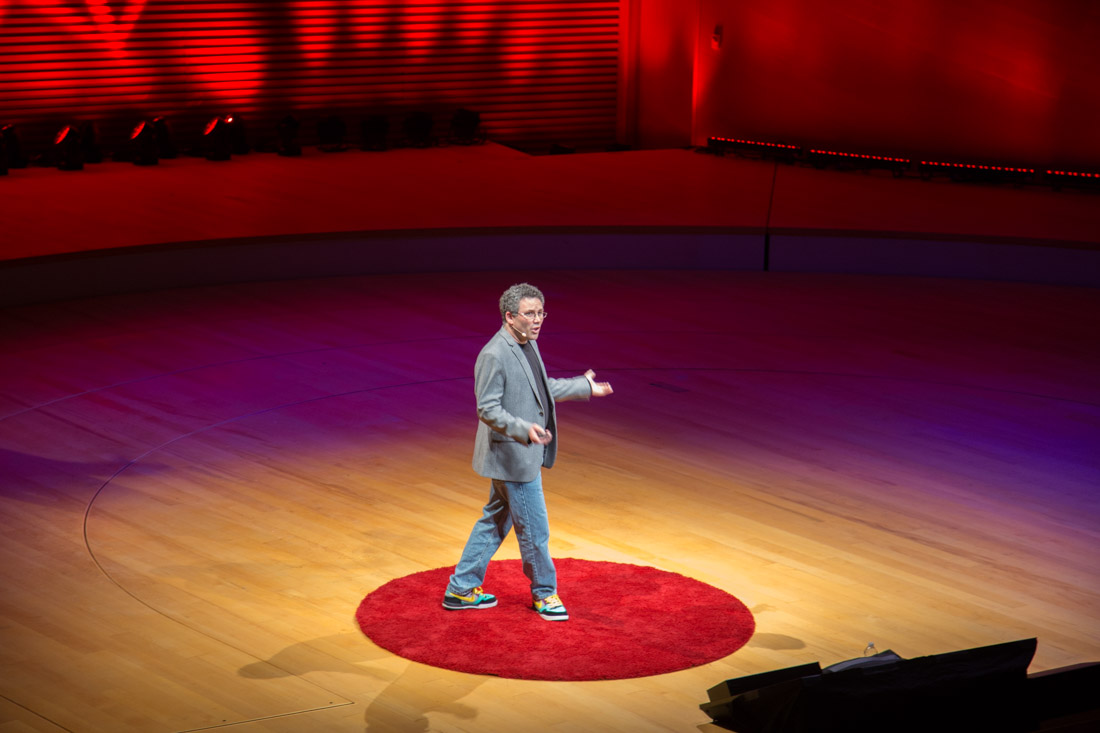
Editor’s note: Startland News is exploring a few of the most impactful quotes from speakers at Friday’s TEDxKC event at the Kauffman Center for the Performing Arts.
“Here we are: the most intelligent species on the Earth. Congratulations. Unfortunately, things are about to change.”
— Louis Rosenberg
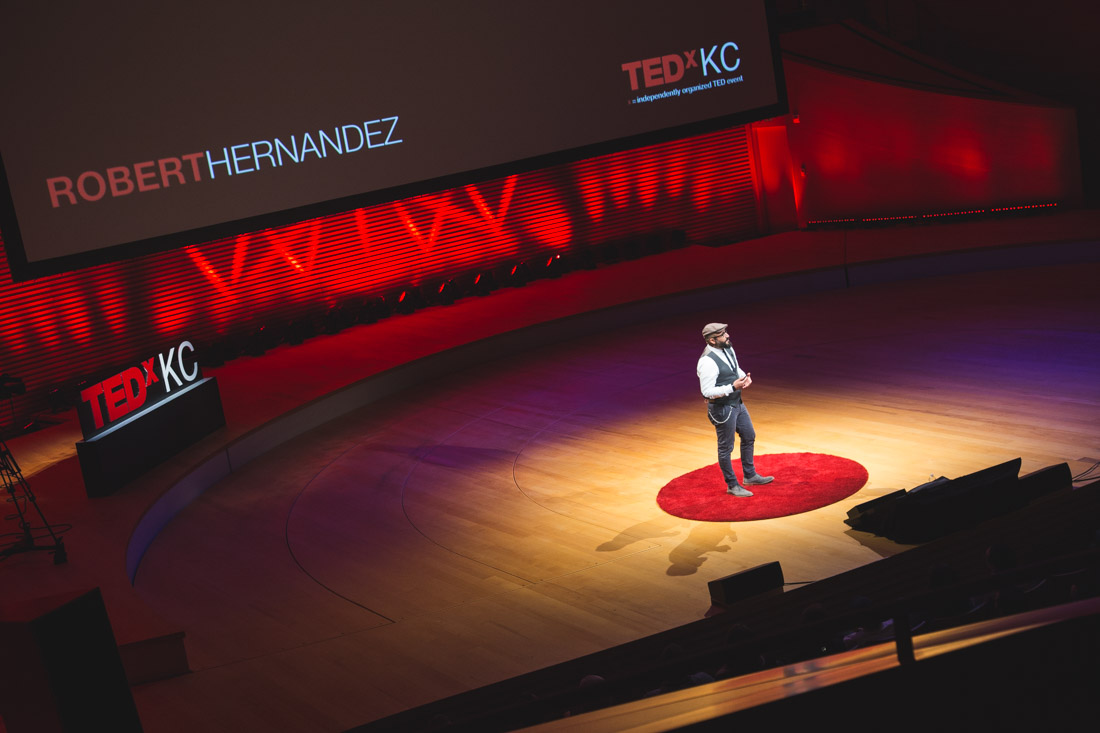
An alien intelligence is headed toward humanity at breakneck speeds, Louis Rosenberg told the TEDxKC crowds, and it will challenge humans’ position as the intellectual top dog on the planet. Experts say the threat could be decades away, he said, but that doesn’t lessen the danger.
“Let’s just be straight: We have no reason to believe it will be friendly. It will have its own values, its own morals, its own self interests,” Rosenberg said. “And if it behaves anything like we do, it will put its own self interests first — to the detriment of all other creatures it encounters.”
No. The looming invasion won’t come at the hands of aliens, he argued. Rather it will be a creature of humanity’s own creation: A sentient artificial intelligence that will emerge from research labs at Google, Facebook or a leading university, Rosenberg, CEO of Unanimous A.I., said.
His solution: Form a bee-like hive mind or “brain of brains” through which swarm intelligence will help humans get smarter together.
By aggregating diverse perspectives on values, morals and sensibilities, Rosenberg said, the species can become more wise — quick-witted enough to fend off not only artificial intelligence, but also to solve such problems as poverty, inequality and sustainability.
“If honeybees could observe how we humans make big group decisions — like electing our leaders, resolving our conflicts or planning for our future — they might think we’re the primitive ones,” he said. “But not for long.”


2017 Startups to Watch
stats here
Related Posts on Startland News
Serial entrepreneur leverages past success for Bridge Space coworking project
Bridge Space will be more than a coworking office, Ben Rao said. He hopes it will be the heart of Lee’s Summit’s blossoming entrepreneurial ecosystem. “My No. 1 goal is to accelerate entrepreneurs’ success,” said Rao, Bridge Space founder and a serial entrepreneur himself. “It’s an opportunity for me to build something that would make…

KC mom’s humble entrepreneurial journey draws on healing power of creativity
Huddled in her parents’ basement, between the cribs of her crying twin babies, Keliah Smith began to draw. She was unemployed and feeling emotionally drained. The relationship with her children’s father had soured. Her escape: the stylus and smartphone in her hands. The Kansas City mother drew what she didn’t see in the mirror, she…

Harvard University recognizes KCMO digital inclusion map
Kansas City’s geographic work to illustrate the area’s digital divide earned high praise from a prestigious university. Harvard University recently highlighted the City of Kansas City, Missouri’s Digital Inclusion map, a tool that — at a block-by-block scale — detail residents’ access to internet connectivity overlaid with poverty levels. “This visualization was chosen as Harvard’s…
Study: Women angel investors more likely to give back to female-led startups
Women support women, a new study of 13,000 North American angel investors says. As more female entrepreneurs have entered the business field in the past few decades, women have begun to reshape the nature of angel investing, according to a report by the Overland Park-based Angel Capital Association. “Being an entrepreneur is one of the…