

TEDxKC speaker Shantanu Bala: Tech moves communication beyond words
August 23, 2017 | Startland News Staff
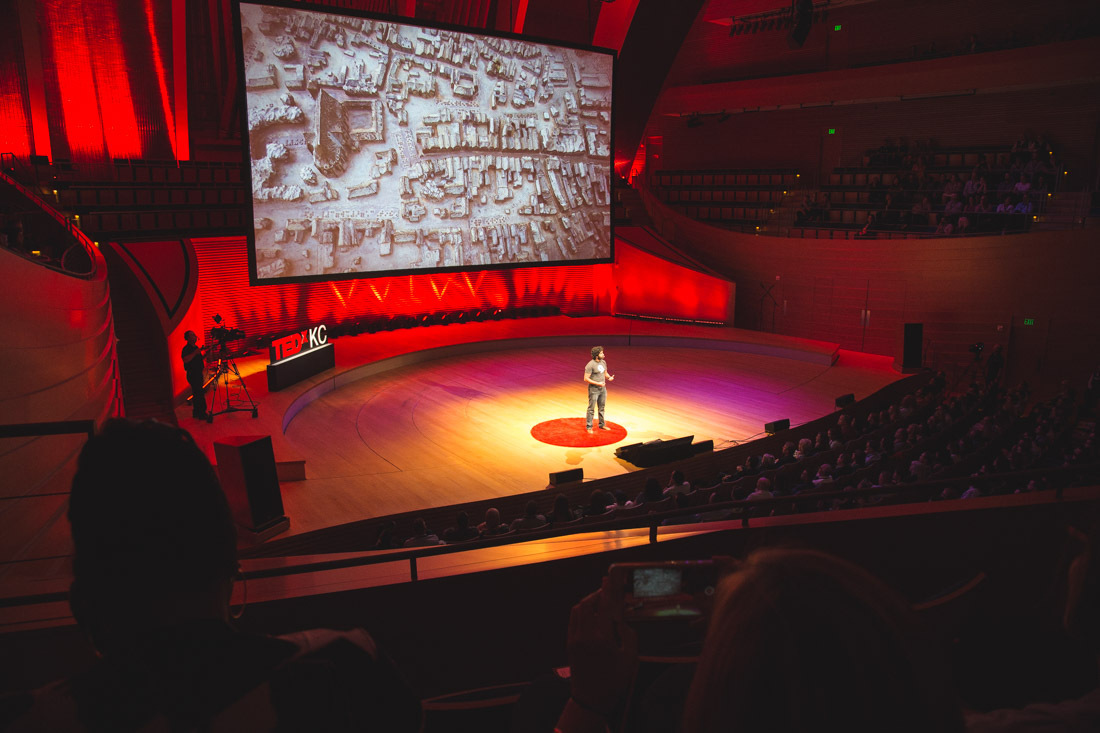
Editor’s note: Startland News is exploring a few of the most impactful quotes from speakers at Friday’s TEDxKC event at the Kauffman Center for the Performing Arts.
“The blind cannot only lead the blind, but lead any of us who can see to experiences that we’ve never seen before.”
— Shantanu Bala
Think about the technology you interact with on a day-to-day basis, Somatic Labs founder Shantanu Bala encouraged the TEDxKC audience.
“You’re probably looking at a screen, whether that’s a laptop, a smartphone or a tablet. You’re checking emails, notifications, messages or alerts,” he said. “A lot of this information is presented in a context that is inaccessible to someone who’s blind.”
Although modern technology users have access to a new era of voice-controlled interfaces, like Alexa, Siri and the Google Assistant, such artificial intelligences that respond to speech also add another channel of disruption and intrusion, Bala said.
Communication involves a lot more than just words, he said.
“Even if you’re not bilingual, you all understand a second language. You understand the meaning of a handshake or a warm hug. You understand to pull your hand away from a hot stove,” Bala said. “And you understand this faster than you can read words printed on a page or even hear them spoken out loud.”
For any of the 285 million people in the world who are blind, a task as ordinary as checking the time can involve asking another person or turning up the volume on a phone and having it yell out that information, he explained.
“This is a cumbersome experience and it’s an accessibility problem, but I would also question the necessity of occupying anyone’s eyes or ears when we can intuitively understand things that we grasp with our hands,” Bala said.
Imagine if you treated your entire body as a programmable computer, he challenged the crowd.
Bala’s Somatic Labs offers software and hardware products that aim to enable a future of wearable devices that communicate through human feeling and touch.
“I’ve spent past eight years working on systems of silent and invisible communication because I believe the same computer interface that could help someone who’s blind to check the time without needing a pair of headphones, is the same interface that could power the future of human-computer interaction,” he said.


2017 Startups to Watch
stats here
Related Posts on Startland News

Bodify joins Tulsa accelerator with $70K investment, ‘knocking down a lot of dominoes’
One of Kansas City’s most tenacious founders is in the midst of an intensive, six-month accelerator aimed at bringing her fashion tech startup to revenue without decreasing her ownership stake in the company. “Follow-on investment is nice, but you don’t have a company without revenue,” said Carlanda McKinney, founder and CEO of Bodify. “For me,…
Esports orgs target more diversity in gaming; Mayor Q to join weekend ‘Among Us’ stream to boost message
Two Kansas City esports organizations are uniting behind one jersey to help make the rapidly expanding online gaming community more accessible to students in Title 1 schools across Missouri. “Esports brings kids together who might not otherwise have the chance to be a part of a broader community,” said Mason Mullenioux, CEO of Generation Esports…
Missouri angel tax credits? New grants? Show-Me State tech advocates researching next generation of incentives for entrepreneurs
The future of entrepreneurial support in Missouri could hinge on what those in the trenches say are the state’s biggest barriers to startup success, said Jack Scatizzi, announcing a new data-driven effort to reshape Missouri’s strategy for cultivating innovation. “The initiative will include quantitative and qualitative aspects that will be incorporated into a strategic plan…
KC tech guru, startup advocate talks cryptocurrency’s value: ‘History doesn’t always repeat itself, but it often rhymes’
Cryptocurrency eventually will cause the most significant exchange of wealth mankind has ever experienced, Matthew Marcus forecast, and the web developer-turned-startup community organizer hopes to help others get involved early. “We are essentially in the early 1990s of the internet. The same way we talked about the internet and email 20-some years ago, will be…