

TEDxKC speaker Shantanu Bala: Tech moves communication beyond words
August 23, 2017 | Startland News Staff

Editor’s note: Startland News is exploring a few of the most impactful quotes from speakers at Friday’s TEDxKC event at the Kauffman Center for the Performing Arts.
“The blind cannot only lead the blind, but lead any of us who can see to experiences that we’ve never seen before.”
— Shantanu Bala
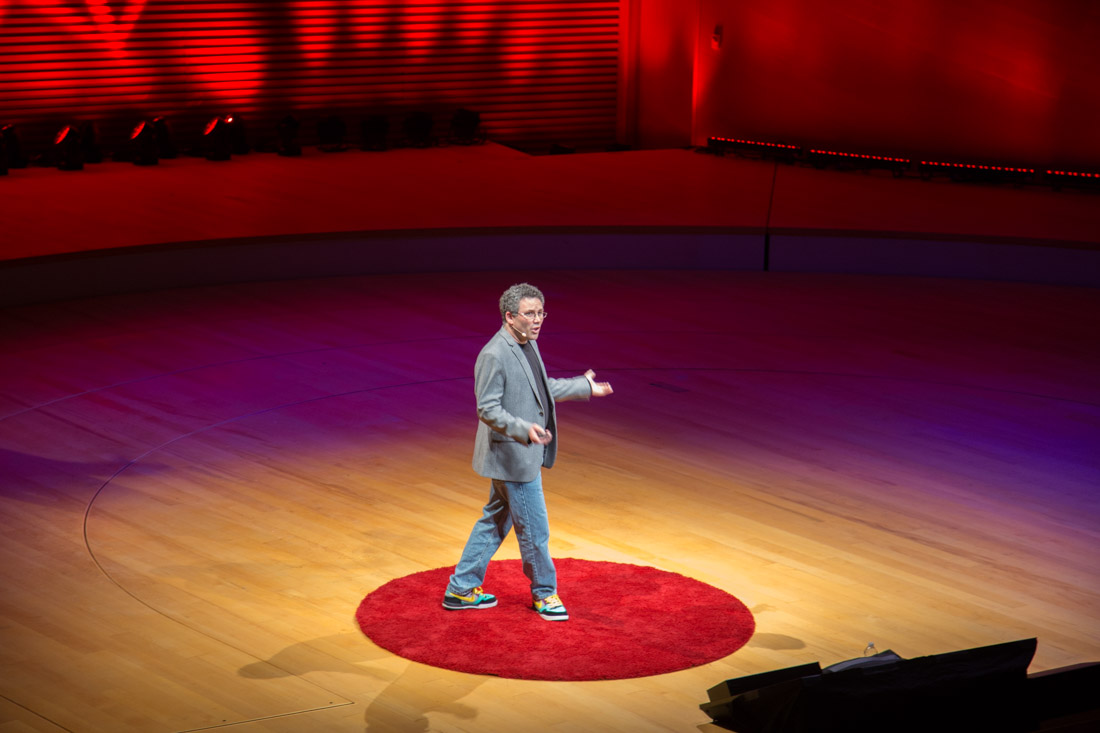
Think about the technology you interact with on a day-to-day basis, Somatic Labs founder Shantanu Bala encouraged the TEDxKC audience.
“You’re probably looking at a screen, whether that’s a laptop, a smartphone or a tablet. You’re checking emails, notifications, messages or alerts,” he said. “A lot of this information is presented in a context that is inaccessible to someone who’s blind.”
Although modern technology users have access to a new era of voice-controlled interfaces, like Alexa, Siri and the Google Assistant, such artificial intelligences that respond to speech also add another channel of disruption and intrusion, Bala said.
Communication involves a lot more than just words, he said.
“Even if you’re not bilingual, you all understand a second language. You understand the meaning of a handshake or a warm hug. You understand to pull your hand away from a hot stove,” Bala said. “And you understand this faster than you can read words printed on a page or even hear them spoken out loud.”
For any of the 285 million people in the world who are blind, a task as ordinary as checking the time can involve asking another person or turning up the volume on a phone and having it yell out that information, he explained.
“This is a cumbersome experience and it’s an accessibility problem, but I would also question the necessity of occupying anyone’s eyes or ears when we can intuitively understand things that we grasp with our hands,” Bala said.
Imagine if you treated your entire body as a programmable computer, he challenged the crowd.
Bala’s Somatic Labs offers software and hardware products that aim to enable a future of wearable devices that communicate through human feeling and touch.
“I’ve spent past eight years working on systems of silent and invisible communication because I believe the same computer interface that could help someone who’s blind to check the time without needing a pair of headphones, is the same interface that could power the future of human-computer interaction,” he said.














2017 Startups to Watch
stats here
Related Posts on Startland News
New city flag designed for KC’s now (and tomorrow): Here’s where you’ll see it flying first
Kansas City is ushering in an era of growth and development, Jared Horman said, and the unveiling of a new municipal flag is just the way to recognize this new chapter. “The timing feels particularly exciting with the Chiefs headed to the Super Bowl, the opening of the new terminal at the airport and the…

Pushing without force: Founder credits accelerator’s collaborative ‘in the trenches’ guidance for overseas scaling success
Editor’s note: This article is sponsored by the NMotion startup accelerator, but was independently produced by Startland News. The powerhouse mix of global and localized support David Biga received from the NMotion Growth Accelerator was well worth the program’s required exchange of equity, the proptech startup founder detailed. Particle Space — one of Startland News’…

Coming to the Plaza: Food hall to put ‘chefs out front’ from breakfast to late-night crowd
Just months after expanding to Downtown Kansas City, the Strang Chef Collectives’ next location for a chef-driven food hall will be tailored to fit its new home on the Country Club Plaza, said Shawn Craft. The hall’s four new food and beverage concepts — slated to open in late May or early June — will…

PMI Rate Pro pivots to tech solutions firm as pricing tool integrates with mortgage software solution
The mortgage industry is lagging behind in the current world of technology, Nomi Smith said; but PMI Rate Pro is innovating to become a one-stop shop for private mortgage insurance (PMI). “We began as a quoting service, so we developed an API (application programming interface) supporting another API. But we quickly realized that there needed…