

‘Hybrid’ connections key to healthy entrepreneurial ecosystem, researcher says
August 11, 2017 | Meghan LeVota
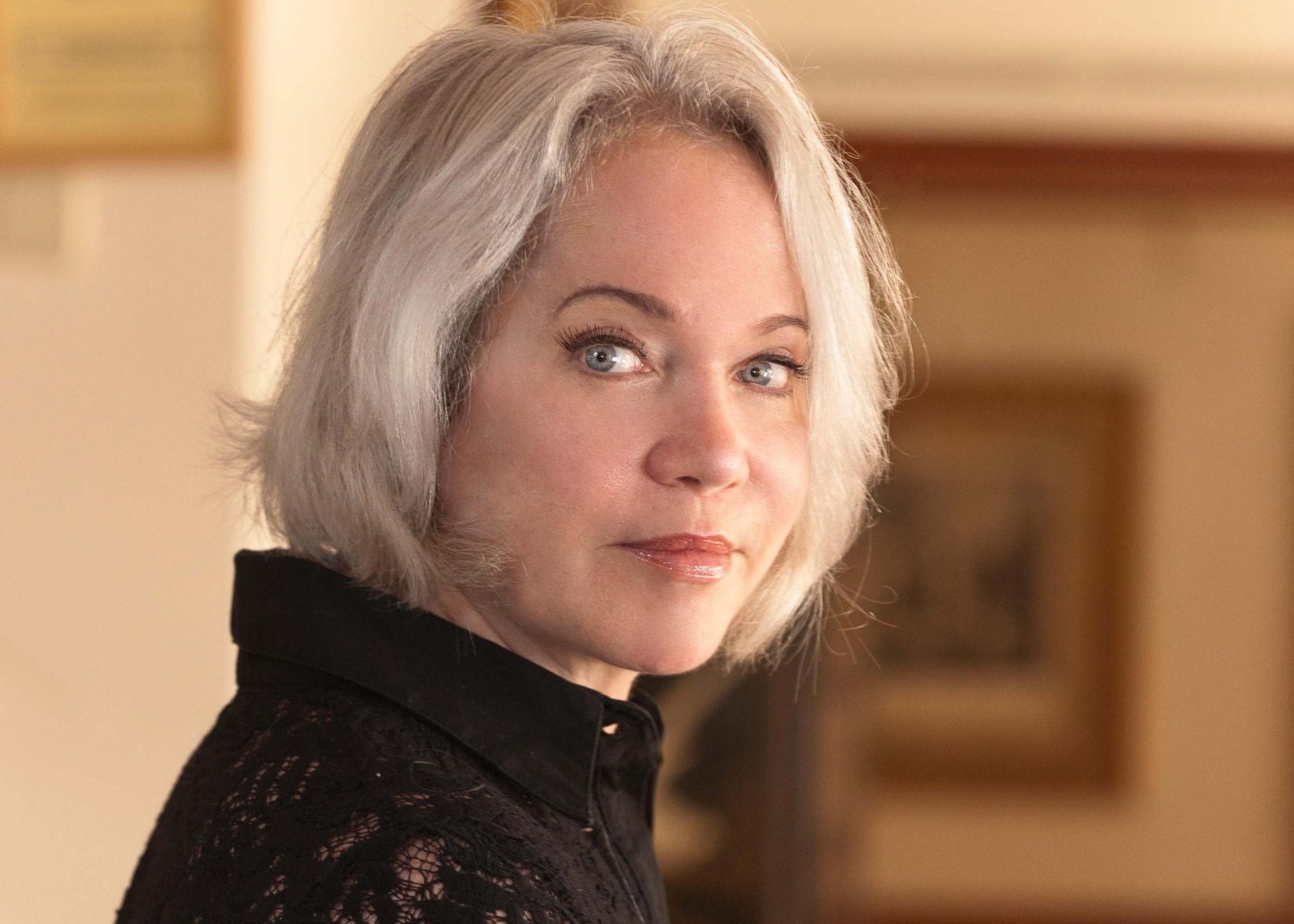
Social research shows innovation is budding in Kansas City, Karen Stephenson said.
“I think that the heartland is where the innovation of the future is coming from,” Dr. Karen Stephenson, a Harvard-educated anthropologist, said. “It doesn’t come from the coasts. When you look at what drives innovation and where a lot of these Silicon Valley firms are coming from, they have migrated from the heartland.”
This isn’t just talk. As part of the KC Connector Project, the Ewing Marion Kauffman Foundation hired Stephenson to take a three-month, deep look at the Kansas City entrepreneurial and education ecosystem. The results of that study were revealed this month during the Gigabit City Summit.
In February, the Kauffman Foundation asked Kansas Citians to nominate the area’s “unsung heroes” for the first phase of research. Stephenson — who has conducted similar studies in Portland, Philadelphia and Louisville — then identified the top connectors and then collected additional demographic information.
Next, Stephenson asked each of the 222 Kansas City connectors to identify which of the remaining 221 connectors they knew personally, analyzing the ecosystem’s structure.
The high frequency of “hybrid” connectors in Kansas City stood out, Stephenson, who has been internationally recognized for her research in networks and relationships, said.
“The hybrids are boundary crossers,” Stephenson said. “They either are educators that are not finding what they need to do a good job in education, so they become entrepreneurs in order to do their job effectively, or they are entrepreneurs creating things that are seeing a need in education.”
Of the 222 connectors, 32 percent self-identified as an educator, 21 percent as an entrepreneur and 47 percent as a hybrid. That means most Kansas City connectors are actively crossing traditional industry boundaries, Stephenson said.
“What people are more inclined to do is connect with people of their own tribe,” Stephenson said. “But, we know that research shows that innovation comes from diverse interconnections. It comes from getting out of your comfort zone and reaching out across to other disciplines.”
The more hybrids cultivated in a community, the more innovation will follow, she said.
“When people work laterally in trust-based networks, the rate of innovation rises,” Stephenson said. “Siloed, competitive hierarchies may have worked in the 20th century, but now we are so interconnected that we’ve got to learn how to connect.”
The study revealed 44 percent of the connectors were male and 56 percent female. In addition, female connectors were more likely than males to have attended higher education in Kansas City, while males were more likely to have migrated to Kansas City.
The KC Connector study was merely a pilot, Stephenson said. She hopes to continue working with Kansas City and the Kauffman Foundation to further build trusted, collaborative networks.
Kansas City can become a pioneer in ecosystem research, she said.
“The study is like a dress rehearsal,” Stephenson said. “We need to look at things more to truly understand what’s happening. This process can be scaled, but I can’t do it alone.”
Stephenson added that she wants Kansas City and other cities in the heartland to feel empowered and confident in the innovation at their fingertips, which they can leverage.
“It’s a false narrative that you say you’ve got to go to the coast to make things happen,” Stephenson said. “Kansas City to me represents the heartland of innovation, it’s not the north, not the south, not the east and not the west. … Continue to innovate, get it out there and let it be copied by the coasts.”
The video below shows a time-lapse of how the connector nomination process works, mapping out the social network’s interconnections. To see the complete list of connectors, click here.
This video is credited to Dr. Karen Stephenson and the Ewing Marion Kauffman Foundation.

Featured Business

2017 Startups to Watch
stats here
Related Posts on Startland News

Frustrated by the fit, this traveler-turned-swimwear founder crafted 10 pairs himself; now his trunk show is going global
Opening a popup swimwear store in one of Atlanta’s most upscale malls represented a surge of momentum for Tristan Davis’ high-end brand that began not on a beach or a runway, but in Kansas City’s tight-knit startup community. “We’ve gone from an idea in a handmade bathing suit to a high fashion mall in less…
Harvesting opportunity: How a KC chicken chain turned a strip of parking lot into its latest ingredient
Months before snow blanketed Kansas City this week, Todd Johnson transformed a weed-filled, unusable portion of parking lot at his Lenexa restaurant into a flourishing garden that serves up fresh produce used in kitchens at all three of his Strips Chicken and Brewing locations in Johnson County. In its first season, Moonglow Gardens — as…

AI evolved faster than rules to protect people; this founder wants to code ethics back into the tech
Amber Stewart sees what many overlook in artificial intelligence, she said: the human cost of unregulated technology that can manifest as anything from sexist and racist outcomes to outright theft from willing and unwilling members of the public. “I’m not afraid of the tech,” said Stewart, founder and CEO of GuardianSync. “I’m afraid of unfettered…
A romantic hideaway (for you and a book): Entrepreneur’s heart for reading opens store on Independence Square
America Fontenot didn’t plan to launch her new Independence bookstore on national Small Business Saturday — the busiest shopping weekend of the year — but renovation delays just kept pushing back the opening, she said. So while many small shops were offering Black Friday-adjacent deals to get customers in the front door, Fontenot’s The Littlest…