

Smart City tech enables KCMO to predict potholes before they happen
July 14, 2017 | Meghan LeVota
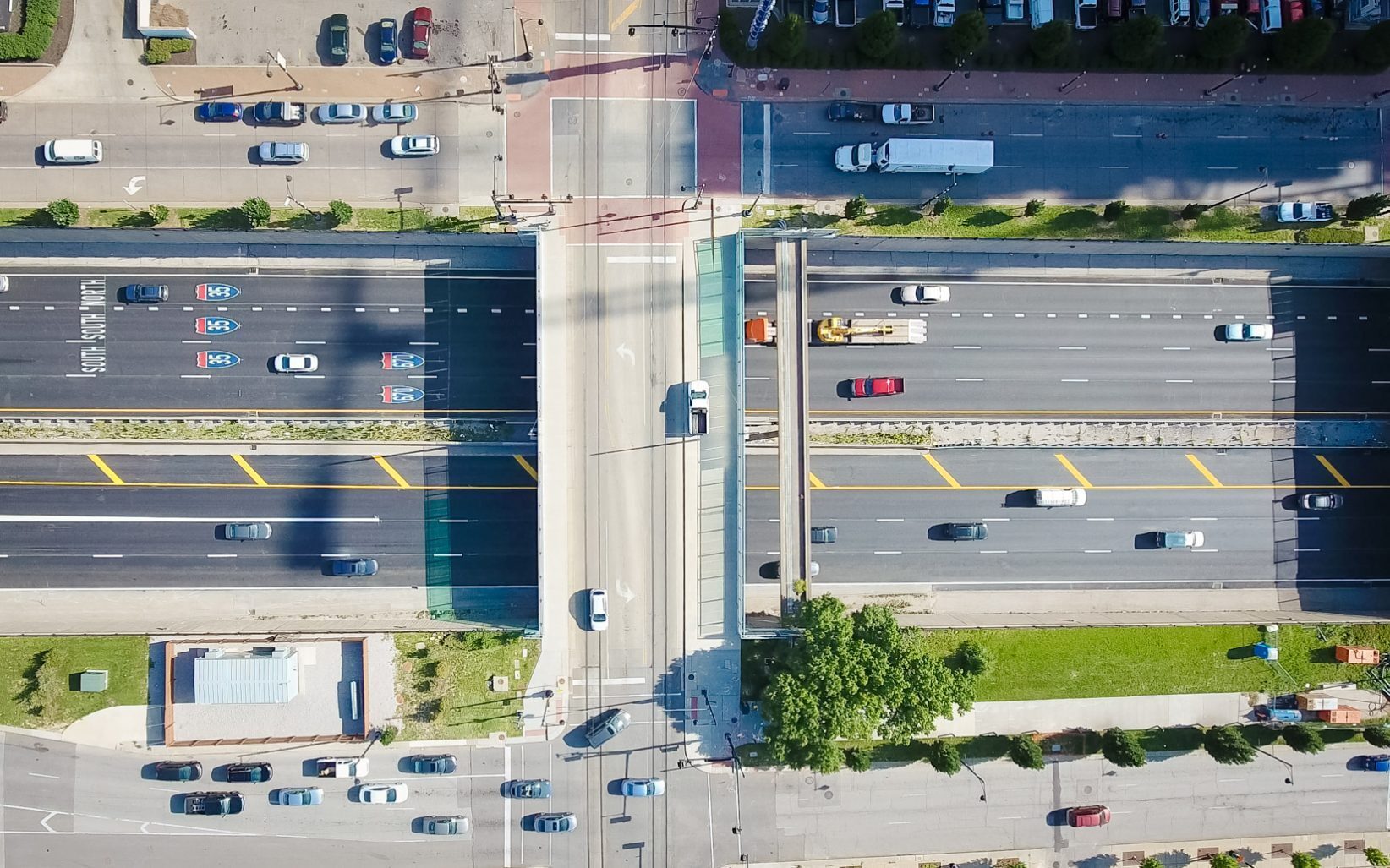
It seems a dash of innovation can make even the most mundane subjects exciting.
That is if Kansas City chief innovation officer Bob Bennett’s enthusiasm for a new pothole technology is any indication. This month, the City of Kansas City, Mo. will pilot a machine learning program that will predict potholes before they occur, saving the city thousands of dollars.
A giddy Bennett said Kansas City will be the first municipality to employ a proactive approach to street maintenance — based in part on an Xaqt report analyzing city streets.
“Normally when I get home I go to bed at around 10:15 … But when I received the paper, I was up for three hours reading,” Bennett said, referring to the Xaqt report.
Bennett said that United States infrastructure is deteriorating at an alarming rate. Instead of waiting for a 311 call to repair Kansas City roads, he said the new pothole tech allows the city to solve problems before they become a crisis.
“We are going to start to be able to make our roads something Kansas City should be proud of,” Bennett said. “We have transitioned from using data to tell a history lesson to using data to dynamically plan city operations. It is a differentiation between a cool city who has a lot of technology and a smart city.”
Organized by partners such as Xaqt, the Department of Public Works and the Smart City initiative, Bennett said the project wouldn’t have been possible a year ago. Thanks to the traffic data the city has collected since the launch of the Smart City initiative, pothole prediction is now possible, he said.
Bennett said that each year, Public Works allocates anywhere from $4 to $6 million for street maintenance purposes. While up to 10 percent of roads may need maintenance during any given year, the budget covers about 4 percent annually.
That means the city is currently operating in a deficit, Bennett said. Xaqt’s technology will allow the city to cover more ground under the same budget, putting Kansas City ahead of the curve.
“Every dollar will go a lot farther. Literally,” Bennett said. “In fact, if you want to use a beautiful road metaphor, instead of a dollar bill covering six miles, that same dollar will now cover 8 or 9 miles.”
The technology will do more than predict the number of potholes — it aims to pinpoint the exact pothole location. Decisions will be made via Xaqt’s algorithm, which uses machine learning to interpret the data. Machine learning is a subset of artificial intelligence that allows software to predict outcomes using data analytics
After a year of deliberation over the best metrics for predicting potholes, Xaqt presented its analysis to Public Works on July 7.
“We consider the road system as a network that consists of segments, and apply spatial network analysis methods for pothole event, which is treated as a network-constrained phenomenon,” Xaqt wrote in its report. “Predictor variables include the number of freeze-and-thaw cycles, traffic counts, bus route, and pavement condition.”
Bennett believes that Public Works will receive an “honest to heavens” return on investment, which will, in turn, pull the Smart City initiative forward, leveraging more innovations.
“This is just the beginning,” Bennett said. “I anticipate that over the course of the next several months you’re going to see several examples of our city using the data that we already have and leveraging the sensors that the smart city initiative has given us. You’re going to see a continued evolution of Kansas City into a truly smart community.”


2017 Startups to Watch
stats here
Related Posts on Startland News
Thelma’s Kitchen cooks up pay-what-you-can cafe concept to preserve community
Twenty people once filled the kitchen of Thelma Gardner’s apartment in search of their next meal. Their hunger for food fueled her hunger for humanity, recounted Father Justin Mathews as he sat sipping coffee in the newly opened Thelma’s Kitchen. The pay-what-you-can restaurant — located inside of the Reconciliation Services building at 3101 Troost Ave.…
Operation Breakthrough bridge over Troost symbolizes ‘real community’ at an intersection
With reflection in his voice, Alvin Brooks paused. “The city has to be a partner,” the Civil Rights activist and veteran Kansas City Police Commissioner said as he spoke of the redevelopment of Troost Avenue — the well known racial dividing line, that has long isolated the east side of the Kansas City metro from the…

Troostapalooza aims to shed the old skin of city’s racial dividing line, says Kemet Coleman
Troostapalooza will build community while constructively addressing the elephant in the room, said Kemet Coleman, organizer of the newly developed street festival. “We wanted to create a home away from home on Troost that is inclusive and sensitive to the historic and existing nuances,” he said. “Not the violent, divisive one that is portrayed by…
Defiant anti-gentrification voice: Clock is ticking on east side neighborhoods, Movement KC
Daniel Edwards isn’t shy about his frustrations with the perception of Kansas City’s east side. “I remember my first corporate lunch after graduating college: the joke was, ‘Nobody wants to go near 35th and Prospect at night time,’” said Edwards, a Kansas City area developer and the founder of Movement KC. “I was like, ‘Yo, it’s…