

Report: Kansas City’s tech workforce is growing faster than most big cities
July 27, 2017 | Bobby Burch

Techies around the nation have flocked to Kansas City at a rate faster than many major cities, including New York City, Chicago, San Diego and others according to a recent report.
CBRE’s annual Tech Talent Report found that between 2011 and 2016 Kansas City’s tech workforce grew 39 percent, adding about 15,000 new tech staffers in the five-year window. That growth rate ranks Kansas City as No. 16 out of 50 cities in the United States and Canada.
KC Tech Council president Ryan Weber said the swelling workforce illuminates the area tech industry’s success.
“Our recent growth is a testament to the Kansas City region’s ability to grow and scale tech companies,” Weber said. “We’re quickly becoming the tech hub of the Midwest and this report, as well as our annual Tech Specs Report, are confirming our status.”
CBRE defined the tech workforce as: software developers and programmers; computer support, database and systems pros; tech and engineering professionals; and computer and information system managers.
Asked why Kansas City’s tech workforce is growing at such a rate, Weber said Kansas City’s brand is improving.
“As our status grows, so does the perception of Kansas City as a destination for tech careers,” he said. “Specifically, this growth is a correlation to the growth of enterprise companies like Cerner.”
While growing quickly, the size of Kansas City’s tech workforce is still in the middle of the pack. The report ranked the size of Kansas City’s tech workforce as No. 25 with about 51,800 techies — just behind St. Louis at 52,200 techies despite its slower growth rate of only 8 percent. For a nearby comparison, Minneapolis has about 95,200 techies, according to the report.
Weber said there are a number of ways Kansas City can continue to grow its tech workforce, namely revamping state education policy.
“We can always do better because we have a lot of competition,” he said. “The present value of our unmet potential is a big number. In the future, tech companies will only exist in cities that can produce their own talent. The most important thing we can do now is to create computer science requirements in the classroom. This will require policy changes and 36 other states have already made these changes. Neither Kansas or Missouri are in those states.”
The cities’ with the fastest-growing tech workforces between 2011 and 2016 are Charlotte, Tampa, Raleigh-Durham, Madison and the San Francisco Bay Area, respectively.


2017 Startups to Watch
stats here
Related Posts on Startland News
Video: ShotTracker fan app courts NAIA tourney crowds with AR experience
A new ShotTracker fan app — expected to launch today — will combine real-time analytics with augmented reality for a first-of-its-kind fan engagement opportunity at next week’s Division 1 NAIA basketball tournament, said co-founder Davyeon Ross. “We want to make the experience as great as possible for the end user,” Ross said, noting his company’s…

TechAccel, UC Davis lab developing wheat seed to combat climate change
A Kansas City-based tech and venture development firm hopes to engineer wheat seeds that produce higher yield by withstanding warmer temperatures. “We’re taking a concept that is pretty important for wheat worldwide,” said Brad Fabbri, Chief Science Officer of TechAccel. Increasing temperatures make growing wheat more difficult across the globe, studies show. Reports indicate climate…
Startup stakeholders: Opportunity zones could prompt culture shift on redevelopment
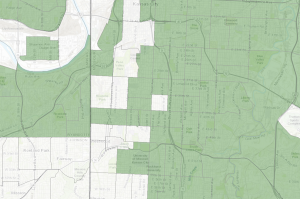
Startup community stakeholders think opportunity zones in some of Kansas City’s poorest areas could work, but only with collaboration between the government and private sector. A number of low-income communities in Kansas City are eligible for designation as opportunity zones — areas in which investors may defer paying capital gains taxes over a certain period…
OP-based motion capture startup DARI Motion sells to Omaha firm
DARI Motion, an Overland Park-based startup that created a motion capture platform that provides biomechanical analysis of athletes, patients and more, recently was acquired by a Nebraska firm. DARI, which stands for Dynamic Athletic Research Institute, was purchased for an undisclosed amount by Omaha-based Scientific Analytics Inc. With the acquisition, the firm aims to transform how…