

Sustainable River Market development project booking tenants with virtual reality tours
June 23, 2017 | Meghan LeVota
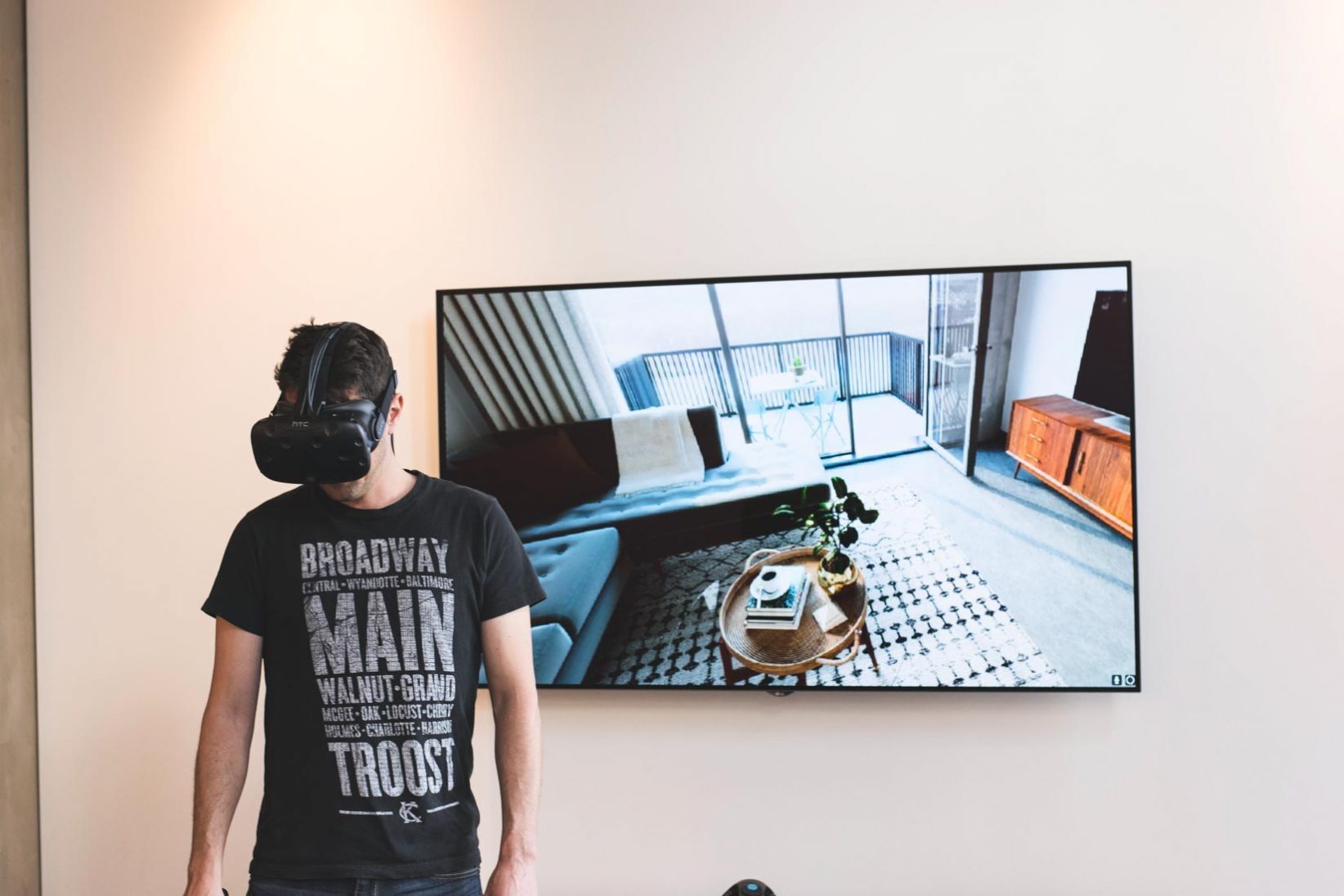
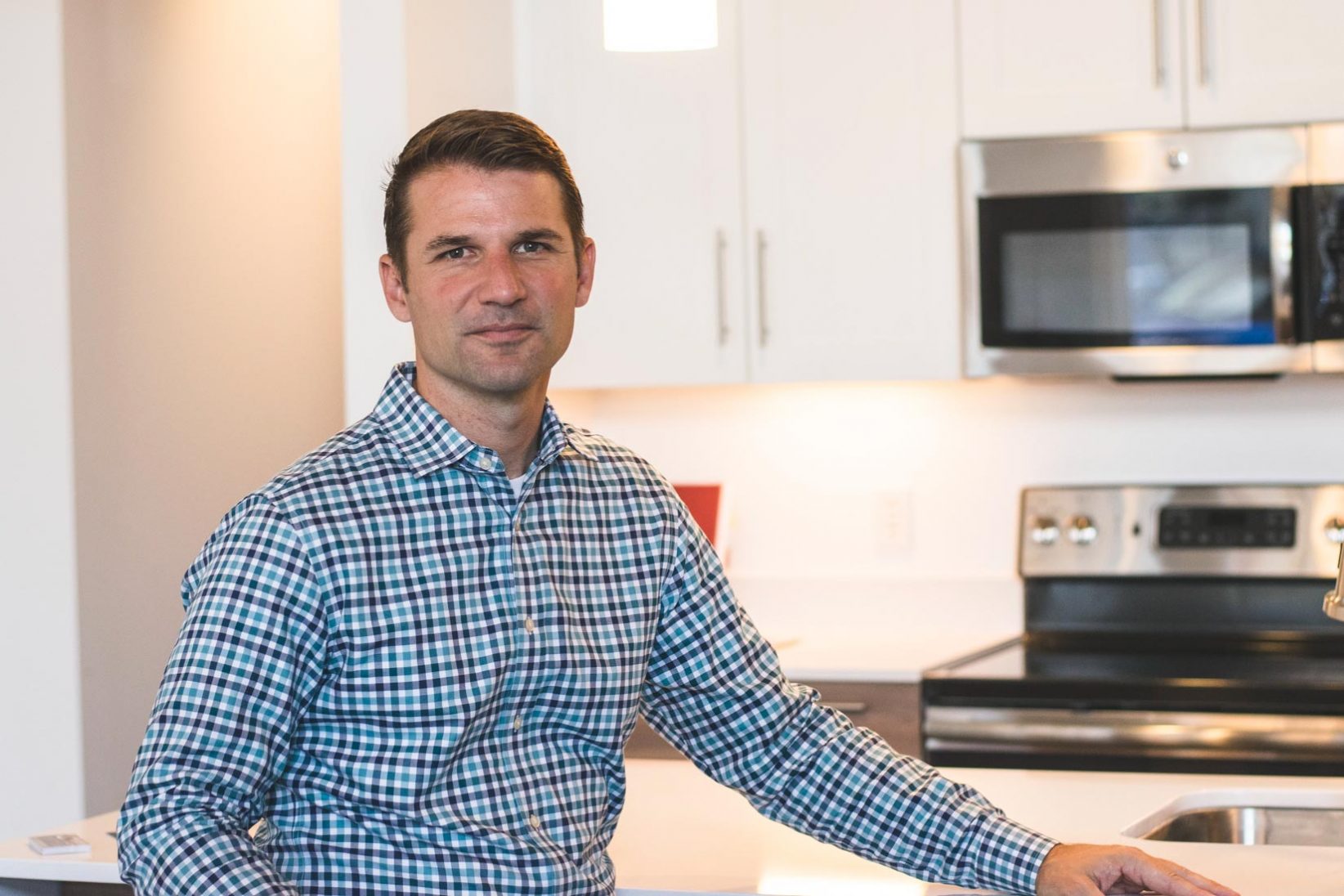
Jonathan Arnold believes that choosing quality over quantity doesn’t have to break the bank.
In fact, he said it makes great business sense.
Arnold, principal at Arnold Development Group, is working to transform modern real estate development with a more sustainable future.
“At its heart, sustainable development means doing more with less,” Arnold said. “You can have a market rate return but also have sustainable and social benefits that are meaningful to people who are searching for purpose and wish to contribute to society with their investments.”
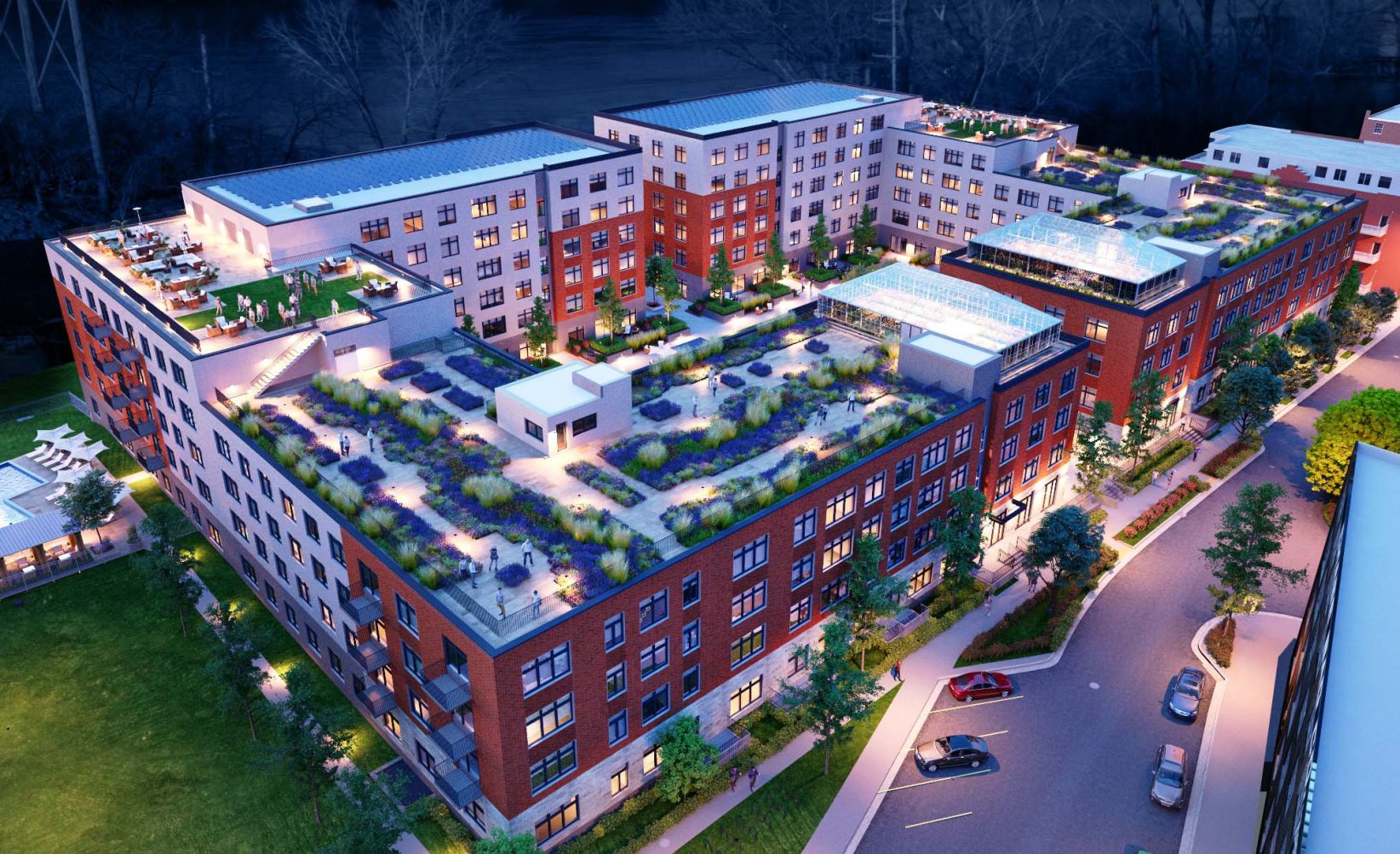
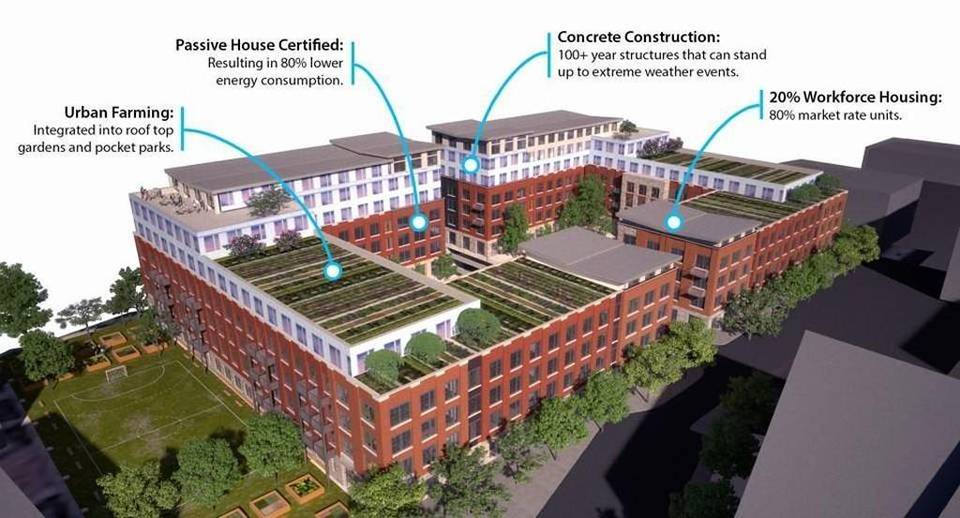
Arnold Development — which is one of two certified B-corps in Kansas City — is currently building a huge “passive house” in the River Market, which is slated to be completed in the spring of 2018.
With 16-inch concrete walls and triple-paned windows, the Second and Delaware project will reduce energy consumption by 70 to 90 percent, Arnold said.
With many months left of construction to go and 15 percent of units taken, Arnold has faith that many in the community will vote with their dollar and lease at Second and Delaware.
“We’re not asking people to pay more to go green,” Arnold said. “For a competitive price, people can rent at Second and Delaware and know that their carbon footprint will shrink.”
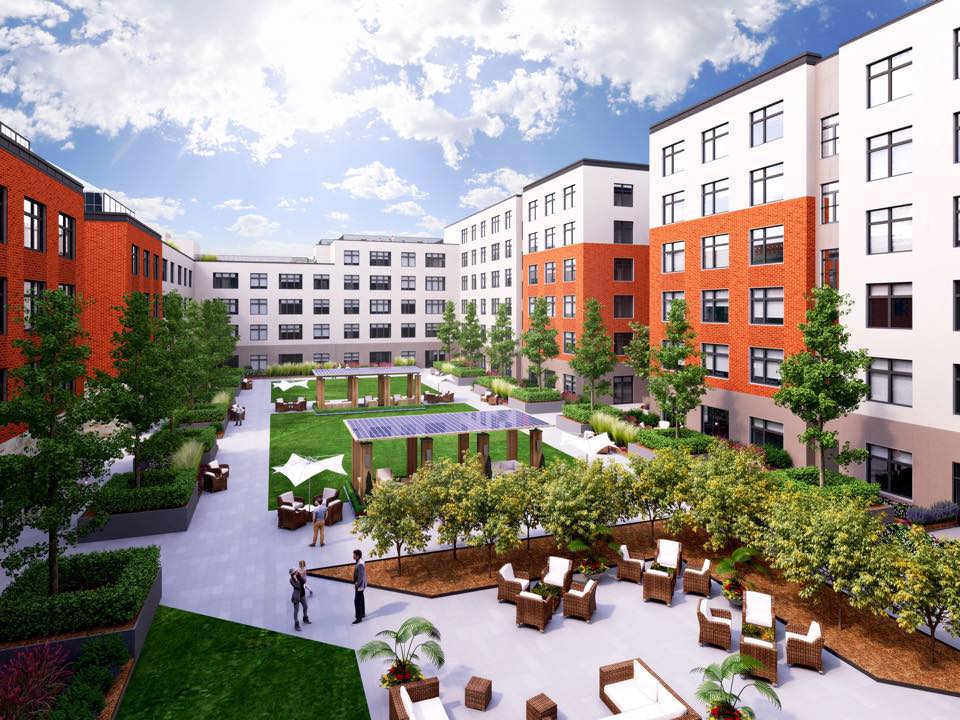
With a walkable location, low monthly utility costs, large windows, a pool, rooftop garden and other amenities — many people will have to see it before they believe it, Arnold said.
And now, they can, thanks to a high-tech offering.
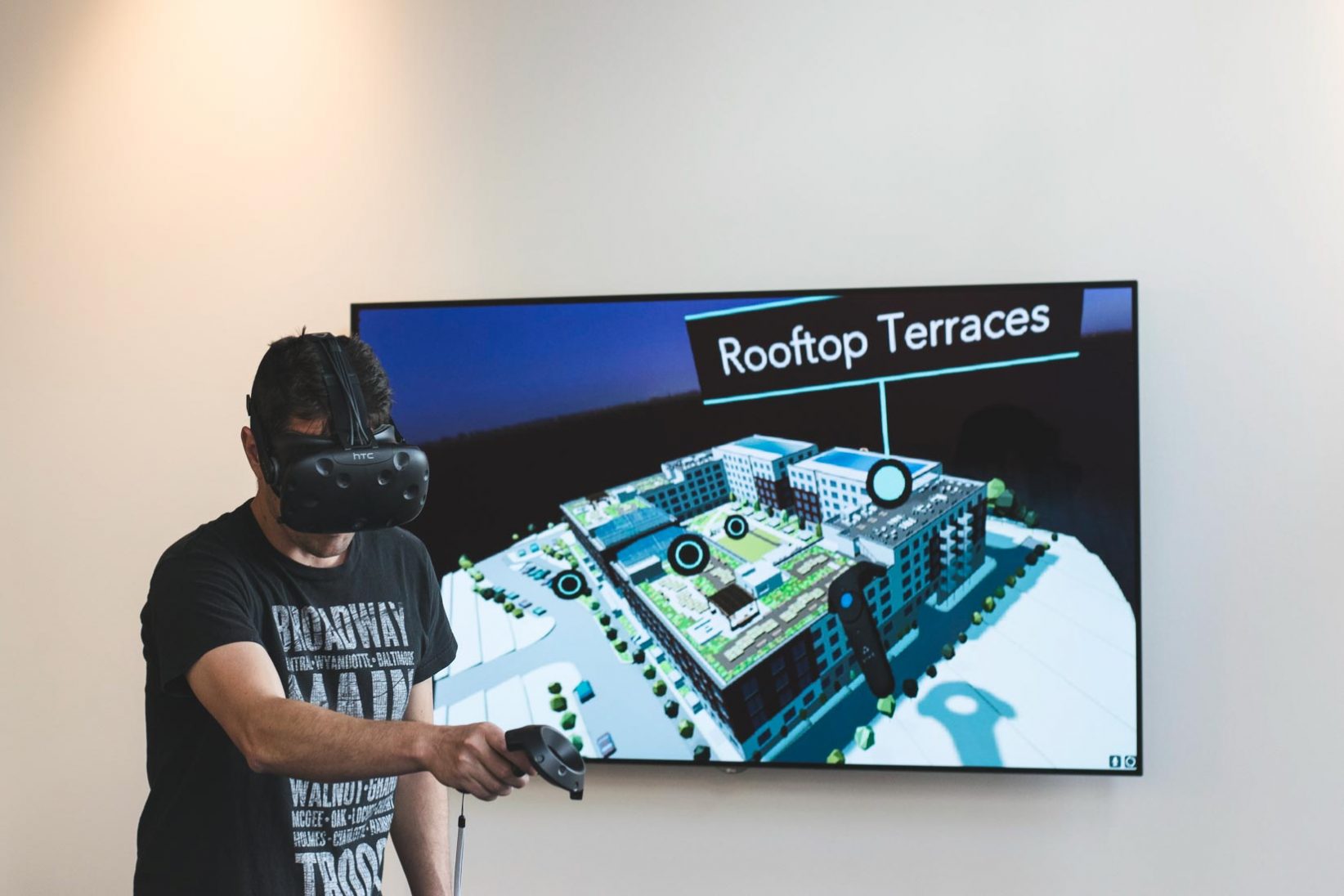
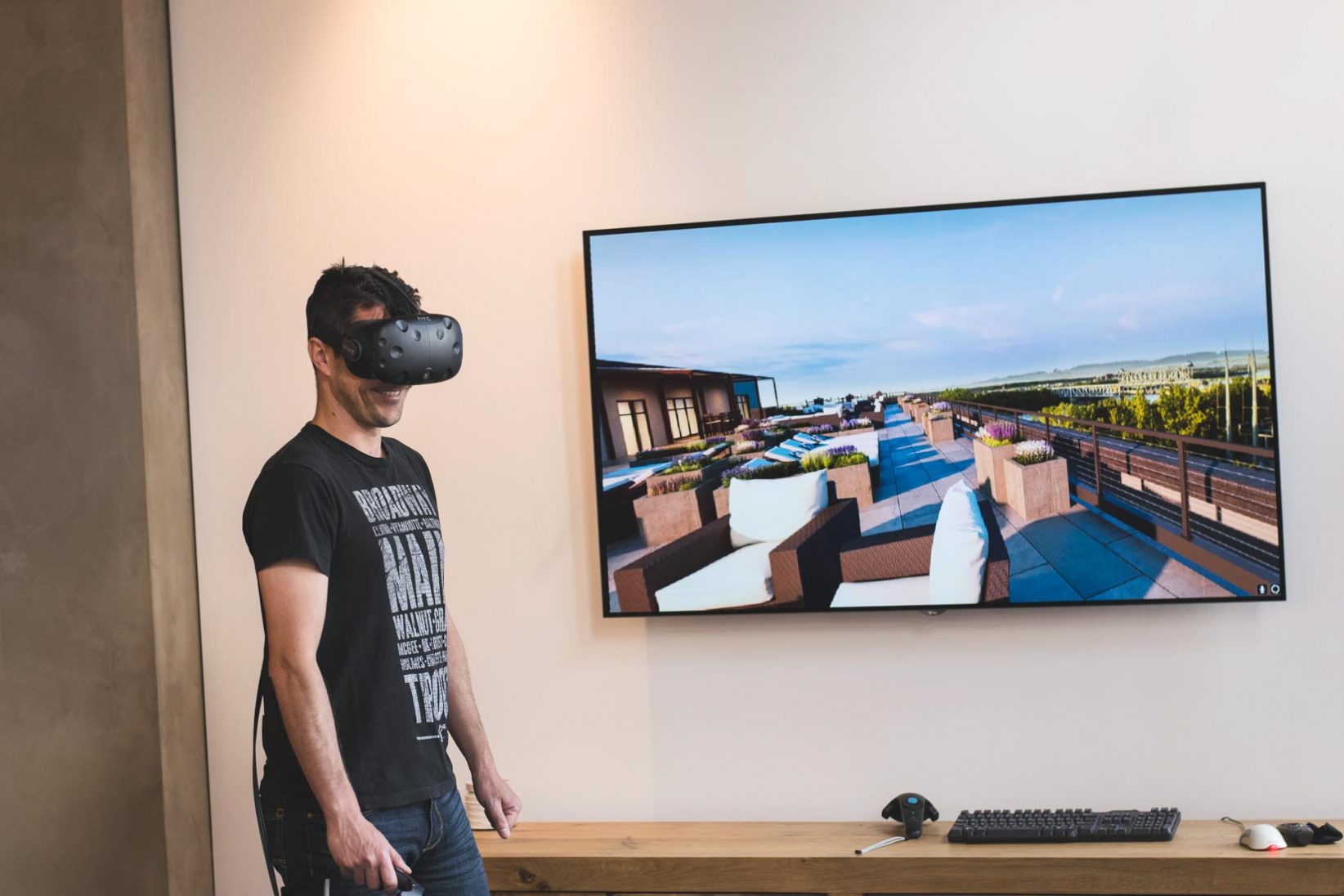
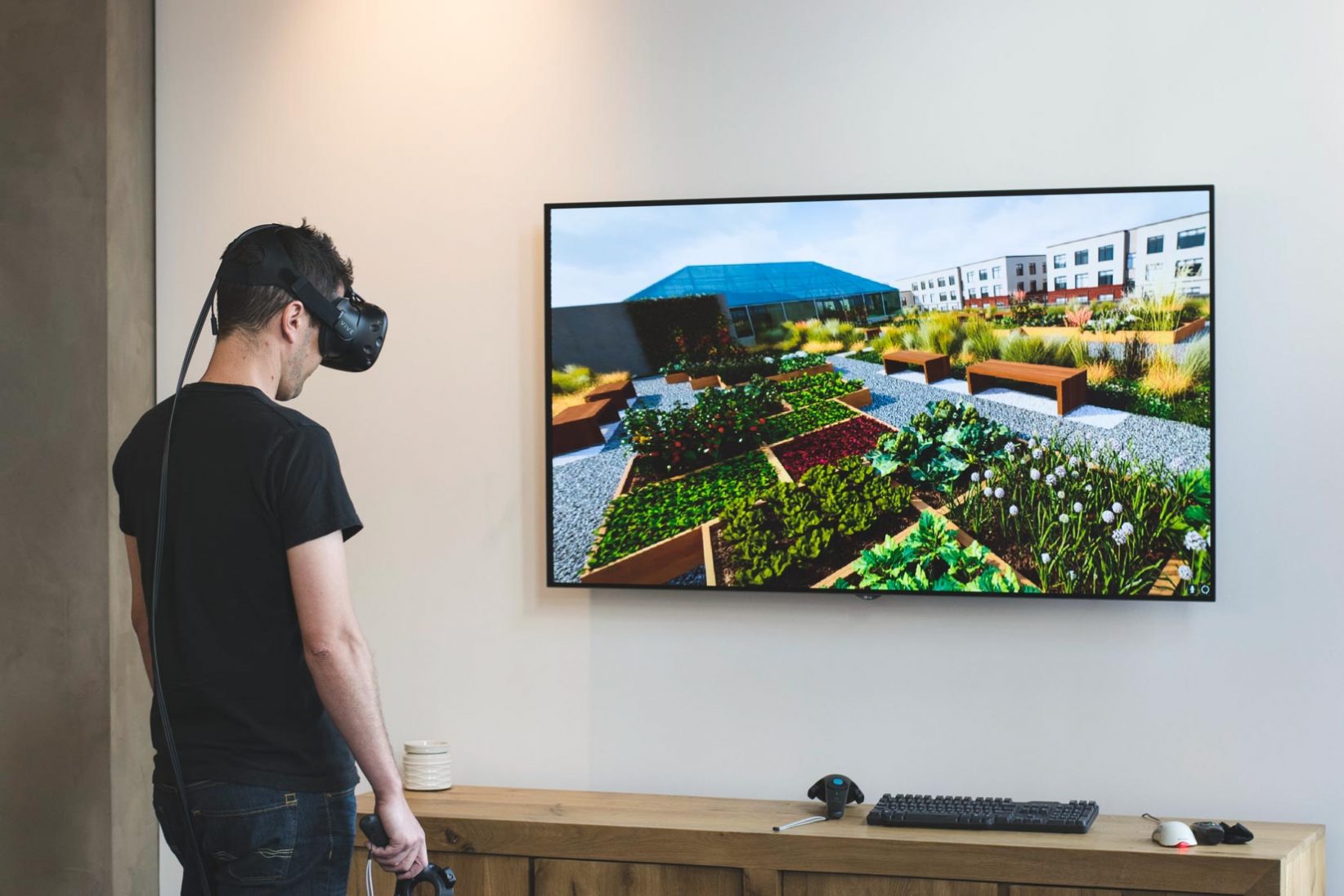
Last month, Arnold Development opened a Second and Delaware leasing office a block away from the construction site in which prospective renters can visualize their future home via an interactive virtual reality experience.
The tech allows people to visualize a 360 panorama view of both the studio and one bedroom apartments. But it’s the two bedroom tour that takes the cake, Arnold said. Virtual tours of the two bedroom apartments enable users to wander around every corner of the space.
Arnold said there’s nothing else like this in Kansas City.
“This gives someone the ability to really kick the tires and understand the space,” Arnold said. “(The tech) can sense your height so you can walk to the shower and see how tall the showerhead is. You can go on the balcony, to the bedroom and this more closely resembles what walking through an already built unit would be.”
The VR experience was built by real estate marketing and consulting firm Arnold Imaging, a sister company to Arnold Development of which Arnold is also principal. Second and Delaware marks the fourth VR development project the firm has worked on. Previous clients include Dinerstein Companies, a national student housing developer.
In addition to the VR, the new leasing office features a replica of the kitchen that will come in every unit, complete with quartz counter tops. The leasing office also features a ceiling to scale at 10 feet and 6 inches and an example of the 16-inch thick walls.
“I think that our brains perceive so much through tactile experiences,” Arnold said. “The more we can marry immersive VR with real world experiences, the real and the virtual, the more powerful it is.”
Erin Walker, leasing consultant at Second and Delaware, said that offering VR facilitates the leasing process.
“As soon as they see the VR, they lease,” Walker said. “It’s truly one of a kind and to be able to give a tour of the building before it’s even built is amazing.”
Arnold said that the faster developers can lease units, the faster they will see a return on their investment. With the emergence of technologies such as VR, developments will begin to be rewarded for investing in quality, he said.
“If you’re leasing off of just a floor plan, you can’t really see the difference between two properties,” Arnold said. “(With VR,) you can see the ceilings and the countertops and the lights. Developers that are doing the right thing and want to do well for their tenants will be rewarded. Those who are cutting corners (during construction) will be forced out of the market.”
In the year ahead, Arnold Development will be focusing on completing the Second and Delaware project, Arnold said. But it won’t be long before the firm is ready to scale the sustainable housing model.
The firm is currently in the process of raising a $55 million fund. The Sustainable Development Fund is an equity fund which would allow Arnold to build similar models in walkable neighborhoods in Kansas City and along the east coast. Initially, Arnold said that he’s planning to build 1,500 units, with about half being built in Kansas City.
“We’re in discussions with multiple people who are very interested, right now is kind of the courting stage of getting to know each other,” Arnold said. “These are long-term relationships and this is a 15-year commitment. You want to make sure that you walk before you run with partners who will be with you for so long.”
Click here to read more about Second and Delaware apartments and its technology. For photos of the VR, check out the gallery below.


2017 Startups to Watch
stats here
Related Posts on Startland News
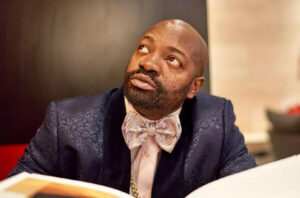
‘Return of the Shihan’ live screening just a teaser, says filmmaker who wants KC to build its own Hollywood
Kansas City’s “first superhero” is set to debut on the big screen for a live audience Saturday evening at the Gem Theater — the first installment of a planned “Return of the Shihan” TV series from local filmmaker Victor Wilson, Jr. Wilson — better known to many by his alter ego “Pudgy PoKCettz” — created…
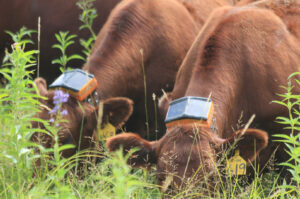
Remote control cattle: Virtual fencing tech reduces herds’ carbon hoofprint, puts rancher pain points out to pasture
Startland News’ Startup Road Trip series explores innovative and uncommon ideas finding success in rural America and Midwestern startup hubs outside the Kansas City metro. LINCOLN, Nebraska — Corral Technologies is taking cattle control virtual, founder Jack Keating shared. Using satellite maps and solar collars, the agtech startup offers a virtual fencing system to help…
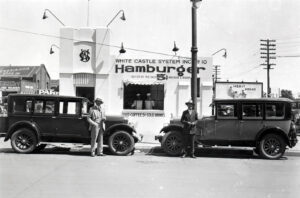
White Castle invented sliders (and the playbook for fast food); then the Kansas-fried chain vanished from its home state
Editor’s note: The following story was originally published by KCUR, Kansas City’s NPR member station, and a fellow member of the KC Media Collective. Click here to read the original story or here to sign up for KCUR’s email newsletter. For more stories like this one, subscribe to A People’s History of Kansas City on Apple Podcasts, Spotify or Stitcher. The White Castle chain began in 1921…
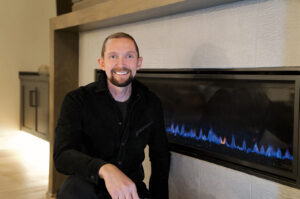
DevStride founder finds himself ‘locking arms with frontline customers’ in bid to catch their mistakes early
Implementing and monitoring complex software cycles is a tedious process, Phil Reynolds said, which is why he and his team are working to drive better project management principles and improve outcomes through their software solution. “We are really trying to transform the way that teams go about implementing and managing agile software development cycles. Our…