

Meet Project UK, an accelerator helping entrepreneurs from underserved KC communities
June 2, 2017 | Meghan LeVota

Project UK founder Quest Taylor was ecstatic Tuesday when he received news his accelerator earned funding from the Ewing Marion Kauffman Foundation.

Taylor
“It was a stamp of approval for the organization,” Taylor said of the accelerator, which was founded in early 2017. “I was not expecting to receive the grant. We really had to prove our track record since we were going against very successful accelerators and we are a new nonprofit.”
Project United Knowledge, also known as Project UK, is a business accelerator that seeks to serve minority entrepreneurs — particularly those from Kansas City’s most underserved zip codes. Offering coworking space, mentorship and technical training, Project UK aims to be a “translator” for Kansas Citians who feel disconnected from the area’s startup community.
Taylor said the program also introduces members to prospective investors and finance sources.
“Kansas City needs something that minorities can go to, not only to feel safe but to guarantee they can have access to funding,” Taylor said. “I don’t want anyone to assimilate. I don’t want you to have to change your background or culture. I want to help you retrain your mind and teach the chess game you, unfortunately, have to play.”
Unlike other similar programs in the area, Taylor said Project UK programs are “urbanized” with “culturally-relevant marketing.” By speaking the language, Taylor says Project UK will elevate the most promising folks in Kansas City’s underserved communities, giving them the skills they need to succeed.
“There are so many programs in Kansas City offering free business education, so we initially thought it would be stupid to try and reinvent the wheel,” Taylor said. “Then we understood that these programs were all built by white people — usually white men. They never addressed some of the issues faced by those in the urban core.”
Taylor said that some of these issues include culture differences in vocabulary, reading levels and a lack of basic business understanding.
He added that he has seen these struggles first-hand.
“I know many people who wanted to take these (business) classes but didn’t even have a basic enough understanding to even understand the ‘basic’ class,” Taylor said. “That’s when we started working with other organizations, teachers and professors to put together a curriculum that would not only address these issues but connect them to the community.”
Project UK has unofficially been in operation for over two years. Following the Kauffman Foundation’s grant, the accelerator will accept its first formal group of entrepreneurs in October.
Nathan Kurtz, senior program officer at the Kauffman Foundation, said his organization is happy to work with Project UK, as its focus fits with the foundation’s overarching mission.
“I think that they have the ability to reach underserved entrepreneurs,” Kurtz said. “This ties in very well with the Zero Barriers Initiative to support entrepreneurs and it will be a great way for us to continue that work.”
Taylor said Project UK is looking for 10 to 15 startup founders or aspiring entrepreneurs with an idea to go through the program. While all ideas are eligible to enter, Taylor said Project UK is targeting a majority of female and minority entrepreneurs.
“Everyone can apply,” Taylor said. “Although, we did flip the equation around and made it harder for the one group that it’s usually easier for.”
In addition, Project UK will partner with the Kauffman Foundation to host free business workshops for the community. Topics will focus on teaching underserved community members the cultural nuances of the startup community, such as how to speak and dress professionally.
While predominately comprised of White people, Taylor insisted there’s limited intentional discrimination in the area entrepreneurial community.
“The Kansas City startup community is really not racist,” Taylor said. “It is very welcoming — if you know the right person to vouch for you. Everyone needs a vouch, I don’t care who you are. White, Black, Latino or Asian. If you don’t have a vouch from someone in the community, you won’t get in until you forcibly network yourself in.”
Nadja Cajic, the founder of MeeDu, said her startup has grown significantly as a result of entering Project UK. She said that Project UK helped MeeDu — an app that connects parents and their children together for healthy meal planning — develop a company video, perform product testing and helped with the firm’s iOS app.
A female immigrant entrepreneur that was new to Kansas City, Cajic said she’s thankful Project UK took an interest in her firm’s mission but also connected her to other helpful resources.
Cajic said she’s always been impressed with Project UK’s attentiveness to members.
“It’s been a tremendous help for our company,” said Cajic, who also went through the Kansas City-based Lean Lab’s education accelerator. “Being a female founder, an immigrant and not from Kansas City it’s tough to get plugged into the scene. I’ve really appreciated that as a young female entrepreneur in a new city. … They’re very hands-on, responsive and willing to help you because they believe in your mission.”
To learn more about Project UK or apply to its upcoming cohort, click here.

Featured Business

2017 Startups to Watch
stats here
Related Posts on Startland News

Efficiency, innovative home construction are cornerstones for Prairie Design Build
David Schleicher was just looking for something to get back on track. In 2012, the president of Prairie Design Build, a house building company located in Kansas City, had watched his then six-year-old business begin to suffer because of the recent recession. Schleicher was desperately seeking a way to keep his head above water, not…
Listen: When the grind gets gloomy, experts discuss mental health challenges and entrepreneurship
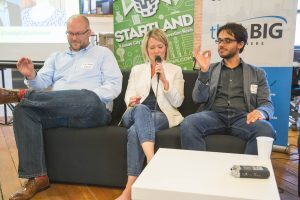
About 72 percent of entrepreneurs have self-reported mental health concerns, according to a study done by the University of California San Francisco. More specifically, about 30 percent of entrepreneurs experience depression and about 30 percent experience ADHD, the same study found. In recognition of Mental Health Awareness Month, Startland News and Think Big’s May Innovation…
6 tips and tricks to stay sane while scaling fast
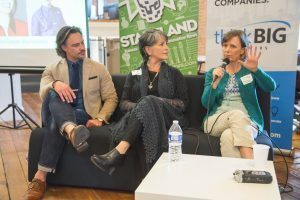
Frequently taking on more demands and shirking personal care, entrepreneurs’ work-life balance often skews toward work. Deadlines, finding clients, making payroll and dozens of other stressors can put entrepreneurs at risk of mental illness or compound existing challenges. Furthermore, entrepreneurs are disproportionately affected by such issues as ADHD, bipolar disorder and depression, according to studies…

Video: How to use the lean model canvas for fun and profit
Editor’s note: Continuing our mission to help area entrepreneurs and startups grow, we’re happy to share with you a video from our friends at Kansas City-based tech agency Crema. Learn more about the agency here. Starting a business, or launching a product is really hard. Most people will tell you to first come up with…