

Faster-than-expected visa process helps BLITAB relocate from Austria to KC
June 6, 2017 | Meghan LeVota
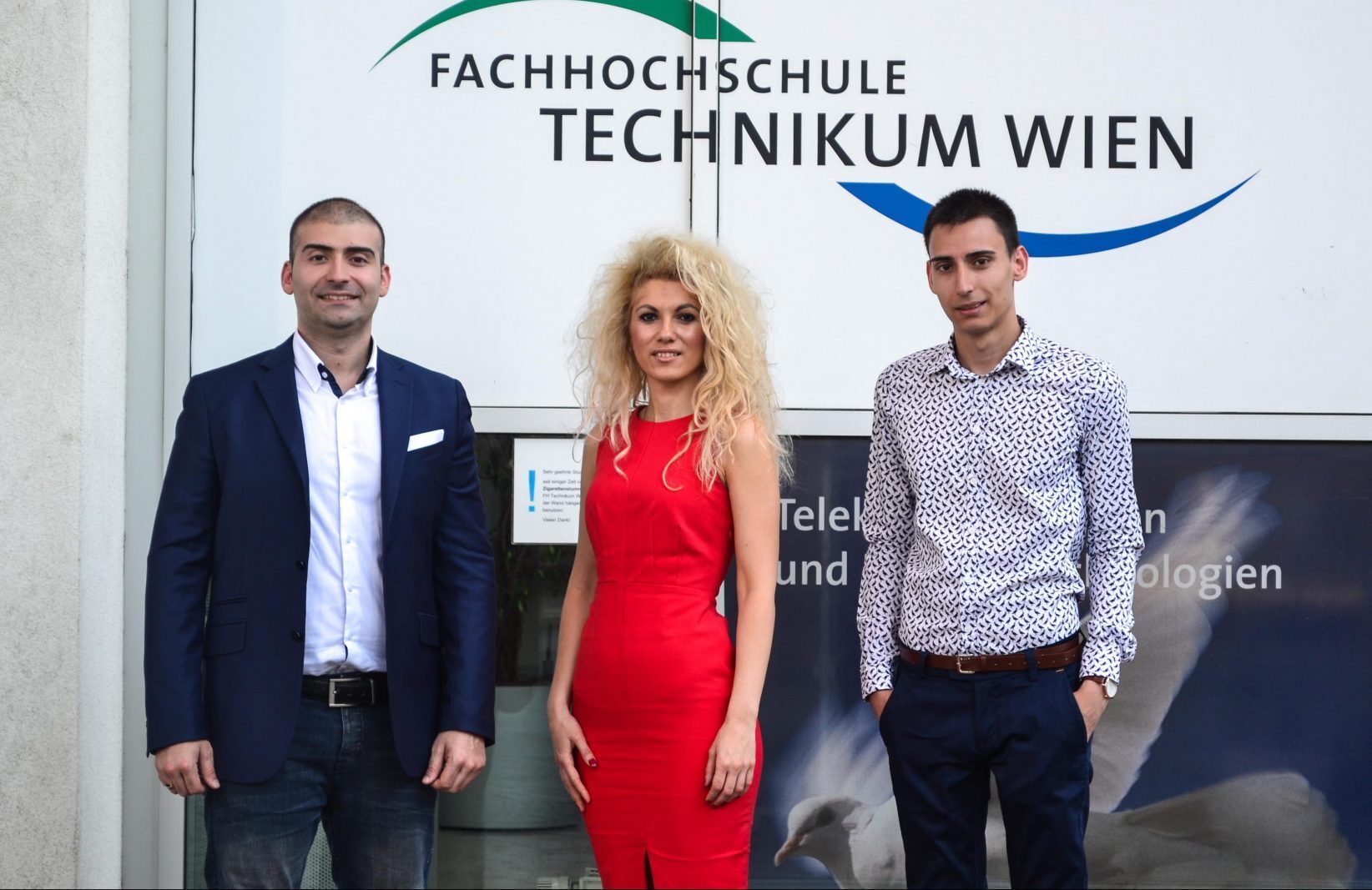
Eight months after the Austria-based firm BLITAB won a LaunchKC grant, its co-founders have finally settled into their new home of Kansas City, Mo.
BLITAB — a startup that developed the world’s first tablet for blind people — was the only internationally-based firm to win a $50,000 LaunchKC grant in September. But before co-founders Kristina Tsvetanova and Slavi Slavev could tap the Kansas City market, they had to obtain the proper U.S. visa, which is a sometimes complicated process for immigrant entrepreneurs.
Shortly after winning the LaunchKC grant, the Economic Development Corporation of Kansas City began to assist Slavev and Tsvetanova through the visa process. The two previously held a visitor visa that allowed them to conduct business, but did not allow them to take a salary.
It was roughly a three-month process to obtain an O-1 Visa — a nonimmigrant business visa for individuals that have show “extraordinary” abilities. To qualify, both Slavev and Tsvetanova had to prove extraordinary ability in business.
In the application, the duo demonstrated their business success, including endorsements from business leaders and people from all over the world, Slavev said.
“We needed a lot of recommendations, work to be done and documents to be prepared so that we had a strong file and background,” Slavev said. “The whole time the EDC was very supportive for the visa process and helped us with whatever we needed.”
It took about 90 days for the co-founders’ visas to be approved, which was faster than expected, said Narbeli Galindo, director of international affairs at the EDCKC. Galindo said that although months have passed since the LaunchKC competition, BLITAB has moved fairly quickly compared to many international businesses.
“To be honest with you, three months is not a long time from my experience,” Galindo said. “It could have taken up to 12 months.”
Once Slavev and Tsvetanova were approved for the visa, the moving process was not as simple as renting U-Haul and driving down the street. Following the approval, it took three additional months for the pair to set up shop in Kansas City, which they did in late May.
During this process, Galindo and the EDC staff has been assisting the BLITAB team through its transition. Galindo said she introduced Slavev and Tsvetanova to everyday services and needs, including insurance, driver’s licenses and doctors.
“When it comes to international business, people need to understand that these things do take time,” Galindo said. “Relocating to a new location does not happen overnight — it may take one year or two years. When a company such as BLITAB relocates in two to three months, I’d say that’s fairly quickly.”
Founded in 2014, BLITAB employs patented “smart liquid” tech to convert emails, stories or other text into braille. Imagine, for example, running your finger across a series of words on a tablet that’s then transformed into a tactile display that allows one to read text files, make notes and surf the Internet. The braille display shifts according to what the user needs and is supplemented by speech to text software.
This year, BLITAB released its pre-production prototype, which is slimmer and lighter than previous versions. Tsvetanova said the prototype is in its final stage and that the device will hit the market by the end of 2017, sold directly to consumers at a price point of about $500.

BLITAB prototype
In January, the startup was named a finalist in TechCrunch’s Hardware Battlefield 2017.
Slavev and Tsvetanova are excited for the opportunities that Kansas City will bring to their business.
“I really love everything we have faced so far,” Tsvetanova said. “We don’t feel that we have any kind of disadvantage to coming late and we still have a chance to participate in some of the (LaunchKC) workshops. We’ve already made a connection with the people in the startup community.”
Slavev added that the process was so smooth that he believes LaunchKC will continue to see an increase in the number of international applications.
“We like the ecosystem here and we think it’s a very good place for an international company wanting to start in the U.S. and not wanting to to go the East or West Coast,” Slavev said. “The whole ecosystem is very helpful and LaunchKC is a great ticket to the U.S.”
Galindo said international business activity is on the rise in the metro. Galindo’s primary role with the EDC is to promote Kansas City overseas and attract foreign investors to the area
She said she’s seeing strong momentum.
“When Mayor Sly James appointed me to this position and asked what I would accomplish, I said that I wanted to put Kansas City on the map,” Galindo said. “I am very proud to say that Kansas City is a city with a lot of opportunity and it has changed tremendously in terms of international business in the last five years or so.


2017 Startups to Watch
stats here
Related Posts on Startland News

Digital Sandbox announces funding for six new companies
On Thursday, Digital Sandbox KC announced its newest cohort of six area startups. Led by entrepreneur Jeff Shackelford, the Kansas City-based incubator welcomed 17° 73° Innovation Co, Anticipate Ventures, FEWDM, Homegrown & Happy, Live-K and TicketRx to the program. “The continued support through partnerships, like Independence, Olathe and Great Plains Energy for the Energy…
During Taste of Techstars, David Cohen offers three tips for hopeful applicants
Founder and co-CEO of Techstars David Cohen addressed Kansas City via a simulcast on Thursday morning, sharing three tips for startups. This preceded the day long workshop Taste of Techstars, which is hosted in multiple Techstars cities. Including simulcast talks, mentor sessions and pitch practice — Kansas City Techstars managing director Lesa Mitchell said she…
Google Fiber clarifies KC plans after reports of mass cancellations
After media reports indicated it canceled “hundreds” of area residents’ installations without a specific reason, Google Fiber is now clarifying its Kansas City plans. The tech giant — which began building an expansive gigabit network in Kansas City, Kan. in 2011 — said that while it remains committed to the area, it is tapering its expansion…
Leaders in KC coworking evaluate cultural, economic impact
Though I’m a “young, hip” millennial that offices in a coworking space, there’s no slant in saying that coworking is more than a fad in Kansas City. It’s a serious — and growing — business segment in the area. In the next 18 to 24 months, the metro will be welcoming more than 300,000 square…