Visualize Kansas City’s digital divide with this new Smart City tool
May 25, 2017 | Meghan LeVota
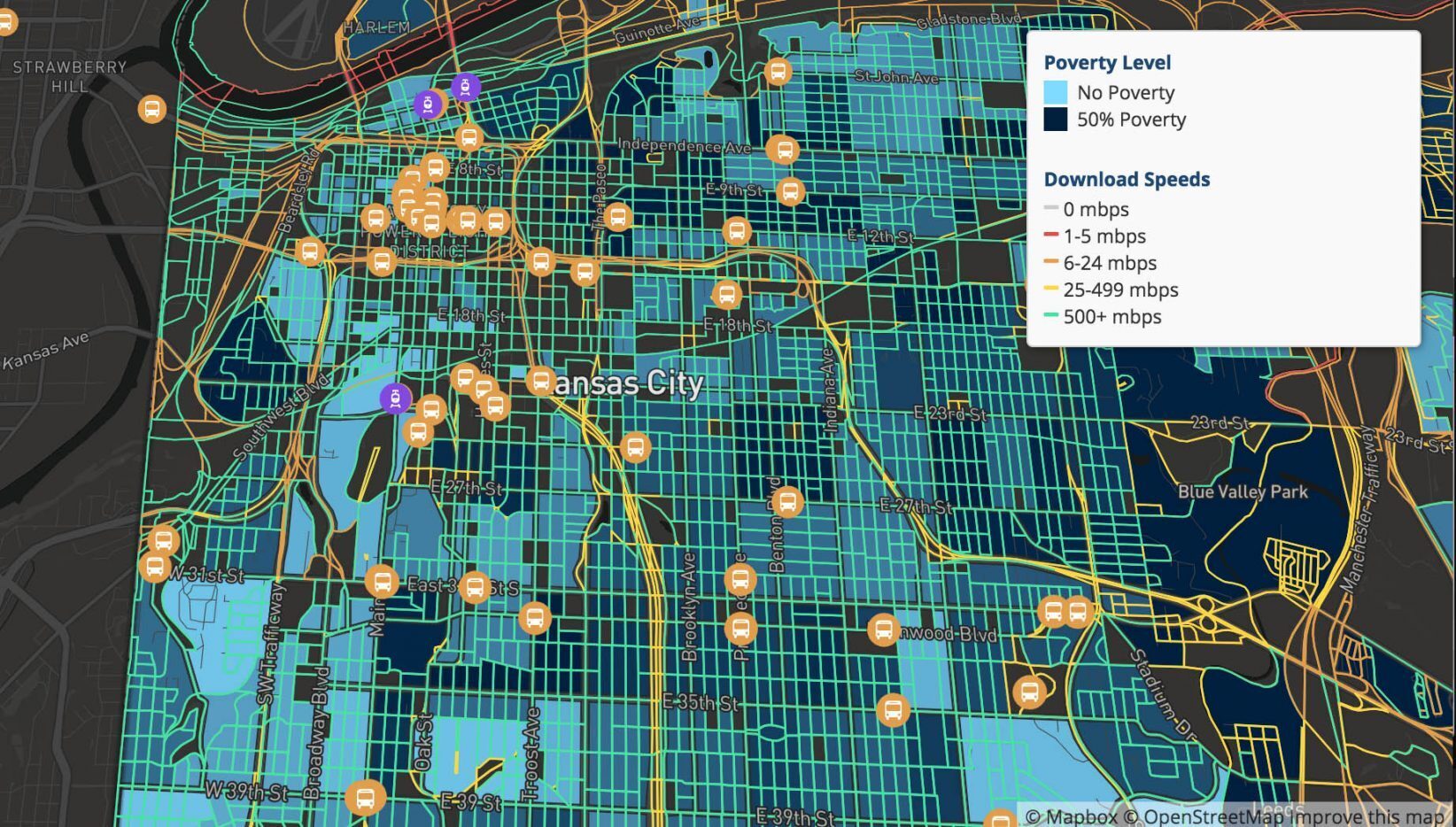
A canyon between those with consistent access to computers and the Internet and those who don’t, the digital divide is often discussed in the abstract.
However difficult to conceptualize in a broad scale, the digital divide in Kansas City has real economic, cultural and social implications in our community.
That’s why the City of Kansas City, Mo. recently released an open data portal that visualizes the area’s digital divide in great detail. To complete the project, the Smart City Initiative synced up with area digital inclusion efforts to produce a live viewing platform via Xaqt
Similar to the smart city portal released in February, the data set showcases public data available through the Federal Communications Commision as well as income data, monitored by the city’s Housing and Urban Development office. The portal allows one to hover a cursor over the various areas in Kansas City, Mo. and compare poverty levels with the maximum advertised broadband speeds, as provided by various Internet Service Providers.
Rick Usher, assistant city manager for small business and entrepreneurship for KCMO, said that viewers of the portal are likely to see a correlation between connectivity and poverty rate.
He added that the conclusions one can draw from the tool are remarkable.
“A picture is worth 1,000 words and I think data visualization is probably worth 10,000,” he said. “This is helping us visualize the neighborhoods that the city needs to focus on most. … The neighborhoods that are the least connected are the same neighborhoods where life expectancy is the lowest.”
Usher said that this doesn’t come as a surprise. He views digital connectivity as one of the best tools people can use to rise out of poverty.
“Connectivity is a foundational component of neighborhood stabilization and economic mobility,” Usher said. “Digital equity is the infrastructure underneath job creation, education and entrepreneurship — digital citizenship initiatives are really going to help increase people’s chances of economic mobility.”
The data portal also includes real-time location mapping of both the Kansas City Area Transit Authority busses and the Kansas City Streetcar Authority streetcars.
Bob Bennett, KCMO’s chief innovation officer, said that the public-private Smart City effort revealed residents’ tech realities and needs. For example, he said that residents in the area’s most economically distressed neighborhoods are smartphone-dependent for Internet access and transit-dependent for access to employment and education.
Bennett and Usher said the new digital inclusion portal was the result of a “serendipitous” meeting in the lobby of City Hall, and prompted the two to combine forces. They said that the mapping will assist the city in implementing the recommendations of the Digital Equity Strategic Plan, as well as help residents make informed decisions when subscribing for Internet services.
Usher said that the city is creating a plan for economic mobility for Kansas City residents living in poverty and that this dataset will facilitate that, but the city cannot do it alone. He hopes that more community organizations will share the data portal to foster opportunities to improve residents’ lives.
“The city has limited funds so we have to allocate those as the Kansas City Council sees appropriate,” Usher said. “What we really see the city’s role is in connecting all of these digital equity initiatives and helping validate the fact that they are necessary.”
The city officially kicked off its Smart City project in May of 2016. Via a Sprint Wi-Fi network stretching more than 50 square blocks in downtown, the project provides a variety of information to citizens while also collecting data on their behavior in downtown. In February, the City of Kansas City, Mo. released its first public facing window into the smart city data it collects from sensors along the streetcar line in downtown.
The project is a collaboration between Kansas City, Sprint, Cisco and Think Big Partners. Kansas City signed an agreement with Sprint and Cisco in June to create the largest smart city in North America with the intention to improve municipal services. The project also includes 125 “smart” streetlights along the streetcar line and 25 touchscreen kiosks that offer information on city services, nearby restaurants and real-time information collected from smart city sensors.