

Legal review: Supreme Court’s unanimous patent troll ruling, effects on KC
May 24, 2017 | Bobby Burch
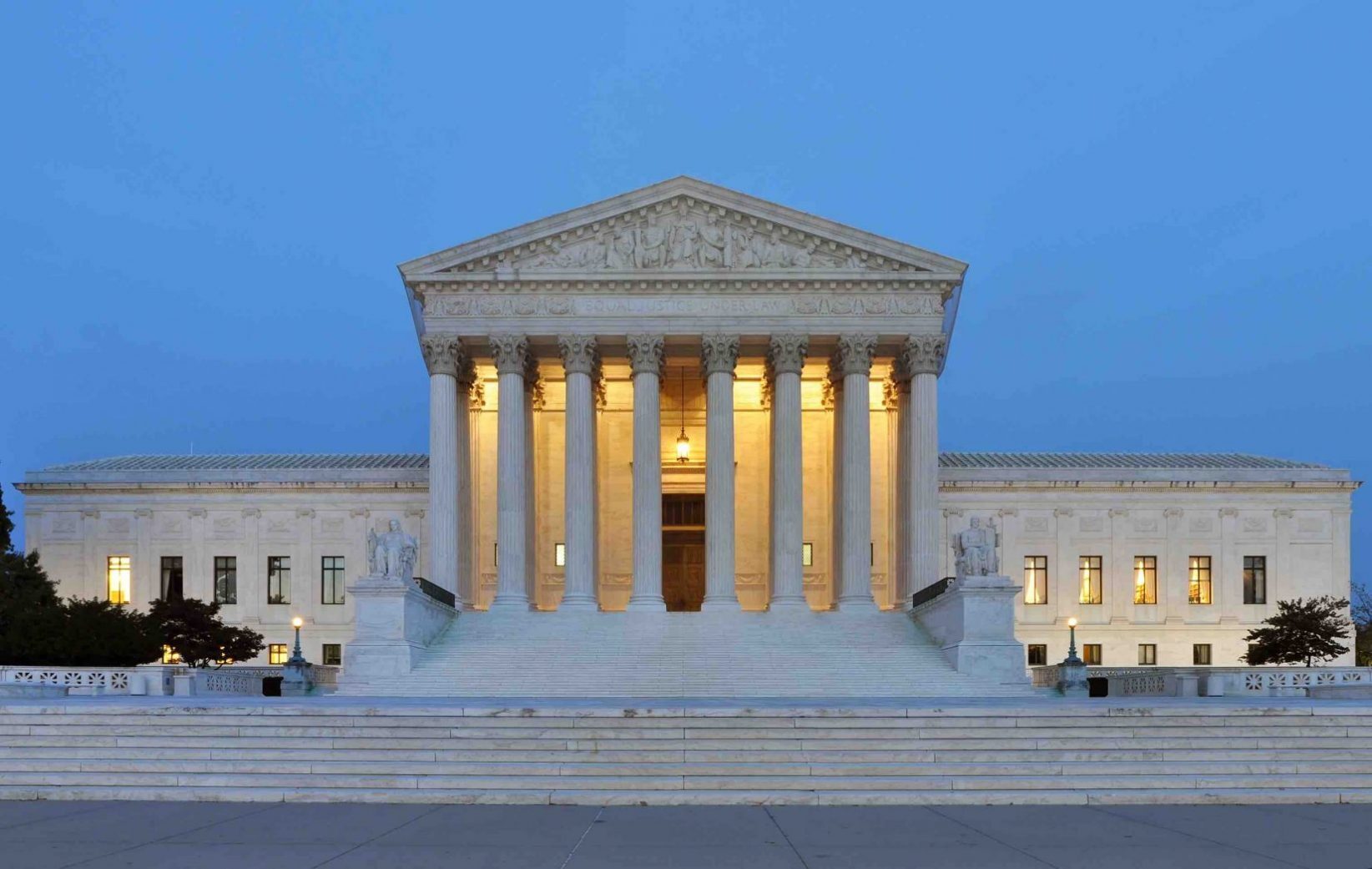
A recent ruling by the U.S. Supreme Court is being hailed as a significant blow to so-called patent trolls.
Supreme Court justices unanimously ruled on Monday that patent infringement lawsuits may only be brought against defendants in the state in which the company is incorporated. The ruling dings “patent troll” plaintiffs that shop the country looking for favorable court venues to file patent infringement lawsuits.
Patent trolls are non-practicing entities that purchase broadly defined patents with the sole intention to sue growing companies that are developing tangentially related products.
The recent ruling will have a distinct impact on federal courts in Eastern Texas where more than 40 percent of patent infringement lawsuits are now filed. Rules in that district enable quick trials and tend to issue plaintiff-friendly rulings. In 2016, the U.S. District Court of Kansas proposed changes that would have adopted similar rules to the Eastern Texas court, however, the proposals never came to pass.

Polsinelli patent attorney Michael Williamson
To unpack the implications of the ruling, Startland News caught up with Michael Williamson, a patent attorney at Kansas City-based Polsinelli to discuss the ruling.
What’s this ruling mean for KC area startups?
In the TC Heartland v. Kraft Foods case, the Supreme Court issued a unanimous ruling that a patent infringement suit must be filed where the defendant “resides” and a corporation “resides” in the state of its incorporation. … So if a company is incorporated in Missouri, the suit will proceed in Missouri; if incorporated in Kansas, the suit will proceed in Kansas; if incorporated in Delaware, then the suit will proceed in Delaware, et cetera.
The effect on startups and entrepreneurs will now be to tie any patent infringement suit to potentially their home field. This means a plaintiff — whether it is a large company or patent troll — will have to come to the startup’s location, the entrepreneur’s location or state of incorporation.
How will this ruling affect so-called patent trolls?
It will be more difficult for patent trolls (non-practicing entities), any company or individual to forum shop patent infringement litigation. In the past, patent trolls relied on the court’s position on a venue — that as long as the company conducted business in a jurisdiction that a patent suit could be filed in that jurisdiction.
This led to many patent litigation cases being filed by patent trolls in the Eastern District of Texas. Recent accounting shows nearly 40 percent of patent lawsuits were filed in this federal court, which over the years had become a favorable jurisdiction for plaintiffs in patent litigation suits.
The Supreme Court, in a unanimous decision, focused on the interpretation of a 1948 statute that outlined patent suits are to be filed “in the judicial district where the defendant resides.” The Supreme Court’s interpretation is a domestic corporation resides only in the state of its incorporation. So, in order for a patent troll to bring a patent suit, it will now be required to file the case in the state of incorporation for that company. This will increase the amount of patent suits in Delaware.
How big of a deal is this ruling at a national level?
This is a big deal since historically more than 40 percent of patent infringement suits were filed in the Eastern District of Texas.
Most of these cases relied on venue being proper because the defendants in each case had some contact with the jurisdiction, typically through some minimal sale. Now, the venue will be proper where the defendant resides. The “resides” definition will most likely result in patent infringement suits shifting to Delaware — a typical jurisdiction for companies to incorporate — as well as California, where numerous technology companies are incorporated and based.
More than likely for the short term, the time a patent infringement suit will be pending will increase as these jurisdictions take on more cases. It will also make patent trolls think twice about filing suits since they may have numerous cases proceeding in numerous jurisdictions against defendants — dependent on where the defendants reside.
Any other thoughts on this ruling?
Incorporation state for a company becomes a little more important. For a startup, basing your state of incorporation on where a patent suit could be brought will not be the most important question to ask yourself — but it now can make a difference. Also, threats by patent trolls or other plaintiffs will now be tempered a little since patent suits will now be brought in one’s home jurisdiction.


2017 Startups to Watch
stats here
Related Posts on Startland News

KC Crew Riverfront project casts Millenial net with sand volleyball, kickball
A new recreation sports complex is part of a series of developments along Berkley Riverfront Park that hope to attract more Millennials to downtown Kansas City. Kansas City-based rec sports league KC Crew has partnered with Port KC to open six sand volleyball courts and two kickball fields toward the east end of the park,…

What the Flokk? Startup to connect residents with area events
For Trey Rhedrick, the alarm sounds at 5 a.m. He rises before the sun to work at Black & Veatch as a chemical engineer project manager. When finished at 5 p.m., Rhedrick conducts a couple meetings for his other gig before heading home to snarf down dinner. For the next six to eight hours —…

Sprint Accelerator graduate acquired by medical giant
A large California-based health care provider recently announced that it acquired Medicast, a graduate of the Kansas City-based Sprint Mobile Health Accelerator program. Providence St. Joseph Health purchased the firm for an undisclosed amount for its logistics and management platform that automates remote care delivery. In 2014, Medicast participated in the inaugural, three-month program at…

Uber finds KCMO’s proposed ride-sharing regulations ‘troubling’
In a move that will likely reignite lively discussions among government, businesses and residents, the City of Kansas City, Mo. is now considering changes to its ride-sharing regulations for companies like Uber. By directive of the Kansas City Council, city officials are reviewing rules drafted in April of 2015 that aim to ensure public safety…