

LED Rabbit tech enhances training for track athletes
May 16, 2017 | Meghan LeVota
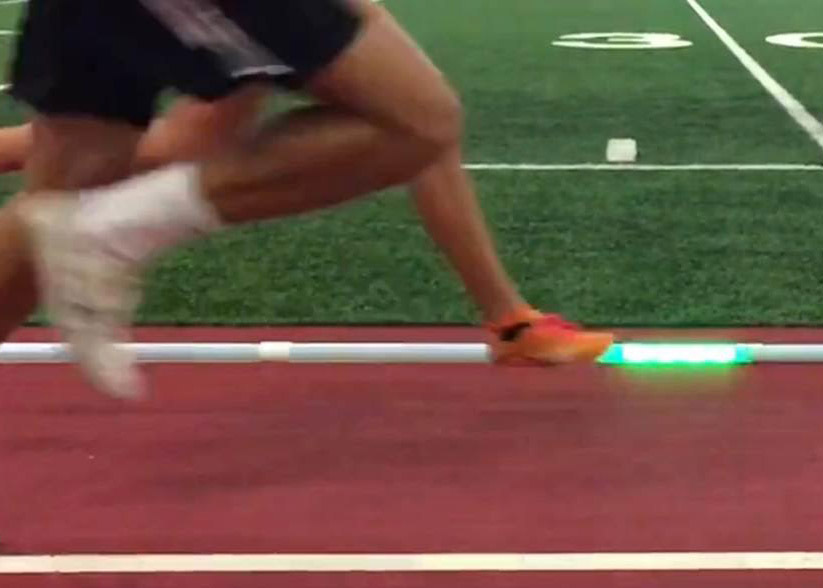
A new Lenexa-based tech firm aims to make training for track and field athletes more precise.
Founded in 2015, LED Rabbit is an electronic pacing system that can attach to or overlay any track. The product uses LED lighting to move a marker around a track, offering runners an indicator of what their pace needs to be.
“Coaches typically go through lot of pain developing specific work outs and they use a stopwatch to make sure athletes are on the correct pace,” said Barry Vonada, founder of LED Rabbit. “With LED Rabbit, a coach could be in his office before practice starts, program a complete workout within our mobile application, and then launch the workout. The system takes care of the rest.”
With expertise in LED lighting, sales and engineering, Vonada said the idea came after talks with his daughter, who is a collegiate track and field athlete.
“One of her coaches came to her and was telling her about all the problems they have with training,” Vonada said. “I thought to would be nice to add some LED technology. Any technology in general would be better than a stopwatch and yelling ‘start and stop.’”
After previously trying to secure a patent, Vonada discovered that a similar technology was already being used by Italy-based Indico Technologies. On Friday, LED Rabbit announced that it gained exclusive license to use the technology.
Vonada said that he is relieved to have reached an agreement with Indico Technologies.
“By securing the patent and technology rights, we can now focus our energy on launching The LED Rabbit into the North American market,” Vonada said. “The expertise that our two companies share in LED Lighting Systems coupled with our passion for sports will spawn many new developments in the future.”
The tech will hit the market this fall, targeting high school and collegiate teams. Vonada said he’s focused on securing funding to hire a team and manufacturing the product.
He is confident that, with the help of the Kansas City community, LED Rabbit has a bright future.
“I’ve started to get in a lot of exciting conversations and getting to know people in Kansas City’s startup community,” Vonada said. “It has been really cool for me because I’ve lived in the area forever and I love that the community is really embracing tech startups.”
Watch a video of the LED Rabbit in action below.


2017 Startups to Watch
stats here
Related Posts on Startland News

Enjoy the college life experience? Homeroom invites you to KC’s new coliving concept
Homeroom is a coliving experience that takes you back to your dorm room days, said Johnny Wolff. “I think everyone looks back with really fond memories of living with really good friends in college in a house. The coliving experience is about taking that shared roommate situation and kind of curating it at Homeroom,” said…

Second-shift startup: Wobblrs pins soccer-inspired game’s future to youth sports pivot
Wobblrs, a soccer-specific tailgating game, is refocusing its niche on youth development, said Roberto Camacho. The game, which involves two self-righting pins for players to knock over by kicking a soccer ball, is proving to be a valuable exercise in aiming, as well as a basic introduction to soccer, said Camacho. “I had a few…

Nickel & Dime supplement club relocates to KC, aims to disprove industry stereotypes
Startup nutrients like location, atmosphere and opportunity have proven the right dosage to lure another young company to Kansas City, said Ben Harris. “[Our move] allows us to ship two days domestically anywhere in the United States,” the co-founder of Nickel & Dime supplement club said. Launched by Harris and co-founder, Michael Giangregorio earlier this…
LaunchKC lands keynote speaker from NASA; Techweek queries two Google developer advocates
Pitch Day for LaunchKC is expected to lift off next month with an opening keynote address from NASA executive Kira Blackwell. Remarks are expected to delve into NASA iTech, a year-long effort to find innovative ideas that address challenges and fill gaps in five critical areas identified by the space agency as having a potential impact…