

LED Rabbit tech enhances training for track athletes
May 16, 2017 | Meghan LeVota
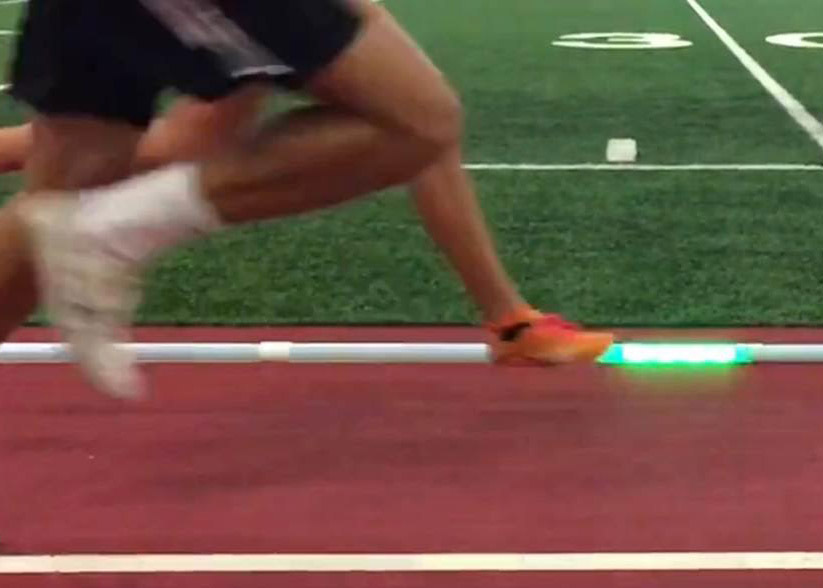
A new Lenexa-based tech firm aims to make training for track and field athletes more precise.
Founded in 2015, LED Rabbit is an electronic pacing system that can attach to or overlay any track. The product uses LED lighting to move a marker around a track, offering runners an indicator of what their pace needs to be.
“Coaches typically go through lot of pain developing specific work outs and they use a stopwatch to make sure athletes are on the correct pace,” said Barry Vonada, founder of LED Rabbit. “With LED Rabbit, a coach could be in his office before practice starts, program a complete workout within our mobile application, and then launch the workout. The system takes care of the rest.”
With expertise in LED lighting, sales and engineering, Vonada said the idea came after talks with his daughter, who is a collegiate track and field athlete.
“One of her coaches came to her and was telling her about all the problems they have with training,” Vonada said. “I thought to would be nice to add some LED technology. Any technology in general would be better than a stopwatch and yelling ‘start and stop.’”
After previously trying to secure a patent, Vonada discovered that a similar technology was already being used by Italy-based Indico Technologies. On Friday, LED Rabbit announced that it gained exclusive license to use the technology.
Vonada said that he is relieved to have reached an agreement with Indico Technologies.
“By securing the patent and technology rights, we can now focus our energy on launching The LED Rabbit into the North American market,” Vonada said. “The expertise that our two companies share in LED Lighting Systems coupled with our passion for sports will spawn many new developments in the future.”
The tech will hit the market this fall, targeting high school and collegiate teams. Vonada said he’s focused on securing funding to hire a team and manufacturing the product.
He is confident that, with the help of the Kansas City community, LED Rabbit has a bright future.
“I’ve started to get in a lot of exciting conversations and getting to know people in Kansas City’s startup community,” Vonada said. “It has been really cool for me because I’ve lived in the area forever and I love that the community is really embracing tech startups.”
Watch a video of the LED Rabbit in action below.


2017 Startups to Watch
stats here
Related Posts on Startland News
Woof’s dog spa wagging into new markets with startup mindset, owner says
It’s a classic startup tail: Disillusionment with corporate life sends a would-be founder fetching for fresh ideas and more innovative inspiration. Woof’s Play & Stay provided Andy Wiltz the opportunity to scratch that itch, the dog spa owner said. Purchasing the plateauing brand in 2015, Wiltz turned his original Merriam location into a model for…

Destiny Wealth moving HQ to KC; former football player owes debt of inspiration to mother
Grit and the gridiron might have helped shape Parker Graham’s business acumen, but it’s the influence of his coach in the game of life who inspired Destiny Wealth — his fintech startup that soon will move to Kansas City. “My Mom stretched herself so thin and sometimes it was hard to put food on the…

LaunchKC pivoting from annual grants contest to supporting industry verticals, accelerators
LaunchKC is expected to focus on specific business verticals in 2019 — an effort to bring companies to Kansas City that can fill industry gaps, said Jim Malle. A revamped version of the annual grants competition eventually would grow those verticals into individual accelerator programs, said Malle, business development officer at the Economic Development Corporation…
Cowboy couture: WH Ranch lassos dream of making the ‘best blue jeans in the world’
Ryan Martin sold his best cowboy boots to buy high-quality denim for his western couture brand, said the founder of Kansas-based W.H. Ranch Dungarees. “I was always describing [my product as] ‘custom made’ but ‘couture’ really describes it best,” said Martin, detailing the laborious process that limits production to an average of four pairs of…