

LED Rabbit tech enhances training for track athletes
May 16, 2017 | Meghan LeVota
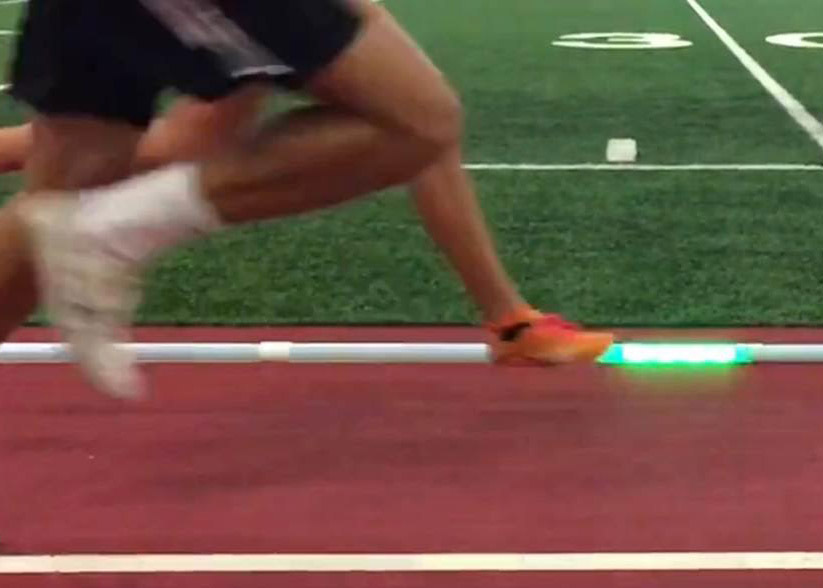
A new Lenexa-based tech firm aims to make training for track and field athletes more precise.
Founded in 2015, LED Rabbit is an electronic pacing system that can attach to or overlay any track. The product uses LED lighting to move a marker around a track, offering runners an indicator of what their pace needs to be.
“Coaches typically go through lot of pain developing specific work outs and they use a stopwatch to make sure athletes are on the correct pace,” said Barry Vonada, founder of LED Rabbit. “With LED Rabbit, a coach could be in his office before practice starts, program a complete workout within our mobile application, and then launch the workout. The system takes care of the rest.”
With expertise in LED lighting, sales and engineering, Vonada said the idea came after talks with his daughter, who is a collegiate track and field athlete.
“One of her coaches came to her and was telling her about all the problems they have with training,” Vonada said. “I thought to would be nice to add some LED technology. Any technology in general would be better than a stopwatch and yelling ‘start and stop.’”
After previously trying to secure a patent, Vonada discovered that a similar technology was already being used by Italy-based Indico Technologies. On Friday, LED Rabbit announced that it gained exclusive license to use the technology.
Vonada said that he is relieved to have reached an agreement with Indico Technologies.
“By securing the patent and technology rights, we can now focus our energy on launching The LED Rabbit into the North American market,” Vonada said. “The expertise that our two companies share in LED Lighting Systems coupled with our passion for sports will spawn many new developments in the future.”
The tech will hit the market this fall, targeting high school and collegiate teams. Vonada said he’s focused on securing funding to hire a team and manufacturing the product.
He is confident that, with the help of the Kansas City community, LED Rabbit has a bright future.
“I’ve started to get in a lot of exciting conversations and getting to know people in Kansas City’s startup community,” Vonada said. “It has been really cool for me because I’ve lived in the area forever and I love that the community is really embracing tech startups.”
Watch a video of the LED Rabbit in action below.


2017 Startups to Watch
stats here
Related Posts on Startland News

Pioneering KCI airport vote should help land top talent, startup leaders say
Capping a six-year journey fraught with turbulence, delays and political drama, voters overwhelmingly ratified plans to build a new $1.3 billion airport terminal, which would replace the existing Kansas City International Airport (KCI). “Kansas City has never been about being just mediocre,” said Michael Wilson, founder of luxury watch brand Niall and a frequent traveler…

WillCo Tech’s sale allows founder guilt-free $200K investment in smart grid startup
Selling a majority stake in his IT consulting firm will allow Kevin Williams to focus on and expand his startup venture, the Kansas City tech entrepreneur said. Although the exact amount was undisclosed, the acquisition by Ohio-based Metisentry earlier this month provided a big enough payoff to fund Williams’ and his wife’s future retirement, as…
After $2.95M round, corporate deal ensures word-of-mouth marketing for RiskGenius
RiskGenius’ $2.95 million series A extension funding round is worth more than its face value, said CEO Chris Cheatham. The round was led by QBE Ventures, an Australia-based firm known as being among the world’s top 20 insurance companies. In addition to the funds, QBE North America will be the first division to fully implement…
Likarda scaling up biotech research firm with $4M angel boost, new lab
An animal’s diabetes diagnosis comes with a heavy burden for the pet’s owners, Lisa Stehno-Bittel said. And it’s not just the cost of treatment, the president and co-founder of Likarda added. “Of those who will try twice-daily insulin injections, within a year, half of those have given up,” she said. “A lot of that is…