

Voting open: Hyperloop One gauges interest in semifinalist routes
April 19, 2017 | Bobby Burch
If MLB All-Star voting is any indication, Kansas Citians are quite adept at voicing their opinions online.
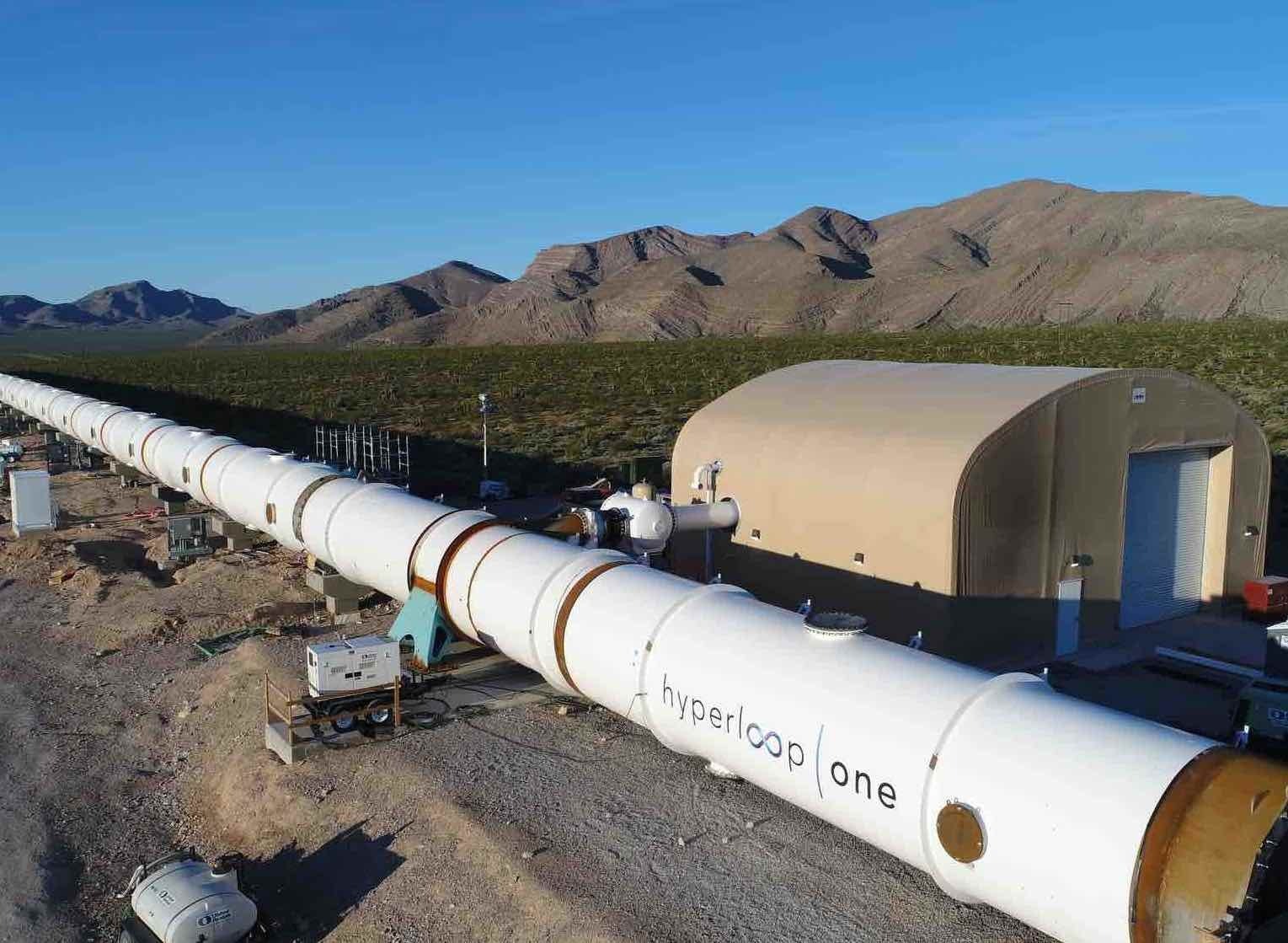
Well, that skill should come into play as part of an online poll that could help Kansas City land a Hyperloop One route. The futuristic transportation system would haul people at speeds of about 760 miles per hour, moving them 240 miles between Kansas City and St. Louis in only 23 minutes.
And if you think that’s pretty cool, you now have the opportunity to tell the company that you’d like to travel across the Show Me State at near subsonic speeds. The Los Angeles-based company recently launched a Facebook poll asking fans to select one of 11 routes that “would benefit you the most.”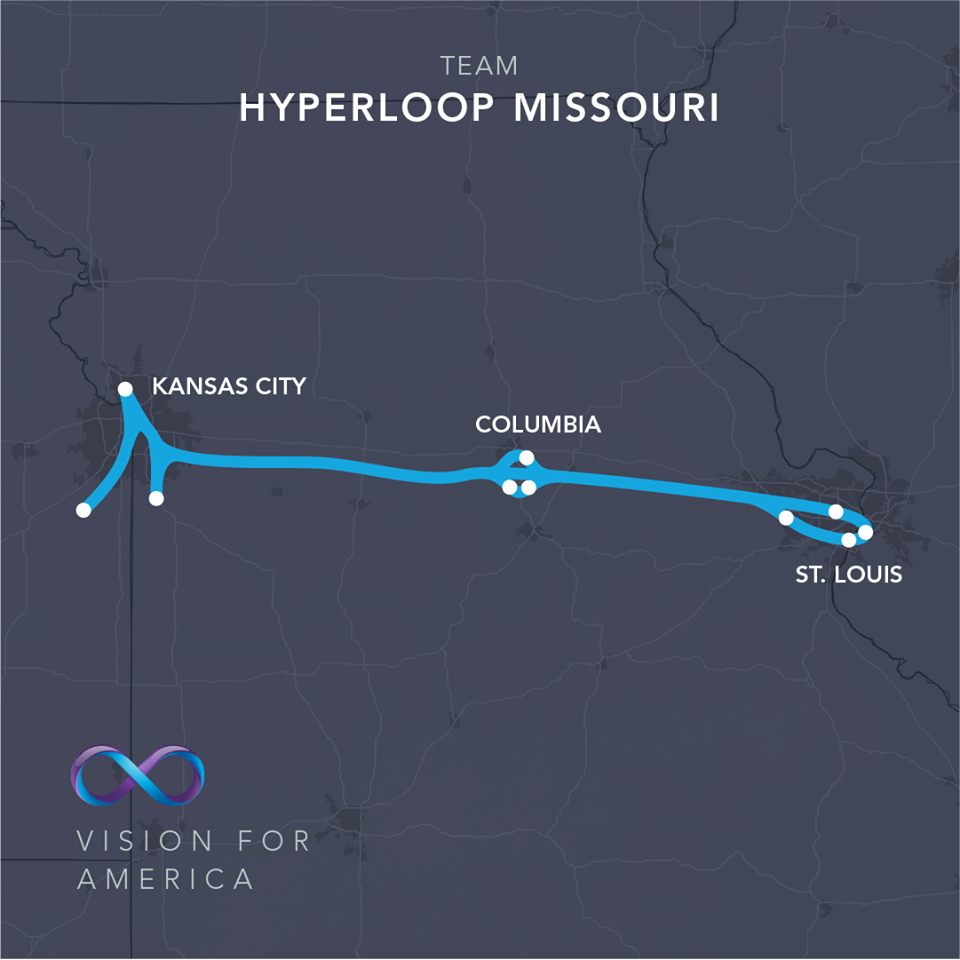
To clarify, this is a poll from Hyperloop One — not an official contest. We don’t know if it will actually have an effect on the company’s decision-making process. Regardless, one has to think that Hyperloop will consider how communities respond to a poll asking them if they care.
Think of the Hyperloop system as high-speed rail travel in a vacuum. Via a series of interconnected tubes that create a low-pressure environment, magnetically levitated pods are propelled by electric motors. In the vacuum-sealed environment, the pods zoom along with limited friction at speeds surpassing air travel.
SpaceX CEO Elon Musk once described the technology behind Hyperloop as “a cross between a Concorde, a railgun and an air hockey table.”
Other U.S. routes that were named as finalists include: Columbus to Pittsburgh; Cheyenne to Houston; Los Angeles to San Diego; Miami to Orlando; Seattle to Portland; and several others. The company plans to announce the winners in May.

Blair
To provide some perspective on how big a deal this could be for Missouri, we spoke with Tom Blair, assistant district engineer with the Missouri Department of Transportation. Blair is one of a handful of state officials leading the Missouri Hyperloop One team and was the man that filed the state’s application about two years ago.
What would it mean for Missouri to have a Hyperloop route?
Hyperloop’s potential to build powerhouse economies is positioned to be the next big thing. Missouri’s Hyperloop Strategic Transformation envisions great opportunities for Missouri and the Midwest when travel that traditionally takes a day will be accomplished in an hour or less. We envision this new mode (of transportation) will add to our existing travel demand by creating journeys that are not taken today — journeys that connect people, opportunity and commerce.
Hyperloop in Missouri creates the core for a national “supply web” instead of multiple single, redundant, intersecting supply chains. A true high-speed connection of Kansas City, Columbia and St. Louis provides endless economic potential by creating a true mega-city that will make our large state more efficient and effective within the global economy.
What factors position Missouri well for this route?
Although our entry is focused on I-70 across Missouri, we envision the connection of resources across the middle of the United States. At over 2,100 miles in length, I-70 is a major corridor for goods, people and services that runs from I-15 near Cove Fort, Utah, to I-695 near Baltimore, Maryland.
I-70 passes through 10 states and many major cities, including Denver, Kansas City, St. Louis, Indianapolis, Columbus, Pittsburgh and Baltimore. Along I-70 we would be able to link widely spaced neighborhoods as a “Super City” without the congestions and air emissions.
How does Missouri stack up against other semifinalists?
Our odds to become a finalist is good. I-70 — where the interstate system began — is a well-known and centrally located transportation corridor spanning the middle of the United States and connecting to east- and west-coast markets and beyond. MoDOT is also a partner with a history of and passion for providing outstanding personal customer service, delivering transportation projects on time and on budget, and embracing new innovation and technologies.

Featured Business

2017 Startups to Watch
stats here
Related Posts on Startland News

WonderWe launches faith-based crowdfunding platform
Kansas City-based software startup WonderWe hopes to tap a specific market for its new faith-based crowdfunding platform. Launched in early June, WonderWe combines faith-based values, the latest in crowdfunding tech and new proprietary features to “be one of the leading names” in crowdfunding, said Dominic Ismert, founder of WonderWe. The platform currently accepts fundraisers for…
The Lean Lab will award $100K to education entrepreneurs
Local efforts to inject innovation into education received a boost Friday as The Lean Lab announced fellows in its incubator program will earn seed capital for their projects aimed at disrupting traditional learning. Founded in 2013, The Lean Lab welcomed five new teams of fellows from around the nation for its incubator, which develops…

‘Kansas City Startup House’ aims to be smart home incubator
A local tech founder is transforming his Kansas City, Kan., home to eventually become the area’s next incubator program. Sports Photos founder Brandon Schatz recently launched the “Kansas City Startup Home” to host entrepreneurs and innovators from around the world. While it’s now serving as an Airbnb destination for techies, Schatz said in the next…
Kauffman Foundation analyzes Kansas City’s startup growth
What does startup community success look like? Often one hears buzzwords like “vibrant,” “supportive” and “close-knit” — standards by which nearly any community can label itself successful. But since it’s nearly impossible to objectively measure those terms, a startup community’s success is instead frequently evaluated through funding and exits. That ignores the fact that most…