

With data pouring in, leaders discuss what’s next for the Smart City
April 13, 2017 | Meghan LeVota
As Kansas City’s Smart City initiative wraps up its first phase, advisory board members on Monday began looking to the future of the public-private project.
Since the initiative’s launch in 2016, the City of Kansas City, Mo. has established itself as a leader in smart city infrastructure, KCMO innovation analyst Kate Garman said. But while in the process, however, Garman said the city has garnered many lessons.
“We learned a lot,” Garman said of phase one. “Parts went as planned; other aspects of the construction or implementation required us to adjust. We are continuing to evaluate and will apply lessons learned and those we are learning to phase two.”
Kansas City officially kicked off its smart city project in May of 2016. The $15.7 million public-private project is transforming Kansas City’s downtown into a living lab of Wi-Fi connectivity on and around the 2.2-mile streetcar line.
Via a large Wi-Fi and sensor network, the project will provide a variety of information to citizens while also collecting data on their behavior in downtown. The project is a collaboration between Kansas City, Sprint, Cisco and Think Big Partners.
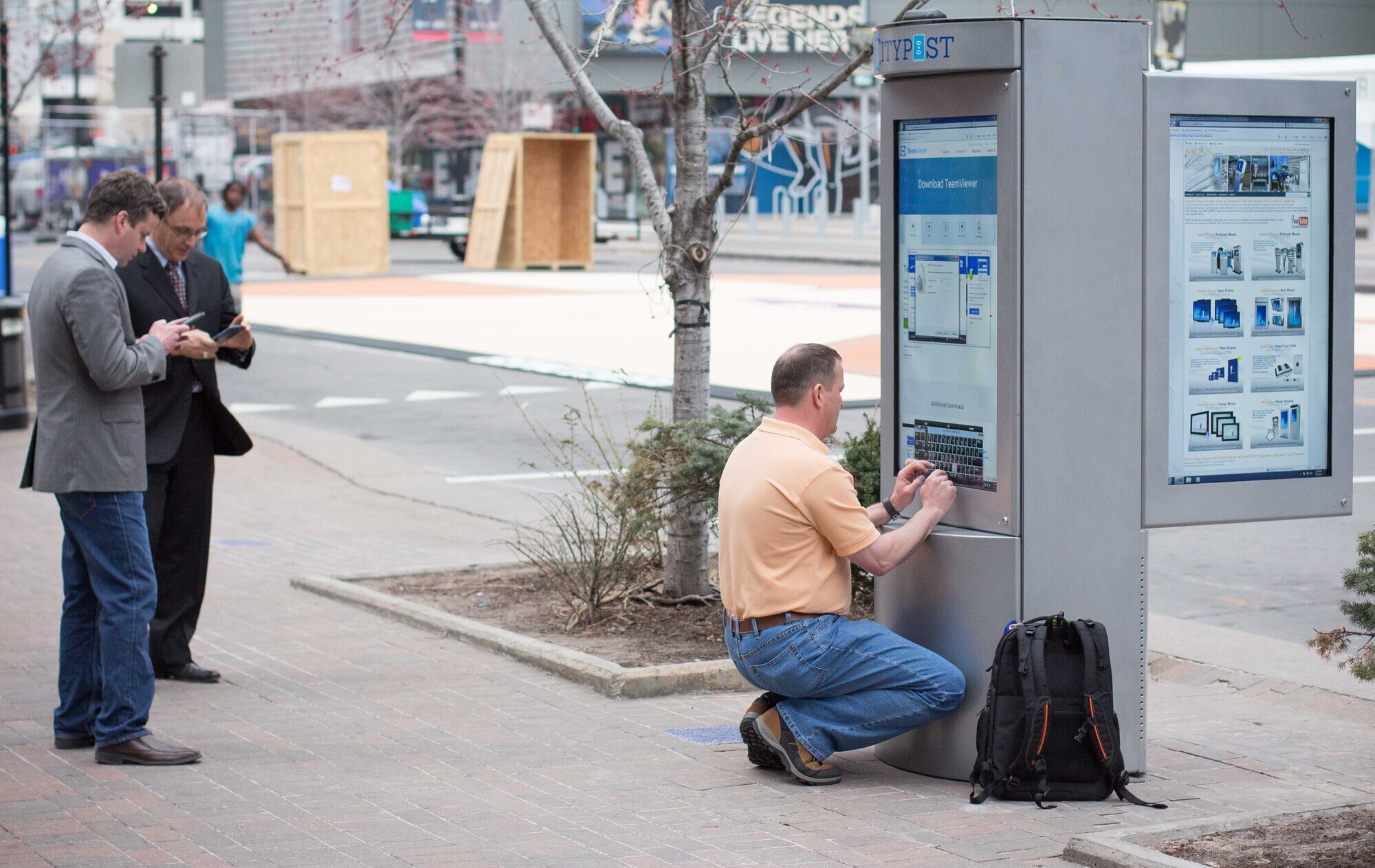
In the last year, the city has established 328 WiFi access points, 178 smart lighting video nodes and 25 smart kiosks, laying the foundation on which the city can begin to collect data on downtowners’ behavior. In February, the city released its open data platform, which provides citizens live and historical information on the streetcar, traffic flow and parking availability in downtown.
The Smart City Advisory Board — which consists of about a dozen industry leaders and city officials — met Monday to discuss what went well with phase one, and what could have gone better.
Top concerns discussed Monday include redefining the ownership of the open data portal so that it can be optimized for both city hall and Kansas City citizens. Powered by the urban data and collaboration platform Xaqt, the city’s interactive data portal provides citizens live and historical information on the streetcar, traffic flow and parking availability in downtown.
Now that the portal is complete, the board is focused on using the data to solve city problems. One way to do this is to ramp up the enthusiasm for the initiative and encourage community members to build applications with the data.
For phase two, the Smart City Advisory board plans to form a cohesive understanding of its goals and to articulate the return on investment the initiative has for the city. The board hopes that, as a result of establishing performance indicators, it can more easily partner with other public and private organizations.
The board agreed that the 25 kiosks scattered around downtown Kansas City also need better content and an improved user experience. The kiosks offer information on nearby restaurants, events, weather and other information collected from smart city sensors. Created by CityPost, the kiosks also provide the information in a variety of languages and allow users to call 911 for emergency services.
The board also hopes to expand the existing wifi network in downtown — provided via Sprint — to more parts of Kansas City and to secure financial support.
“Scaling projects brings questions of funding,” Garman said. “As we continue to move forward we will continue to work with our partners and work on our public-private partnerships.”
As for what went well in phase one, the board agreed that Kansas City is establishing itself as an industry leader in smart city development. Although other cities have similar initiatives, Kansas City is setting an example of how to work together among a variety of different partners.
Garman said that phase two will begin this fall after the board agrees on its top priorities. She hopes that as the initiative grows, she hopes it will continue to serve as a leader to other communities.
“We are sharing our knowledge with other cities and we hosted a conference involving federal agencies that will use our data reporting model as a national standard,” Garman said. “Also, Smart City initiatives have helped Kansas City grow economically by attracting startups and tech talent.”


2017 Startups to Watch
stats here
Related Posts on Startland News
OP greenlights Edison District walking community envisioned by former startup executive
Less than a month after announcing the launch of a second coworking location in Johnson County, the former startup executive behind Edison Spaces revealed news of a new project: a mixed-use district that repurposes a block previously defined by its church grounds. Centered around a five-story office building that features a chef-driven food hall, the Edison…

High-growth additions: PayIt, Main Street Data earn slots in $19M KCRise Fund portfolio
Investing in Kansas City startups ultimately brings greater interest from outside funding sources, said Darcy Howe, KCRise Fund founder and managing director. “We continue to be impressed by the increasing early stage deal flow in our region,” Howe said Tuesday in announcing the additions of Kansas City-based PayIt and Main Street Data to the fund’s…

Digital Sandbox KC nabs $950K to continue regional startup impact
Already with a lasting legacy of growing the area entrepreneurial ecosystem, Digital Sandbox KC has received significant support that should fuel its program for years to come. The proof-of-concept incubator was recently awarded a combined $950,000 — $450,000 from the Ewing Marion Kauffman Foundation and $500,000 from the Missouri Technology Corporation. The two grants will…

Victor Hwang: Individual entrepreneurs hold the key to making America great again
Victor Hwang posed a riddle to a TEDx crowd gathered in Georgia. What five-letter word was overlooked during the 2016 U.S. presidential campaign and almost never mentioned by the candidates or at the party conventions? The answer is rooted in overcoming inequality, said Hwang, vice president of entrepreneurship for the Ewing Marion Kauffman Foundation. “I’m…